NACC NRM acknowledges the Traditional Owners and original natural resource managers of the land and sea country of the Northern Agricultural Region. NACC NRM’s activities are conducted on the lands of the Yamaji and Noongar peoples; we acknowledge their elders past present and future for they hold the memories, the traditions, the culture and the hopes of Aboriginal Australia.
“Looking to the future, I anticipate continuing strong performance in project delivery and community engagement, increasingly with the local government sector.”
The role of communications for NACC NRM cannot be underestimated, to promote and share what is being achieved across the region, but also to raise awareness about critical Natural Resource Management developments. This part of our activity supports the organisational goal ‘To increase community awareness of regional TEK, NACC NRM, and NARvis, and improve opportunities for the local community to contribute to NRM in the NAR.’
This past year has seen NACC NRM expand, welcoming new team members in all four core programs. Taking on more projects and staff has allowed the team to prioritise more travel throughout the region to host events and work with landholders and organisations from as far north as Kalbarri and south to Gillingarra.
We’ve also had the pleasure of partnering with Dr Trudi Ryan of Words for Change to deliver several online webinars about values-based messaging. This allowed us to engage with small groups, Local Government Authorities , and NRM organisations around the state. We’ve all learned from Trudi how to tap into intrinsic values and frame our messages to engage more effectively.
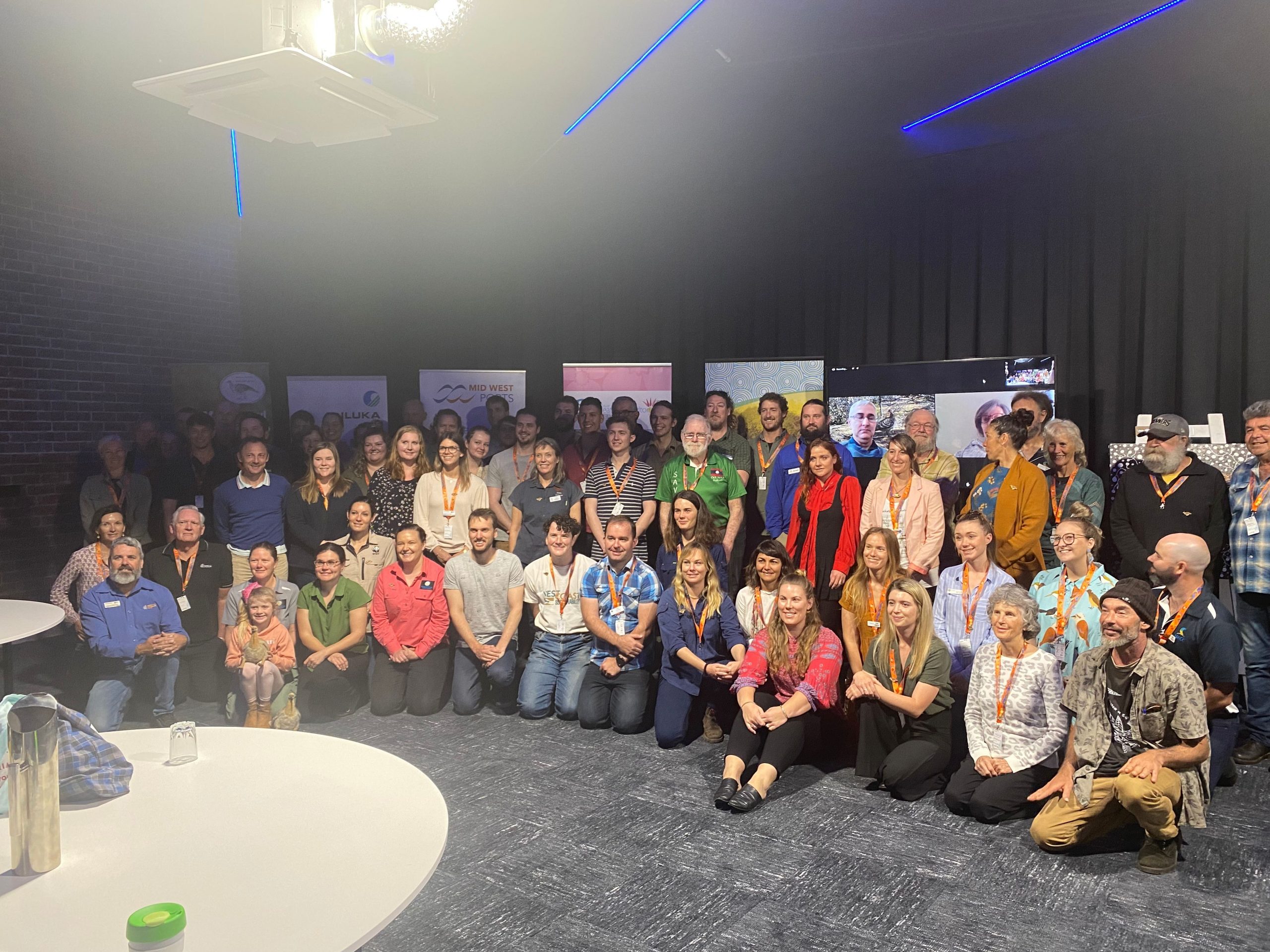
The National Malleefowl & WA Threatened Species Forum, held in September of 2021, was a huge success in inviting people from far and wide to the Northern Agricultural Region. NACC NRM hosted over 150 attendees, 14 local artists, more than 25 businesses and organisations, 36 youth participants from three local schools and ran 12 events over five days.
NACC NRM’s social media presence has strengthened throughout the year. As we have emerged from COVID-19 we have demonstrated greater reach than ever before. Our Instagram page was established in 2020, and has seen page visits increase by 53.7% from last year. We’ve also seen success on Facebook, with several posts reaching over 3,000 people and page reach increasing 70.5% from last year.
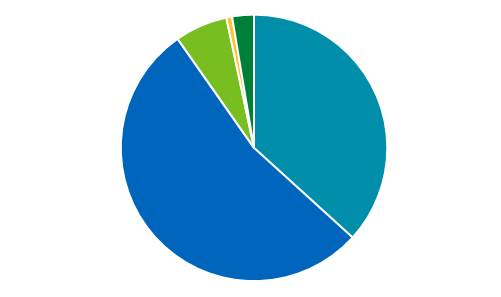
Twitter continues to be a useful tool in engaging with farmers and academics both locally and from further afar. We have established a LinkedIn profile to stay connected within business and industry sector. Our website continues to attract a steady flow of users, with 83.62% percent of site visitors being new, and 16.38% being returning visitors.
“It was a busy year for events with face-to-face events becoming commonplace again. During 2021-22 we hosted events in Gingin, Moora, Dalwallinu, Cervantes, Jurien Bay, Walkaway, Nabawa, Perenjori, Kalannie and Morawa.”
I am pleased to report another year of accomplishment and consolidation. Steady progress toward programme objectives has been punctuated by several highlights while our financial position has strengthened sufficiently to allow the Board and Management to commit resources to NACC NRM’s longer-term interests.
Confirmation of Western Australia’s northern-most breeding population of Carnaby’s Cockatoo near Murchison House is testament to the diligence of our Biodiversity team while the formation of the Turquoise Coast Management Group represents a vindication of our decision to re-establish NACC NRM’s Coastal and Marine Team and of their ability to catalyse community action.
NACC NRM continues to seek opportunities to extend our activities within the scope of our purpose. Recently we were awarded funding under the Commonwealth Government’s ‘Preparing Australian Communities’ program, for ‘In the Wake of the Storm’, a project initiated following Cyclone Seroja, to develop guidelines for environmental recovery activities, particularly revegetation, to be applied after future such events in our region and beyond. This project is being implemented in cooperation with affected local government authorities.
A second recent success has been a long-term extension of the Mid West Aboriginal Ranger Program (MARP) which is funded by the National Indigenous Australians Agency and which NACC NRM delivers in cooperation with Western Mulga Pty Ltd, Kwelena Mambakort Aboriginal Corporation (KMAC) and the Department of Biodiversity, Conservation and Attractions (DBCA).
These successes together with the strong performance and financial management delivered by the NACC NRM team ably led by Katherine Allen, has caused the Directors to consider the longer-term work environment and accommodation requirements of the organisation. A year-long project to secure suitable premises has concluded with NACC NRM purchasing a property in Geraldton. We look forward to the many benefits that this modern facility will enable us to deliver to our staff, community and other stakeholders.
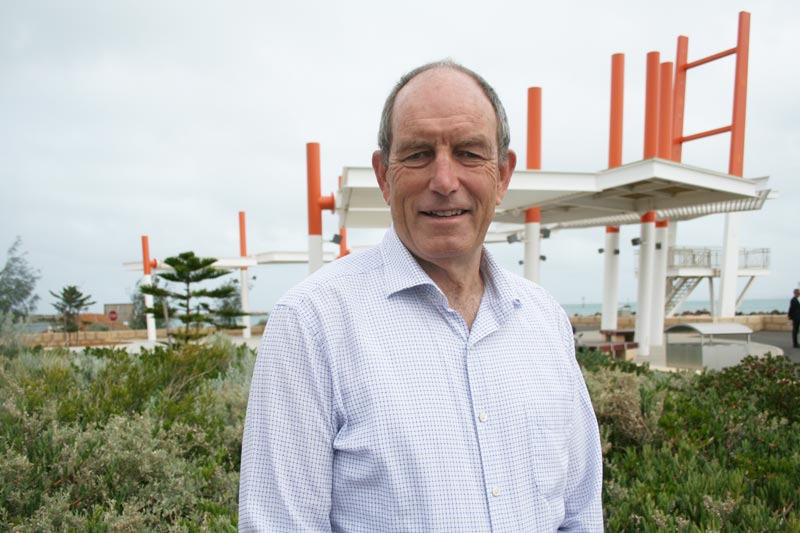
Looking to the future, I anticipate continuing strong performance in project delivery and community engagement, increasingly with the local government sector.
The next year will not be without its challenges. The current Federal government-funded RLP program expires soon and we are in the process of developing our bid for the next round. Our commitment to owning our office accommodation will require work and imagination to realise the potential of the investment, which in turn, we expect to contribute to the ongoing financial sustainability of the organisation.
I end my time as Chair of NACC NRM at the 2022 AGM, confident in the capability of the NACC NRM Board, Management and Team and look forward to the organisation playing an ever-increasing role in delivering sound natural resource management outcomes in the Northern Agricultural Region.
Robert Keogh
In 2020-21 I talked about ‘raising the bar’. In 2021-22 we worked on setting the bar on fire. Over the last 12 months, the team at NACC NRM has not stopped.
The Sustainable Agriculture team has extended the program’s reach through collaborations with grower groups in the regions. Specifically, the Beyond Reasonable Drought project and Grower Group Alliance – South West WA Drought Innovation Hub – Geraldton Node project. The Beyond Reasonable Drought partnership with grower groups supported farmers across the region to improve the environmental sustainability of their agricultural production and drought resilience. The outcomes of this project have been consolidated through our successful Expression of Interest to the South West WA Drought Innovation Hub, with support from grower groups across the region, to host the Geraldton Node of the Hub. The program continues to focus on working with agricultural networks to share technical expertise and provide opportunities that will improve land management practices in agriculture across the region.
The conservation outcomes of ranger teams have expanded through work on several land tenures. Maintaining Heritage sites such as Willi Gulli, Racecourse Paddock and Buller River has long been a priority. During 2021-22, the teams have increasingly focused on threatened species and ecosystems.
To this end, Western Mulga rangers have improved management across 19,000 ha for the conservation of Malleefowl through firebreak and access management. They completed the maintenance of water holes and supported the monitoring of over 90 Malleefowl mounds.
Similarly, the Kwelena Mambakort Aboriginal Corporate ranger team have contributed positively to Carnaby’s Black Cockatoo populations by installing artificial hollows and habitat restoration.
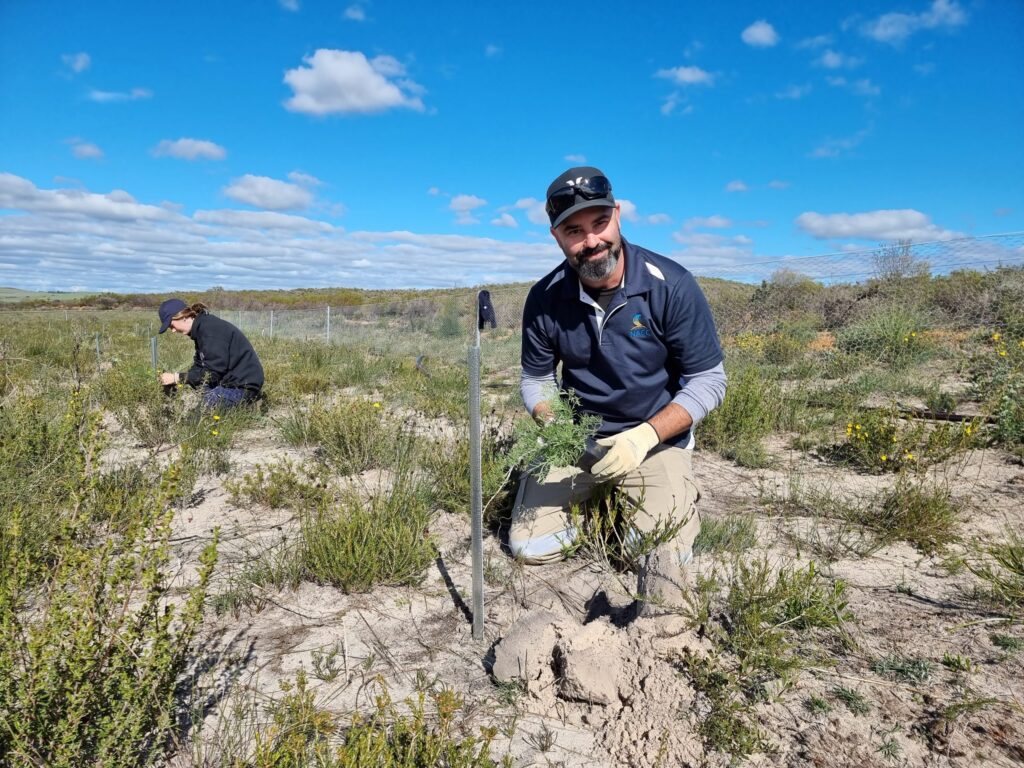
All ranger teams have collected native seed, propagated native plants for restoration, and planted native vegetation in key locations across the NAR. Seed collection provides valuable industry experience and has facilitated the planting of over 100,000 seedlings during the year.
In September 2021, the NACC NRM team delivered the WA Threatened Species Forum, held in tandem with the National Malleefowl Forum. Given the impact of COVID and the timing of this event, having more than 100 delegates from all over Australia was a significant achievement. The two Forums brought together 12 events over five days and featured 14 local artists, 25 businesses and 36 youth participants.
Following the successful relaunch of our updated NARvis, NACC NRM was invited to help lead a significant piece of strategic planning work for the region with Mid West Development Commission and the Department of Primary Industries and Regional Development. With funding from the Australian Government’s Future Drought Fund, the consortia delivered a Regional Drought Resilience Plan covering the shires of Northampton and Chapman Valley and the City of Greater Geraldton, along with significant technical analysis of drought vulnerability for the South West land division. The development of this plan also included extensive community consultation to ensure that local knowledge and technical advice guided the development of priorities for action.
This planning work links to existing NACC NRM on-ground projects, including Beyond Reasonable Drought and the Chapman Catchment Collaborative regeneration project.
It was a busy year for events with face-to-face events becoming commonplace again. During 2021-22 we hosted events in Gingin, Moora, Dalwallinu, Cervantes, Jurien Bay, Walkaway, Nabawa, Perenjori, Kalannie and Morawa. We supported events in Karakin, Thundellara, Perenjori, Paynes Find, Wubin, Cataby, Warradarge, Northampton, Yuna, Dalwallinu and Dandaragan.
We also supported on-ground works throughout the region, including at the following locations Yuna, Dalwallinu, Dandaragan, Merkanooka, Goodlands, Kalannie, Bunjil, Yardarino, Canna, Kondut, Latham, Kadathinni, Nabawa, Red Gully, Sandy Gully, Waddy Forrest, Devils Creek, Perenjori, Bowgada, Ellendale, Wandana, Namban, Hill River, Warradarge, Gillingarra, Regans Ford and Moonyanooka.
Our region is vast – slightly larger than Tasmania, which for comparison, is serviced by three separate NRM organisations. Covering the NAR region and its many environmental threats is challenging. We continue to focus on partnerships and collaboration to address this challenge. We know that by working with our community through passionate delivery of collaborative on-ground projects and education, the community will value and actively protect our region’s natural capital.
This year we have launched a new Reconciliation Action Plan (RAP). The RAP Working Group consulted widely and developed an Innovate RAP which Reconciliation Australia approved in March 2022. The activities to fulfil these commitments are now in full swing.
Sadly, at the end of 2021, we farewelled former NACC NRM CEO Shelley Spriggs, who lost a long battle with cancer. Shelley was an inaugural inductee to the NRM Leadership Honour Roll. I will always be grateful for her guidance and no-nonsense approach, not to mention her passion for life.
While we have said farewell to some, we have welcomed many new faces across all programs, including our Administration team. We have also hosted a school-based trainee from Nagle Catholic College who has been working towards a Certificate II in Conservation and Ecosystem Management. This trial position has been very successful, and we look forward to making this opportunity available again in 2023.
During 2022 we have taken on new projects that align with our organisational and program objectives, and we have successfully completed some great initiatives that support continued conservation and sustainability outcomes. I want to thank the whole team who continue to go above and beyond for the organisation and each other proving their ongoing commitment to our purpose and our values.
I wish to extend my gratitude to all who have been involved in making the last year a great success. I have had the pleasure of working with my fellow Board members in discussing the future of the organisation and embarking on new and exciting initiatives.
It is my pleasure to present to you the Treasurer’s Report for the year ended 30 June 2022.
I draw your attention to the Financial Results for the year ending 30 June 2022. The audit was again successfully performed by William Buck , firstly through an interim audit at the end of April and then finalised onsite in the Geraldton Office during August. Thanks to Tom and his Team. Noted is the fact that despite the current challenge that all organisations face with movement of staff, the anticipated disruption did not eventuate. Both organisations worked tirelessly to ensure the process proceeded without delays. The draft accounts and project acquittals all delivered ahead of schedule.
The Balance sheet reveals we have been operating optimally throughout the year. Our net-asset position has remained the same as last year. Cash and cash equivalents equated to 93% of total assets.
Notably for most of the year, the interest rate regime was not favourable with the return on our invested cash assets attracting an average interest rate around 0.27%.
The organisation’s liabilities remain stable in line with project delivery with comfortable ability to meet commitments as and when they fell due throughout the year.
The Operating Statement reveals NACC NRM’s recognised income for the year was $4,504,166 against expenditure of $4,503,998.
Perhaps of interest especially for many of our stakeholders are the factors beyond the control of the organisation. For the first time, the Board has interrogated assumptions that are underpinned by macro-economic factors like inflation and its impact on the budgeting process. As global economic conditions influence policy settings of nations around the world, never has it been more important to monitor all that is happening in the macro-economic environment. With the beast of inflation raging around the world, disruptions continue in supply chains and the labour market continues to tighten.
The other strategic matter that the Board has considered important to the long term future of the organisation is the organisation’s office accommodation needs.
During 2021-22 the Board considered the purchase of a building to house the team in preference to lease arrangements which have perpetuated for much of NACC NRM’s existence. . The time has come for a permanent solution to this challenge. It is instructive that the Board intends to re-coup the cost of investment through revenue that will arise from the availability of parts of the building. It is an exciting time for the entire NACC NRM team.
It has been a great privilege to serve with my fellow directors and I look forward to the year ahead. To our very able Chair, I extend a note of thanks for your leadership. I thank the NACC NRM team and all stakeholders who collectively have made the year a great success.
To the NACC NRM staff team, I offer you my best wishes for the coming year.
Thank you

The organisation’s strategy ‘supporting landholders, community groups, and government to improve biodiversity in the NAR’ and ‘Increase landholder capacity to integrate on-farm biodiversity into land management practices’ has been progressed by the biodiversity program this year. This has been achieved through the delivery of on–ground works and incentives. Seven regional groups and twelve regional stakeholders have been supported to deliver services targeted at improving strategic habitat and biodiverse outcomes. These on ground incentives have contributed to the program goals with over 200 hectares of threatened species habitat revegetated with biodiverse and local provenance flora species, and 950 hectares of remnant bushland important to threatened species protected.
NACC NRM’s Biodiversity Program has multiple projects aimed at improving the trajectory of threatened flora and fauna in the NAR. These projects are funded by the Australian Government under both the Environment Restoration Fund and Regional Land Partnerships. These projects are multifaceted and provide many opportunities for our regional stakeholders to participate and engage in the conservation of threatened species in the region. The Biodiversity Program provides a unique platform for collaboration across a range of regional stakeholders. This has been highlighted this period by engagement with Traditional Owner groups to deliver cross regional outcomes for threatened species, involving seven partner organisations and four remote properties. Stakeholders of the biodiversity program have embraced the opportunities for collaboration with on-ground incentives for the final year of ‘Gnow or Never’ fully subscribed.
The Protecting WA’s Black-cockatoos project has progressed well and remains on track for the final year. Collaboration with key stakeholder BirdLife Australia, has led to the identification and improvement of Carnaby breeding sites within the NAR and this work continues to improve the trajectory of the endangered Carnaby’s cockatoos in our region. The successful completion of one flora project and the commencement of a new flora opportunity has been achieved this year. We have continued to engage with partners such as the Department of Biodiversity, Conservation, and Attractions, and several ranger programs in the region to deliver this important work.

The advent of the Turquoise Coast Management Group (TCMG) in 2021 has fulfilled all expectations for creating a collaborative forum between coastal managers and community representatives. Meetings held during the year included a healthy amount of vigorous debate on priority project topics and how to best address them. However, in the southern NAR, discussions on coastal management priorities invariably coalesce around one topic – unmanaged 4WD access.
It was refreshing then for the Coastal Team, to compile a comprehensive funding application that was a clear priority for all parties present. Upon hearing of the group behind the proposed project, industry and conservation stakeholders outside the region were quick to provide support. Councillors from the Shire of Gingin, Dandaragan and Coorow voted to each set aside cash contributions from their annual budget towards a project coordinator to deliver the project. With the assessment and results of this State NRM application due in late 2022, the team has also progressed other project concepts to support the cross-regional management of road registered four-wheel drives on coastal environs.

This year the Aboriginal Custodianship program has delivered against the organisational strategies of ‘Empower Traditional Custodians, Aboriginal organisations, and Aboriginal-owned businesses to lead NRM activities and achieve NRM outcomes that acknowledge TEK’ and ‘Establish partnerships with Traditional Custodians and Aboriginal organisations and Aboriginal-owned businesses’. During this period five Traditional Owner groups have engaged and guided the activities of over 30 Aboriginal Rangers. The successful application for, and funding of, the Mid West Aboriginal Ranger Program demonstrates contractual partnership with two Aboriginal Owned businesses. The activities of the Rangers has supported achievement against the goal of ‘Engage regional partnerships to enact site specific protection’, with 15 heritage sites registered, monitored or maintained. The Aboriginal Custodianship Program goal of ‘Commit to delivering and progressing NACC NRM’s Reconciliation journey through a Reconciliation Action Plan’ has also progressed, with the endorsement of a new Innovate RAP this year.
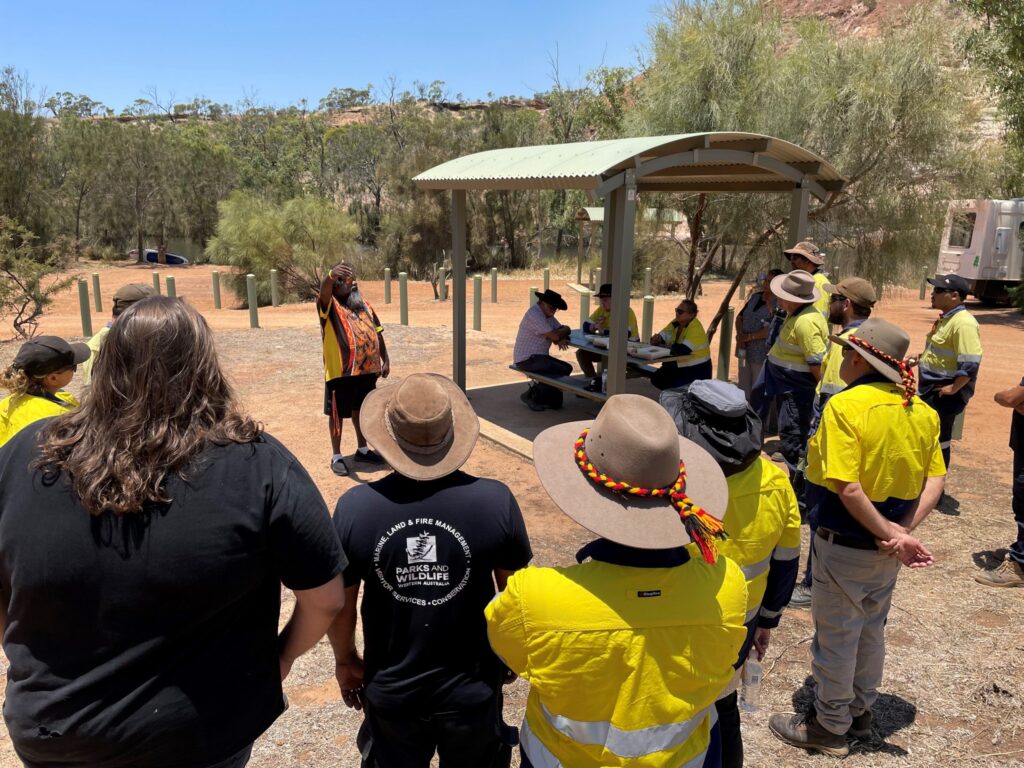
Funded by the Department of Prime Minister and Cabinet through the National Indigenous Australians Agency, the Mid West Aboriginal Ranger Program (MARP) is now in its fifth year. Founded in regional employment and training objectives, this project provides opportunities for Aboriginal people across the Mid West region to engage in natural resource management (NRM) activities.
The Midwest Aboriginal Ranger Program offers employment and training placements for rangers and ranger teams through three program delivery partners; Kwelena Mambakoort Aboriginal Corporation (KMAC), Western Mulga, and the WA Department of Biodiversity, Conservation and Attractions (DBCA). Our project partners remain committed to project delivery and are excited about the opportunities Aboriginal peoples may realise through the program’s extension to 2028. In consultation with partners and Traditional Owners, NACC NRM continues to provide conservation advice, coordination and administration services to the project.
Western Mulga has continued to employ over 20 Aboriginal Rangers and have maintained female employment opportunities through a thriving nursery and associated revegetation activities. The rangers have progressed work team responsibilities to demonstrate leadership and to respectfully share their cultural knowledge within the team when visiting their respective Country. KMAC’s rangers have undertaken work on Declared Flora and Threatened Species along with extensive revegetation works guided by Yued Elders. DBCA rangers have applied and increased their skills in fire management through regular participation in fire activities. They have also been critical to Moresby Range Conservation Park and Nambung National Park conservation activities.
Training has continued to be a strong focus for all ranger teams. Participants have continued to progress their Conservation and Ecosystem Management training, along with an extensive list of work-ready short courses.

This year, two successful regional meetings have expanded Traditional Owner engagement with these events also enabling cross-regional collaboration. In month the Goldfields Land and Sea Council rangers joined in for the first time. This interaction allows all parties to share and learn about different activities being implemented to look after Country.
Rangers have also participated in new university-delivered short courses to support progress beyond certificate-level courses. Seven Rangers participated in the University of Western Australia ‘Introductory Environmental Science Ecosystems and Biodiversity’.
DBCA and KMAC rangers have also implemented programs to identify and protect specific flora species and habitats. The Western Mulga rangers have undertaken expanded monitoring of threatened species and habitat management, with services now being delivered on Badimia Country with guidance from Traditional Owners and the support of the regional conservation partners.

This year the Sustainable Agriculture program has provided significant contribution to the NACC NRM goal, ‘To achieve measurable beneficial impact on: the region’s terrestrial, coastal and marine biodiversity; the sustainability of primary production activities and the natural systems that sustain them; in line with NARvis 2030 vision and goal statements.’ This has been achieved through targeted activities to increase landholder capacity to integrate on-farm biodiversity into land management practices. Over this period the team have contributed to the delivery of over 20 capacity building events, which align with the program goal to ‘Engage land managers to improve the uptake of improved land management and actively participate with and support regenerative and sustainable agricultural producers.’ In addition, this period has seen the successful completion of the Future Drought Fund – Beyond Reasonable Drought Project, aligning with the program goal that ‘Drought resilience and the rate of adaptation to climate change is improved across the NAR.’
NACC NRM’s Sustainable Agriculture Team has continued to work closely with land managers, community groups, and industry experts to address challenges facing the region’s agricultural sector. This year has seen the team’s effort firmly focused on the delivery and finalisation phase of current projects following last year’s focus on program growth. Consequently, the program has successfully delivered all expected project activities. Outcomes from completed activities to 30 June 2022 have resulted in 1,375ha of on-ground impact through improved soil health and on-farm biodiversity practices. Capacity-building events supported these on-farm practice changes through engagement with 13 groups, 205 farm businesses and over 1000 Land managers.

This year has seen the finalisation of two of the Sustainable Agriculture Program’s community driven projects, ‘Beyond Reasonable Drought’ and ‘Increasing Soil Vitality with Legume Solutions’. Both of these projects were developed and delivered following the strategic direction laid out in NARvis, aligning with and supporting the interest of local land managers and groups to address community needs.
The Sustainable Agriculture team delivered these projects in partnership with land managers, grower groups and industry representatives, improving land management practices over 881ha across 15 demonstration sites. To build the legacy of this project, NACC NRM and the participating grower groups engaged a total of 205 farm businesses and 720 individual land managers through capacity-building events and publications.

This year the Coastal and Marine program has delivered against the organisational goal ‘To increase community awareness of regional TEK, NACC NRM, and NARvis, and improve opportunities for the local community to contribute to NRM in the NAR’ as well as making significant progress aligned with the strategy of ‘Support landholders, community groups, and government to improve biodiversity in the NAR’. Through engagement across the community the team have commenced three new projects that support community group involvement across the region and contributes to the protection of marine biodiversity. With the commencement of the ‘Mitigating marine debris impacts on breeding seabirds at Houtman Abrolhos’ the Program Goal that ‘By the end of 2024 100 NAR Community members will have actively participated in beach clean-up and data collection events effectively reducing marine debris and widening their understanding of the impacts and sources of marine debris’ has been well actioned. More than 50 community members have been involved in this project to date.
It has been another action-packed year for this Program, not least being the departure of the eminently capable Tegan Knowles and the arrival of the equally competent Alanah Campbell.
Through engagement across the community, the team have commenced three new projects that support community group involvement across the region and contributes to the protection of marine biodiversity.
These have been through Coastwest with the project ‘Collaborating Coastcare in the Northern Agricultural Region’, WA State NRM Program: ‘Supporting coastal communities through small grants’ and ‘Mitigating marine debris impacts on breeding seabirds at Houtman Abrolhos’. The projects have combined to enable ongoing support for the annual Coastcarers Forum, as well as the Turquoise Coast Management Group (TCMG), and delivered strong engagement associated with activities.
In addition, the program team contributed to a successful tender bid for, and led delivery of, the ‘Chapman River Estuary Reserve Action Plan’ Project for the City of Greater Geraldton. This project, nearing completion, has seen further strong stakeholder engagement guiding development of this important plan. The team also continues to deliver on its Service Agreement with the City of Greater Geraldton to conduct boxthorn workshops and monthly beach photo-monitoring. Ongoing positive relationships with local government has been built by the team through the continued support and development of the TCMG.
The team continues to engage directly with the regions coastal communities. Notable activities include;