
But first, a bit on the ‘how’ and ‘why’ of this project’s inception. A year ago, NACC NRM was successful in obtaining funding from Keep Australia Beautiful Council’s Community Litter Grant! This grant was secured with the objective of building a database of numbers etched in fishing floats found washed up along the coastlines of the Northern Agricultural Region.
The primary aim of the project was to work out which fishery sector these floats were coming from, with the data collected to then be used by resource managers to address fishing gear loss in sectors that contribute to marine debris. Additionally, the project offered valuable insights into the percentage of marine debris that originates from the pot fishing sector (lobster and octopus) and drew a comparison between gear that has been lost or discarded recently, and gear lost or discarded a long time ago.
Now onto the results – drum roll please!
- Of the 152 fishing float numbers collected, 77% were from the commercial pot fishery, 14% were from the recreational pot fishery and the remaining could not be identified
- Of the 161 kg of marine debris collected, 62% came from the pot fishing sector (commercial and recreational combined)
- Of the 101 kg of pot fishing gear collected, 30% was considered recently lost and 70% lost long ago
Stay tuned for more statistics to come, as this data has many stories to tell.
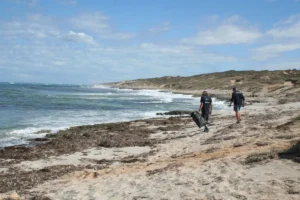
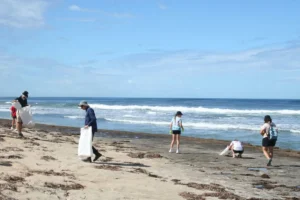
Some great snaps from our recent clean up with KABCWA and Midwest PEAC at Flat Rocks Beach, Greenough
So, what’s next? Well, this project has provided a definitive answer to which sector contributes most to marine debris on our beaches, as well as just how much it contributes. The Department of Primary Industries and Regional Development, as a stakeholder in the project, is keen to review the data in detail to find ways to reduce loss of commercial pot gear.
Also indicated is the large proportion of fishing gear that was lost long ago; continued beach clean-ups are the only way we will ever remove these items before they break up into microplastics, enter the food chain, and end up in the stomachs of many animals, humans included. This would seem of sufficient importance to justify a coordinated and properly resourced effort to remove all this legacy fishing gear.
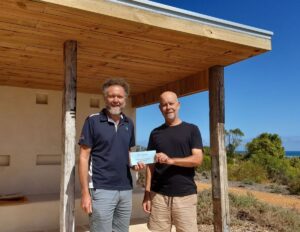
Whilst the initial project has wrapped up, NACC NRM will continue to maintain the float number database, so please keep those float numbers rolling in here. A huge thanks to all data contributors, in particular a big shout out to two of our outstanding stakeholder contributors to the database – Ashley Sutcliffe (DBCA) and Samantha Culbertson (KABC) – who both took the time to enter data from their large clean up events. The outstanding winner of the $100 prize for community contribution was clean-up stalwart David O’Meara with a whopping 19 float entries – a great effort as always.
Meanwhile, Biodiversity Program Coordinator Jarna Kendle led a team of seven in Chapman Valley. Among them was a familiar face – former NACC NRM Coastal team member Tegan, who brought along her son and father to take part in the count! Whether young or old, seasoned birdwatcher or first-time counter, everyone played a valuable role.
To learn more about NACC NRM’s biodiversity projects or to get involved in future citizen science events, click here or follow us on social media by clicking the icons below.
This project is jointly funded by the Australian Government Natural Heritage Trust and NACC NRM, a member of the Commonwealth Regional Delivery Partners panel, Mitsui E&P, Beach Energy and Birdlife WA.