There was fun to be had for all ages last week as NACC NRM’s Coastal and Marine team joined forces with Birdlife Midwest to host an educational experience with Walkaway Primary School students at the Greenough River!
Through the collaborative efforts of Coastcare Support Officer Dr Mic Payne, Coastal and Marine Project Officer Josh Burney and Mike Clarke from Birdlife Midwest, the Year 3, 4 and 5 students enjoyed a day of learning about river ecosystems and scientific methodology to accompany their studies of Greenough River this term.
Under welcome clear skies following a rainy few days, the day kicked off with an exhilarating sighting of an osprey flying by sporting a large fish for breakfast! The students first embarked on a stroll along the beach to where the river opens up and meets the sea. Recent winter rains had contributed to a significant erosion scarp along the southern bank, providing a dramatic display of aptly timed masses of falling sand.
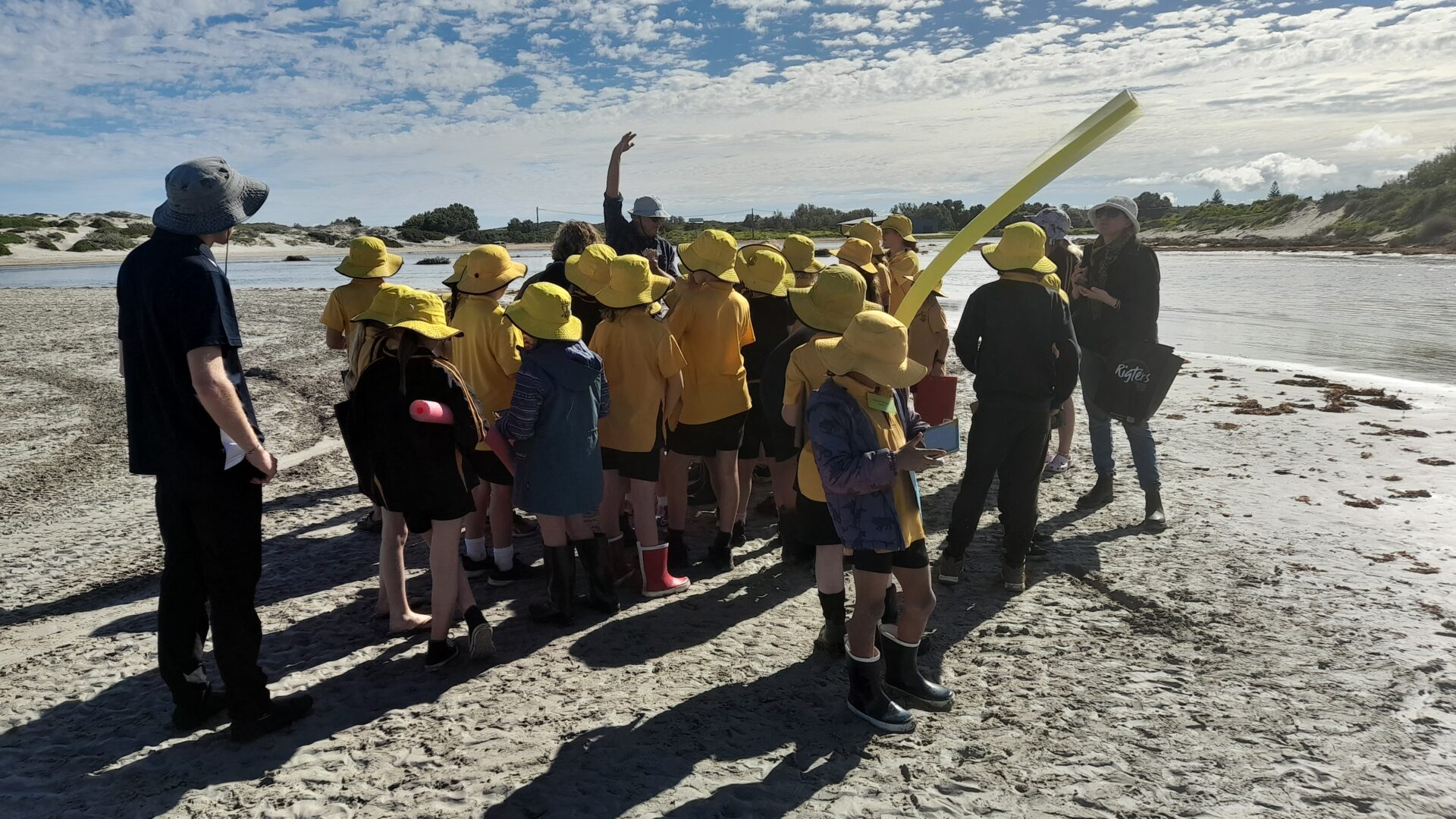
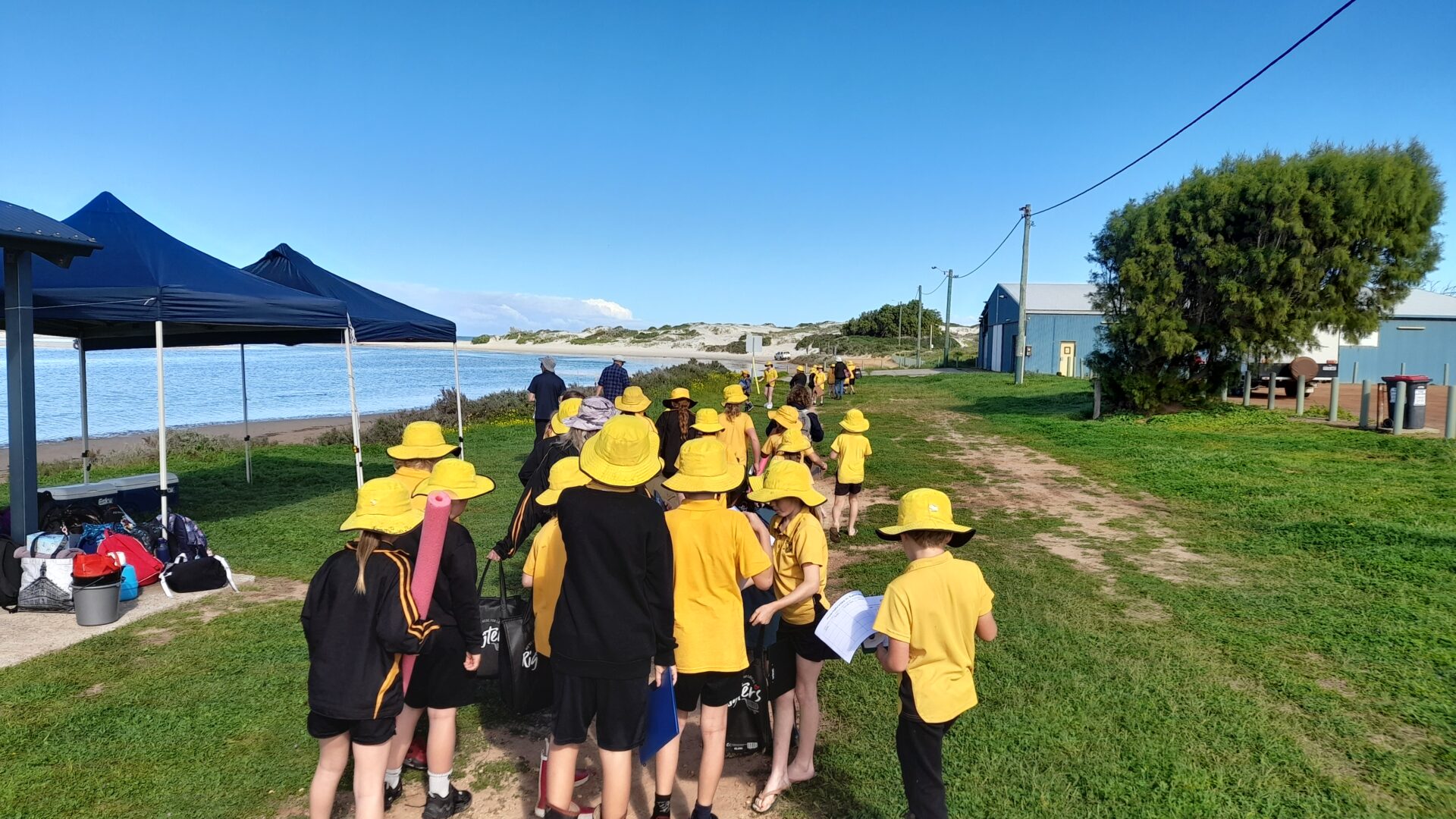
Following this initial exploration, Dr. Payne delivered an insightful demonstration on the role of sea wrack in coastal ecosystems, with the discovery of kelp fly larvae (commonly known as maggots) generating fascination among the students. Through hands-on activities designed to deepen their understanding of the environment, the students delighted in finding sponges, shells, cuttlefish bones, and seaweed amidst the sea wrack, all while diligently collecting any litter encountered along the way.
After a recess, it was onto a series of interactive rotations:
- Mike guided the students along the river to examine the estuarine vegetation and introduced them to local and migratory bird species.
- Mic had the kids’ attention hook, line and sinker – or, rather, net, with aquatic macroinvertebrate sampling. Using nets, students discovered various beetles, crustaceans, insect larvae, and even some vertebrate fish, adding to the excitement of the day.
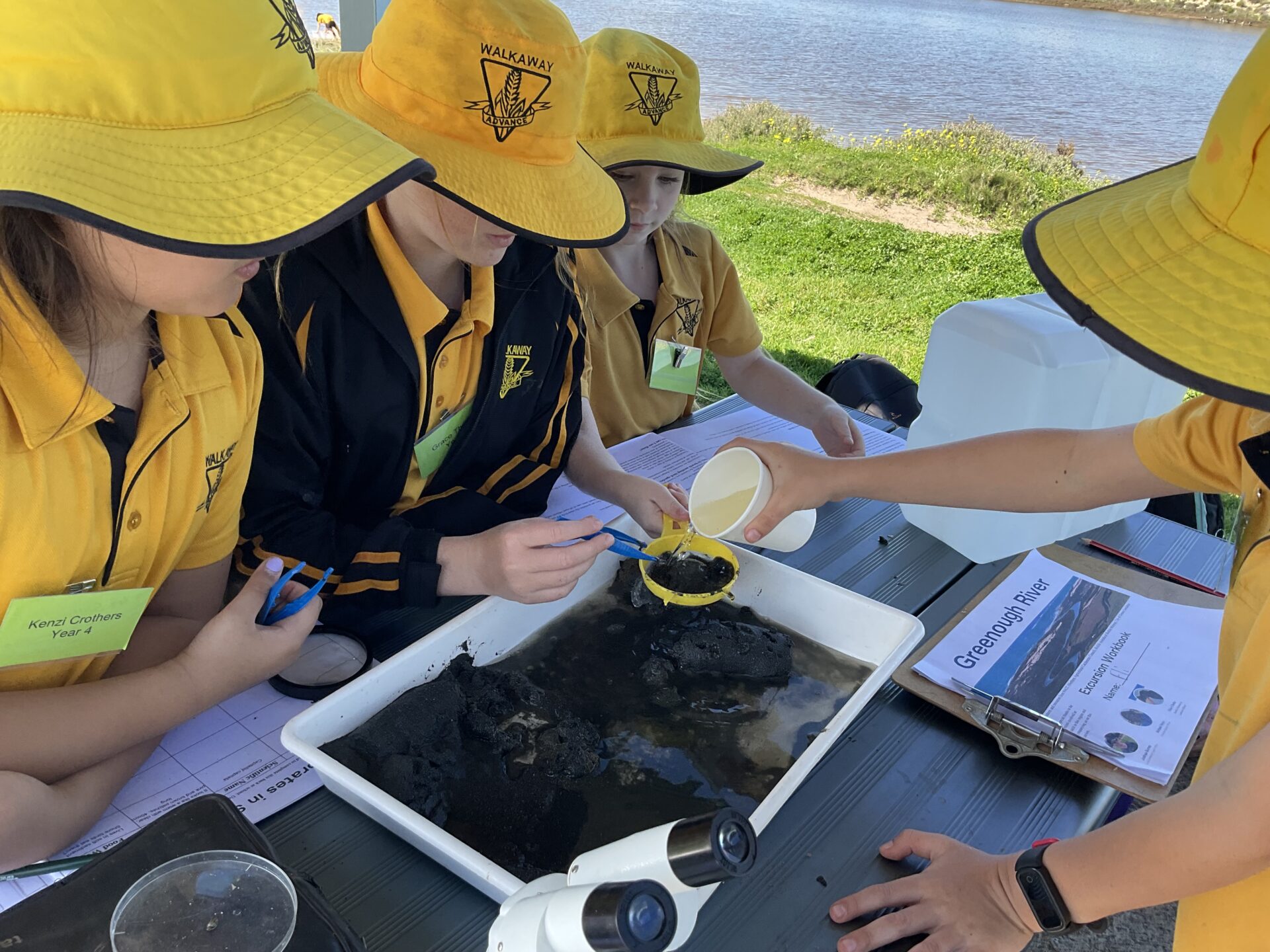
- Josh focused on uncovering benthic macroinvertebrates residing within the sediment. Using PVC pipe cores and sieves, students identified snails and studied them under a microscope.
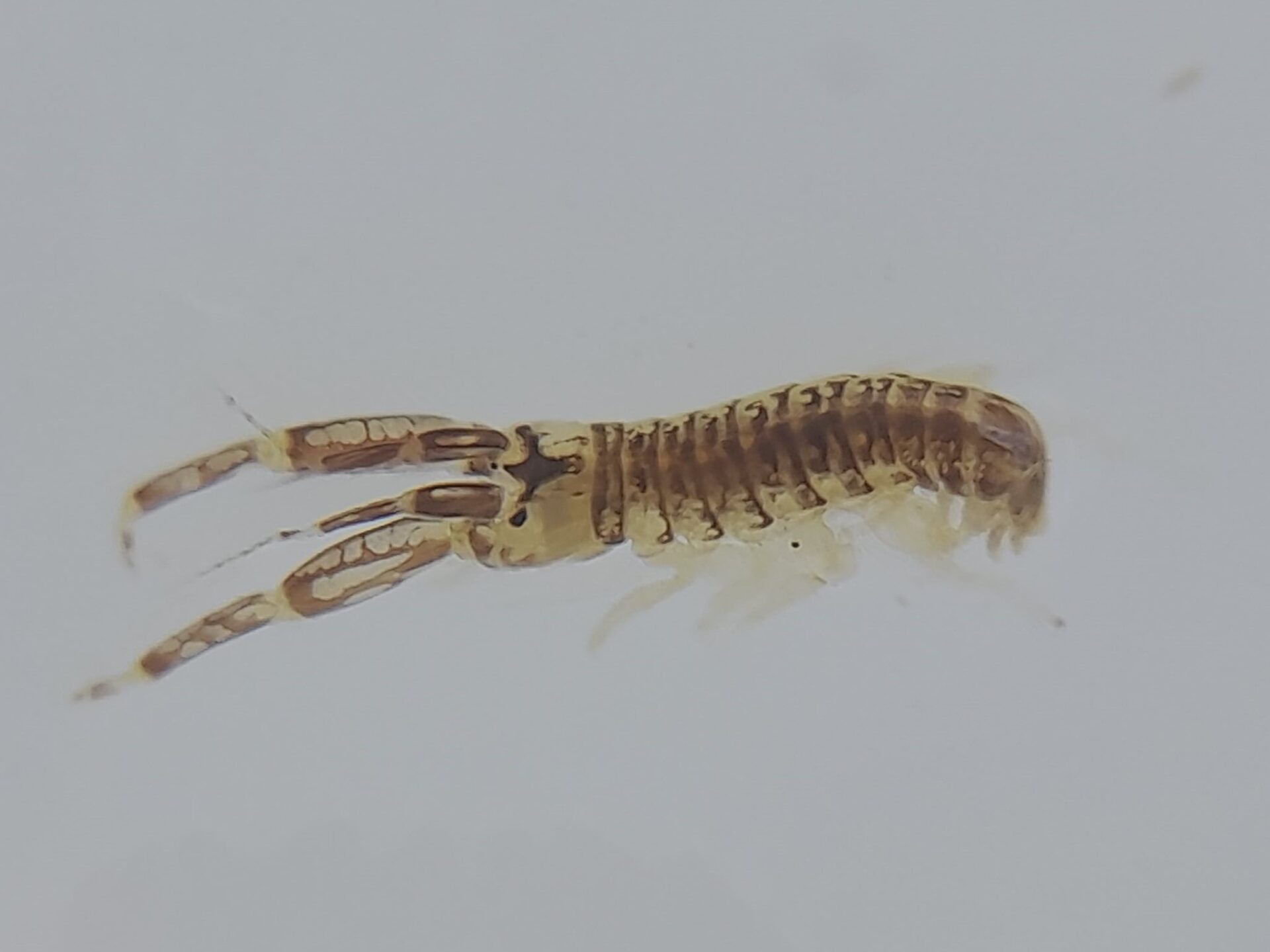
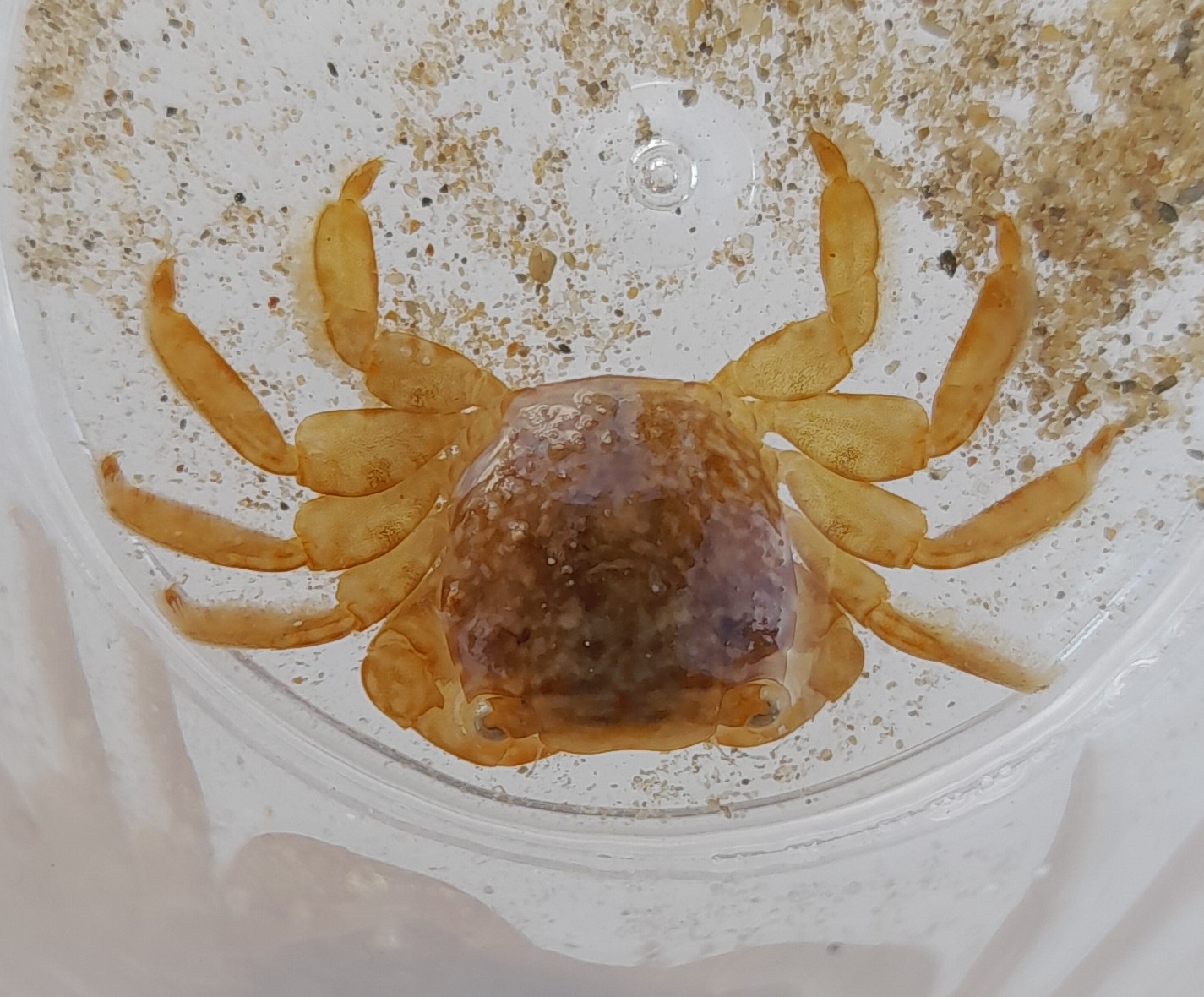
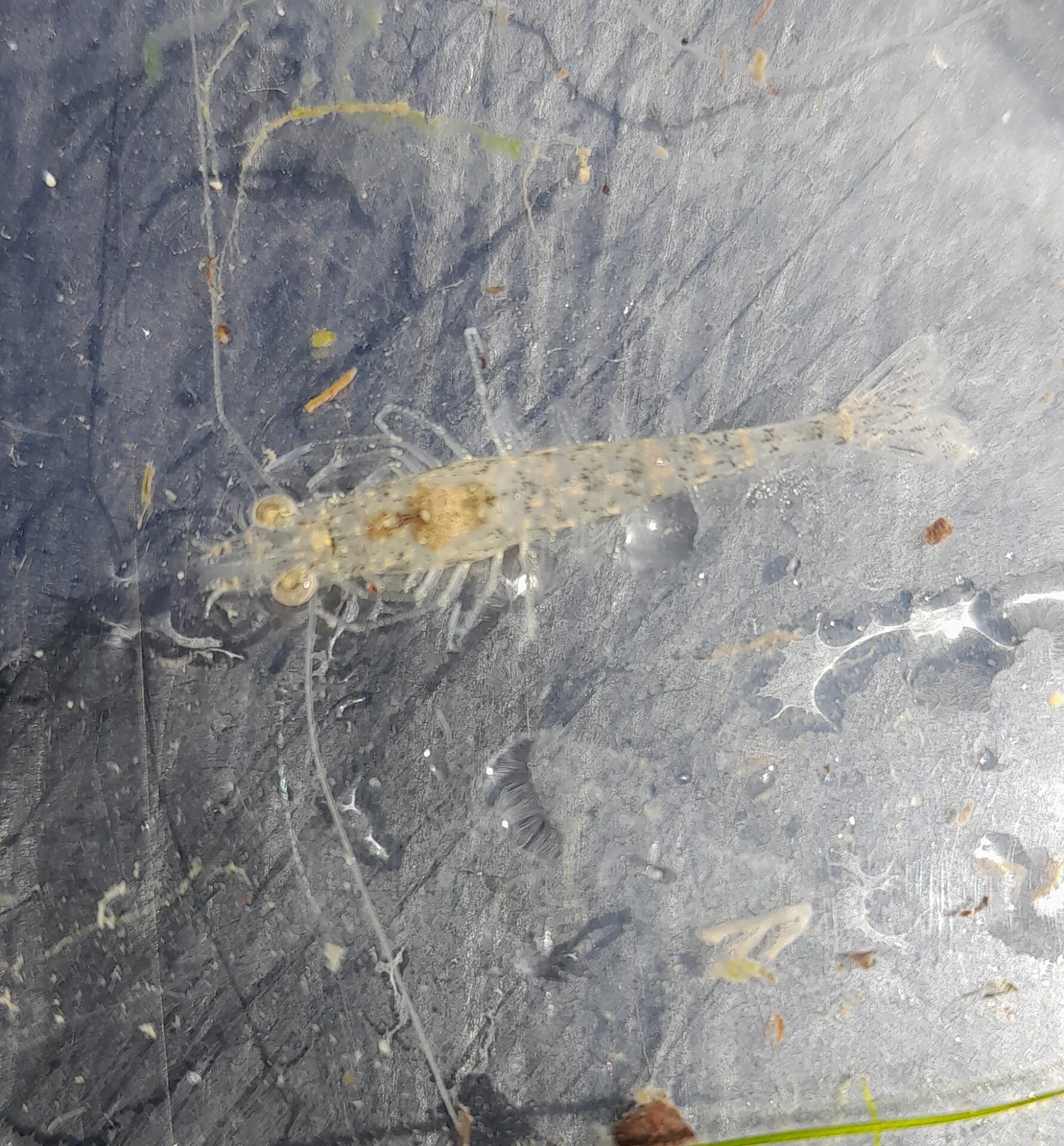
Macroinvertebrates under the microscope.
This immersive experience not only allowed the students to engage with the natural environment but also introduced them to some of the practical, hands on aspects of environmental science. There many a curious questions from the kids who had learned about recording their observations through notes, drawings, and photographs.
Additionally, the day served as an educational opportunity to raise awareness of the Threatened Ecological Community (TEC) of subtropical and temperate coastal saltmarshes found along the Greenough River. It was great for the kids to be able to observe the all-important tidal connection in action, a requirement for the saltmarsh to meet TEC criteria, as defined by the EPBC Act. Learning hands on was a valuable way to delve into the vital functions of coastal saltmarshes; providing food for birds, protection from erosion, water filtration, carbon storage, and of course habitat for a range of macroinvertebrates!
The day was a huge success and served as a reminder of the importance of hands-on learning experiences in engaging young minds and instilling an appreciation for our natural resources. NACC NRM’s Coastal and Marine Team extends a big thank you to the teachers and helpers from Walkaway Primary School for their support in fostering the next generation of environmental scientists!
To find out more about NACC NRM’s project ‘Improving Subtropical & Temperate Coastal Saltmarsh’, please contact our Coastal & Marine team.
This project is jointly funded by the Australian Government Natural Heritage Trust and NACC NRM, a member of the Commonwealth Regional Delivery Partners panel.