
Australia is responding to its first detection of the H5N1 avian influenza subtype (clade 2.3.4.4b) in an animal, following the discovery of the virus in a wild bird on Western Australia’s southern coast.
While this strain has caused significant impacts to wildlife and poultry populations overseas, authorities have emphasised that the current risk to people in Australia remains low.
Response efforts are underway across government agencies, with the Western Australian Department of Primary Industries and Regional Development leading on-ground activities including surveillance, monitoring and community engagement. National coordination is being supported by the Australian Government to help track and manage the situation.
What is bird flu?
Bird flu, also known as avian influenza, is a viral disease that primarily affects birds but can occasionally infect other animals. There are different types of avian influenza viruses, ranging from low pathogenic strains, which often cause mild illness, through to highly pathogenic strains that can lead to severe disease and high mortality.
The recently detected H5N1 strain is considered highly pathogenic and has been responsible for widespread outbreaks internationally among poultry, wild birds and some mammal species.
What does this mean for people?
Current health advice indicates the risk to the Australian public remains low.
Human infection with bird flu is uncommon and generally occurs through close or repeated contact with infected birds, contaminated environments, or exposure to virus particles in the air. There is currently no evidence that this H5 strain spreads easily between people.
Importantly, bird flu is not considered a food safety risk when poultry products such as chicken and eggs are handled appropriately and cooked thoroughly.
Protecting wildlife, livestock and pets
Because avian influenza can spread through feathers, droppings, body fluids, contaminated equipment and even mud on footwear or vehicles, biosecurity plays an important role in limiting transmission.
Simple actions can help reduce the risk of spread:
- Avoid touching sick, injured or dead birds and animals.
- Keep pets away from wildlife and prevent scavenging.
- Clean footwear, clothing and equipment after visiting natural areas, reserves or farms.
- Wash hands thoroughly after handling animals, eggs or raw meat.
- Report unusual wildlife deaths or illness.
Bird owners and poultry producers are encouraged to remain particularly vigilant by reducing contact between domestic and wild birds, maintaining clean enclosures and monitoring flocks for signs of illness.
Signs to look out for
Bird flu can affect different species in different ways, but warning signs may include:
In wild birds:
- Difficulty standing, walking or flying
- Respiratory symptoms
- Unusual posture or behaviour
- Sudden deaths, especially in groups
In poultry:
- Reduced egg production
- Lethargy or loss of appetite
- Swelling or discolouration
- Respiratory illness or unexpected deaths
In mammals:
- Weakness or unusual behaviour
- Breathing difficulties
- Neurological symptoms such as tremors or seizures
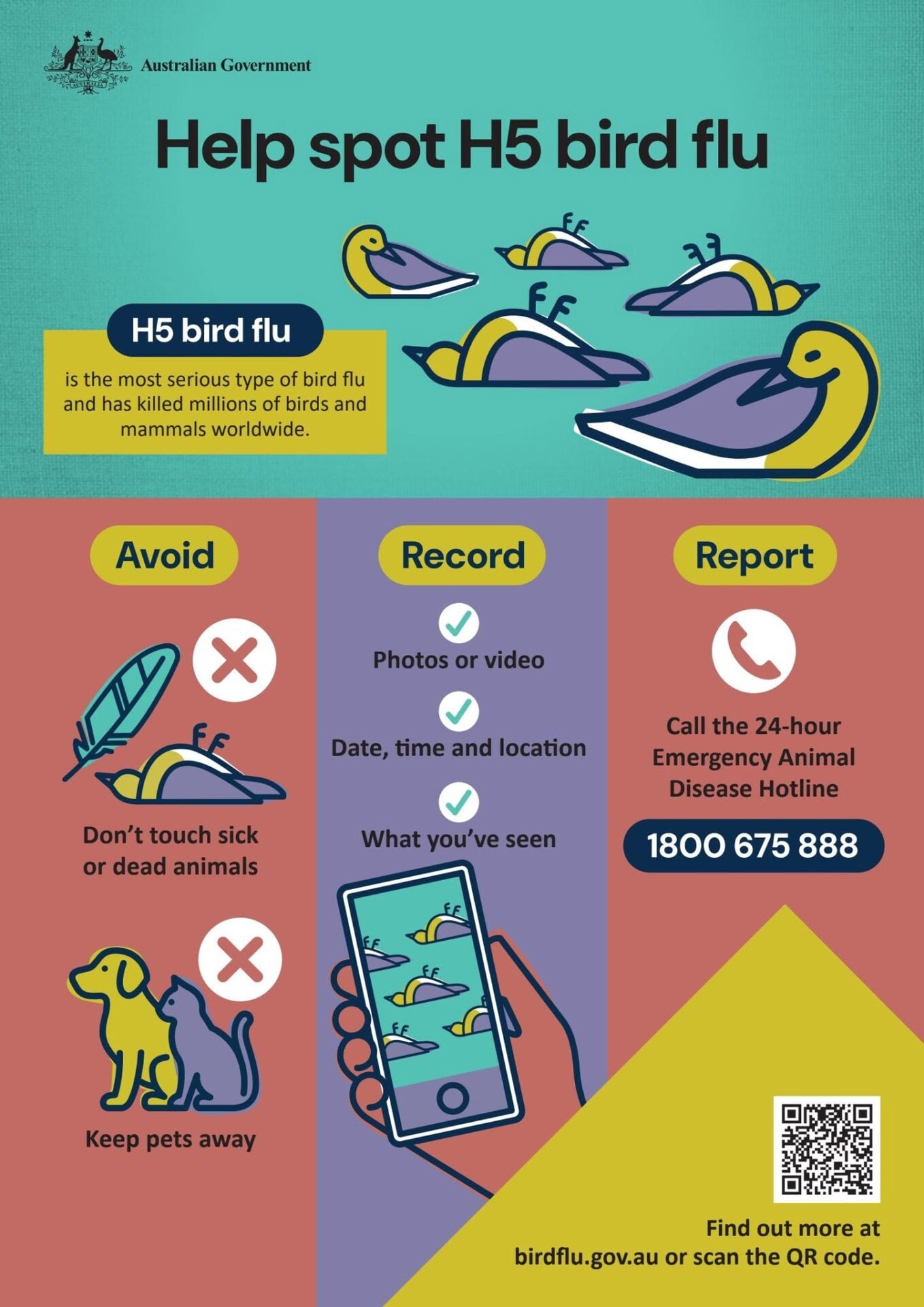
If you see sick or dead wildlife
Do not approach, handle or move affected animals.
Instead:
- Move away from the area.
- Record the location and, if safe, take photos.
- Report observations to the Emergency Animal Disease Hotline: 1800 675 888.
Australia has successfully managed and eradicated previous avian influenza outbreaks, and authorities continue to monitor this detection closely. Community awareness and good hygiene and biosecurity practices remain important tools in protecting wildlife, livestock and public health.
As information continues to develop, we encourage everyone to seek updates from trusted sources. For the latest advice, visit:
NACC NRM is a member of the Commonwealth Regional Delivery Partnership panel and has promoted this information with funding by the Australian Government Natural Heritage Trust.