
NACC NRM is committed to a continued journey of understanding what best practice looks like when working with First Nations communities and recently engaged Indigenous law firm Terri Janke and Company to deliver an informative workshop on the True Tracks Framework.
The session was delivered to NACC NRM staff and Board of Directors, providing an overview of the framework and how it could be utilised across different areas of the organisation. Preliminary discussions recognised that this work can be complex and requires genuine relationship building to be done well, which takes time.
Across the board, a key takeaway was the significance of understanding Free, Prior and Informed Consent, recognising that this is a focal part of the process and is critical to how NACC NRM operates across the First Nations community. The team also learned about the best approaches to, and importance of, rectifying any missteps or oversights.
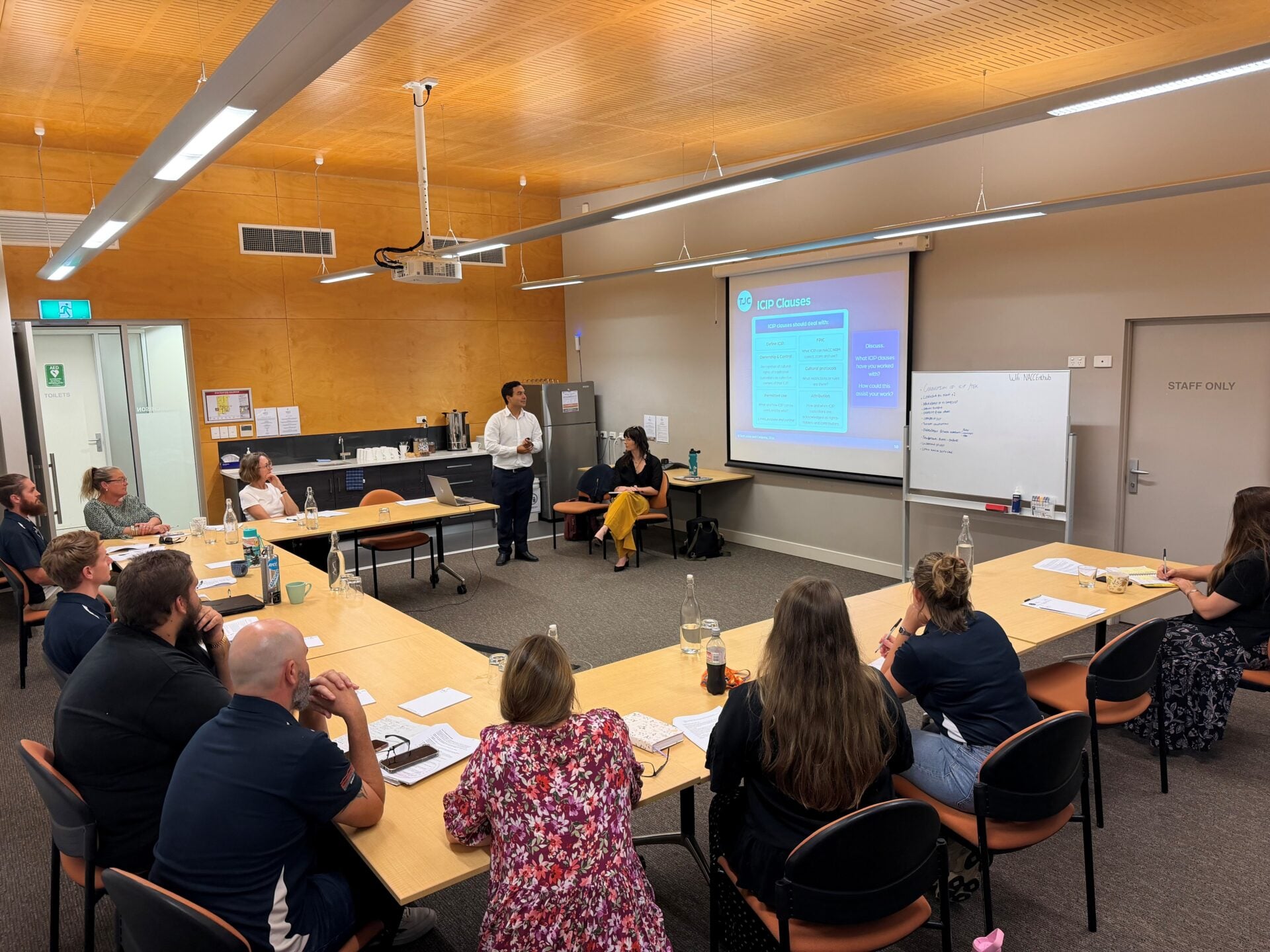
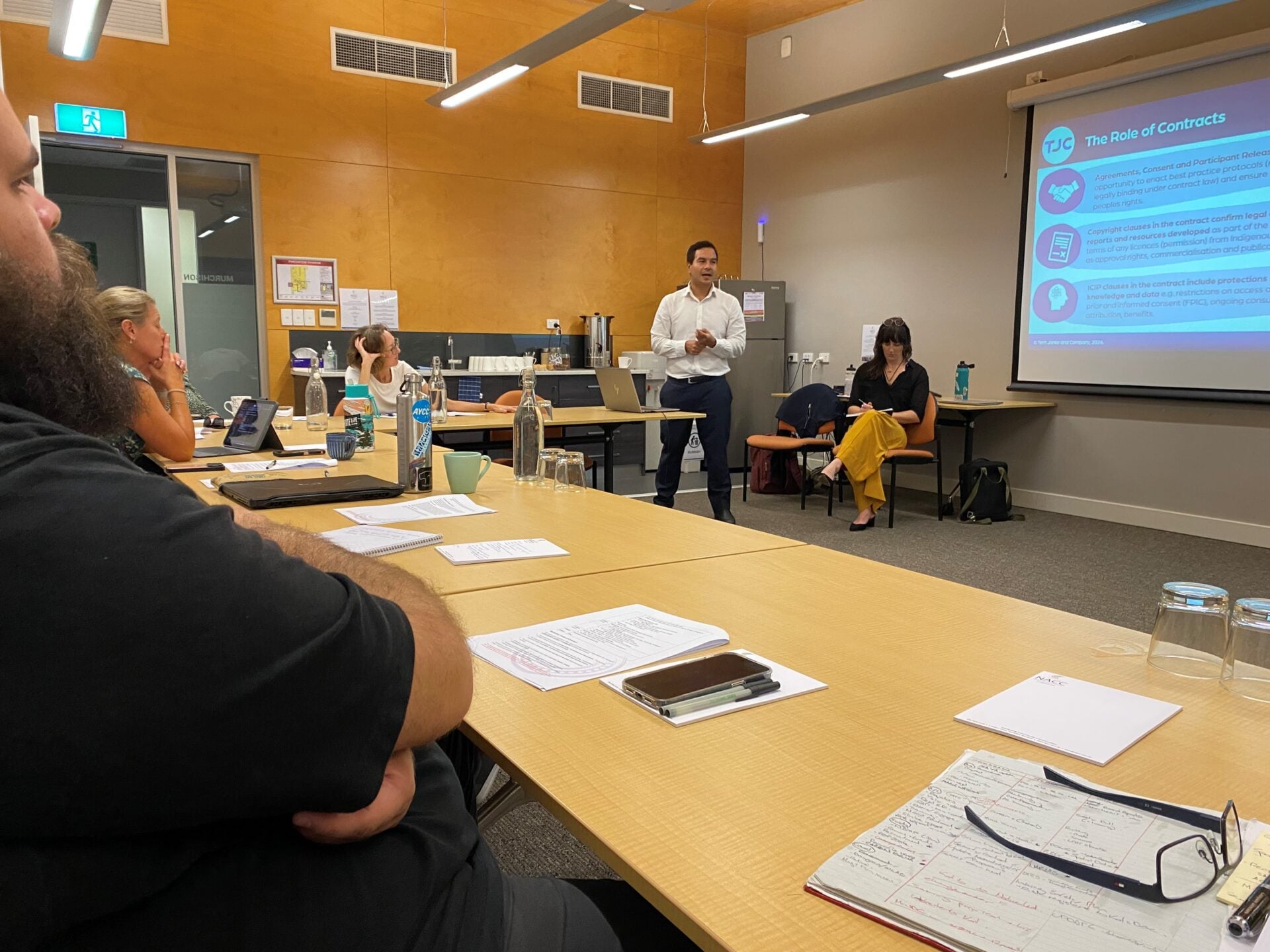
Tyson McEwan, Solicitor of Terri Janke and Company co-facilitated the session.
“I previously felt daunted by not just the time factor – which many jobs, employers and funders appear not to factor in – but how to remember and make space for everything that needs to be considered,” said Sustainable Agriculture Project Officer Yvette Hollings.
“I had only the most basic understanding of all the elements that would need to be considered when it comes to working with Indigenous cultural and intellectual property (ICIP), so this represented a big learning curve for me,” said Yvette.
For First Nations staff, this experience highlighted a viewpoint that has enriched collaboration and understanding across the team. Presenting and dissecting the different processes and tools that can support the organisation has helped strengthen the way NACC NRM team members work together.
Aboriginal Custodianship Project Officer Taj Mamid said he found the ICIP training to be very interesting from his perspective as an Aboriginal person.
“A lot of what we learned in the training, I already had prior knowledge of. I never really thought of it as ICIP, but more as cultural knowledge that may or may not be appropriate to share with non-Indigenous people,” said Taj.
Across all areas of the organisation, the training was extremely valuable in guiding engagement with First Nations peoples, businesses and communities. In looking at strategies to protect ICIP and exploring the contrasting concepts of copyright and intellectual property, Terri Janke and Company has supported NACC NRM staff and Directors to approach their work with a deeper understanding of cultural sensitivities.
With these learnings, NACC NRM continues to evolve and take steps to ensure Indigenous cultural and intellectual property is appropriately recognised, valued and protected.
NACC NRM is a member of the Commonwealth Regional Delivery Partnership panel and has promoted this initiative with funding by the Australian Government Natural Heritage Trust.