
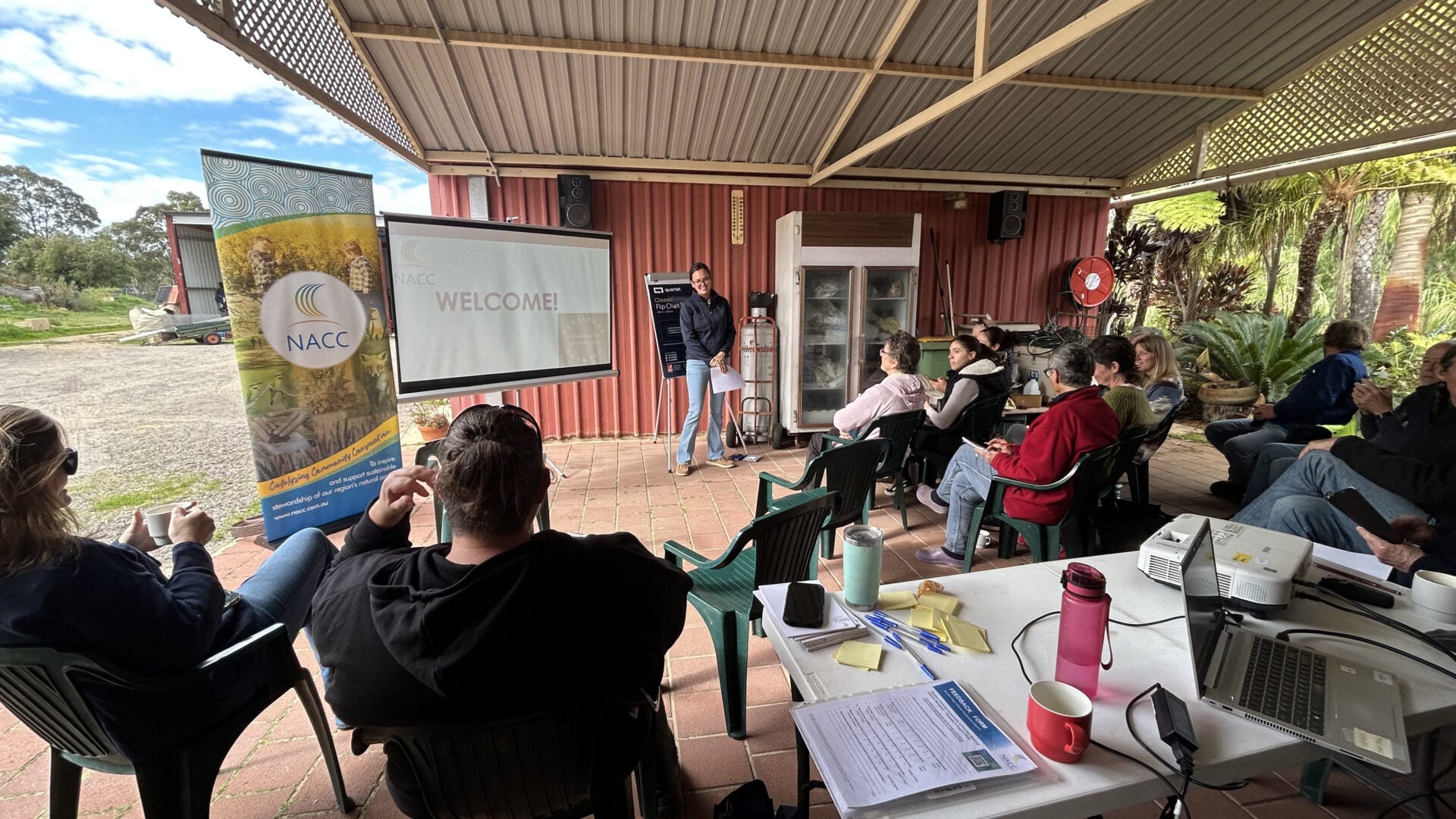
On the morning of 6 August, the Resilient Farming Community of Practice was welcomed to Robyn Todd’s property, Araluen Mangoes. The beautiful winter weather provided the perfect conditions for a field walk and a day of learning, discussion and connection.
The morning began with informal conversations over morning tea, provided by Tressina from Caladenia Mini Golf Park and Café. Following introductions, it became clear that most attendees were small landholders from the surrounding area who shared a strong interest in adopting more sustainable and resilient farming practices. Many were involved in horticulture, with some also managing livestock.
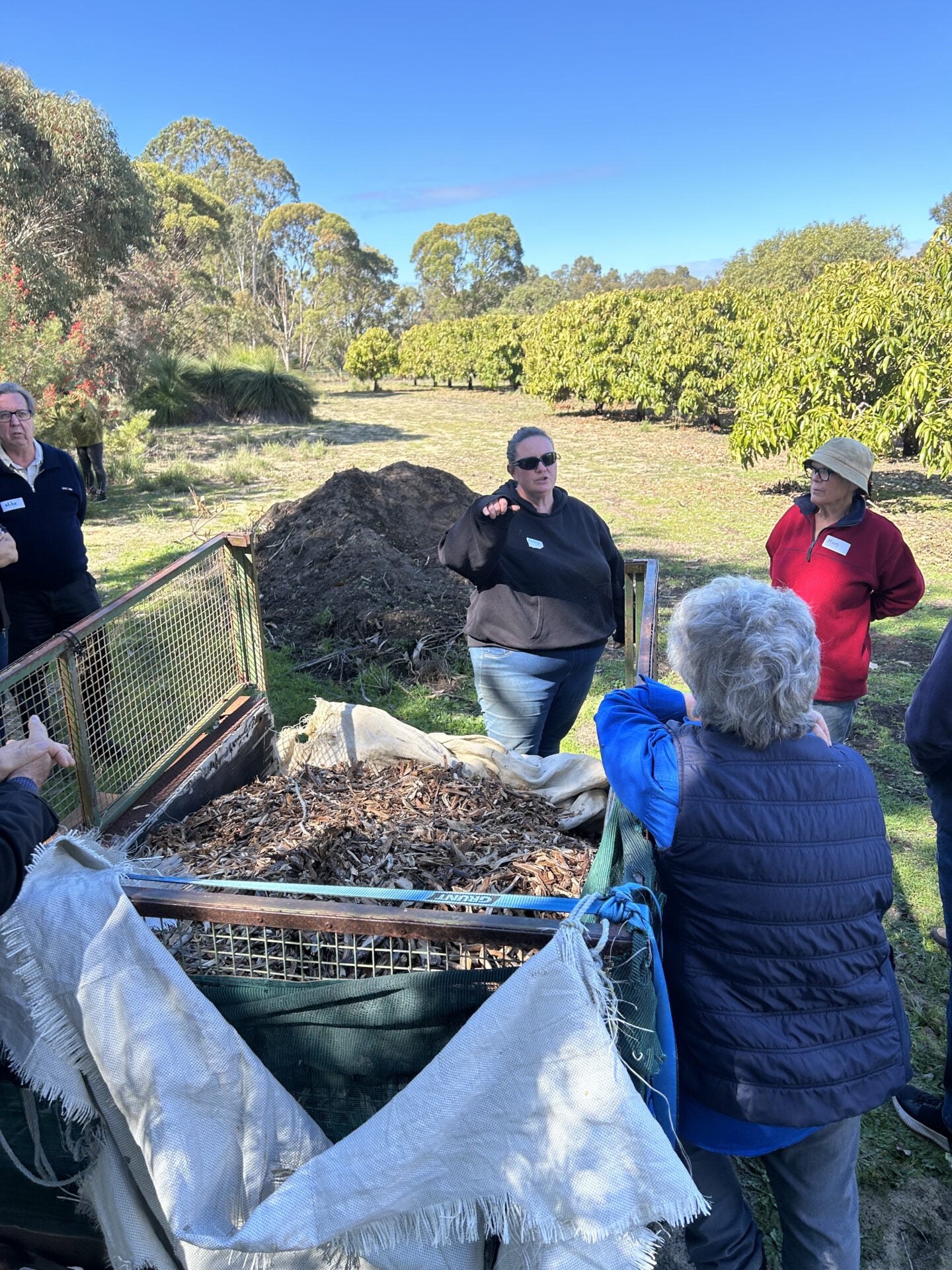
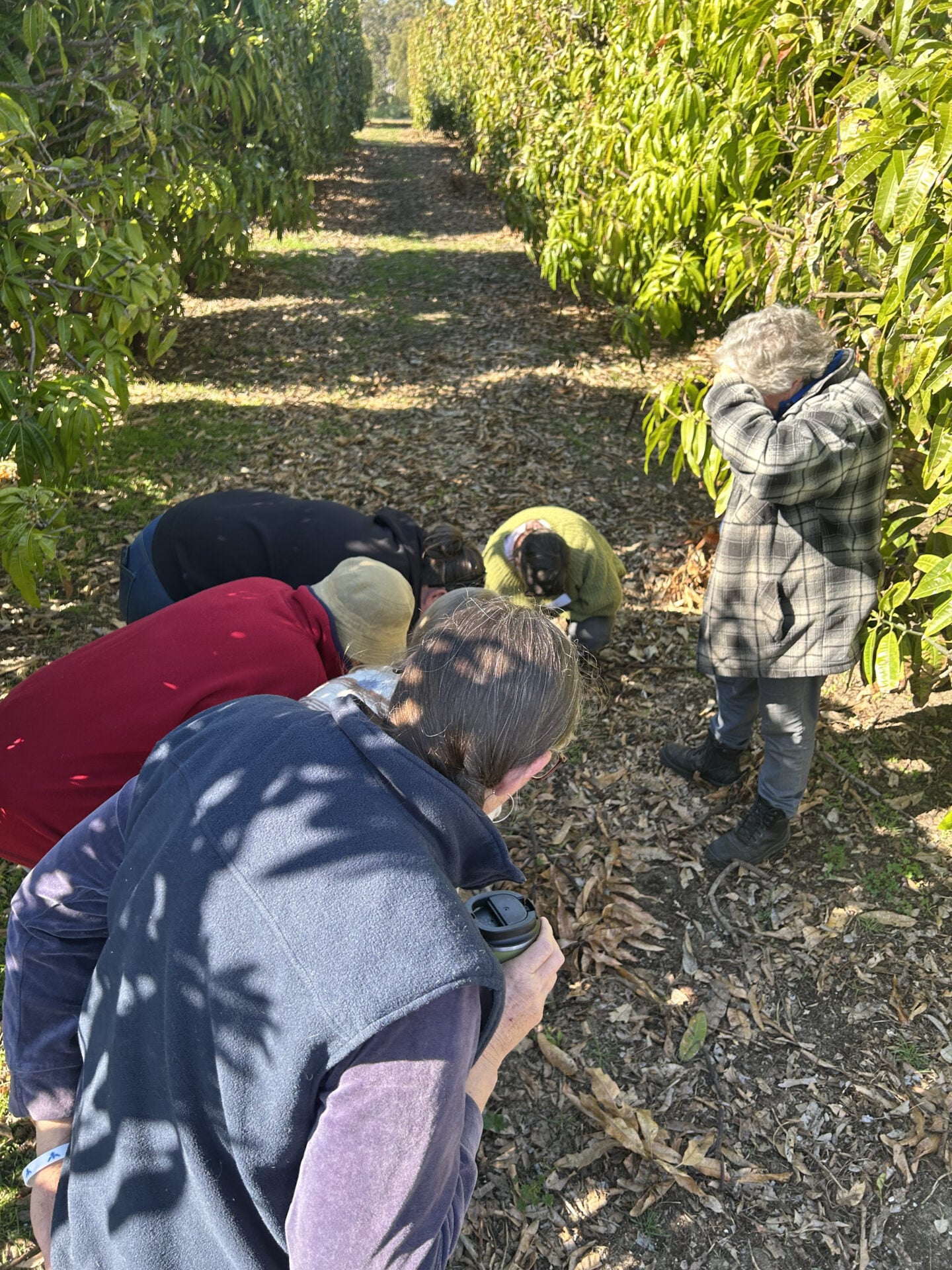
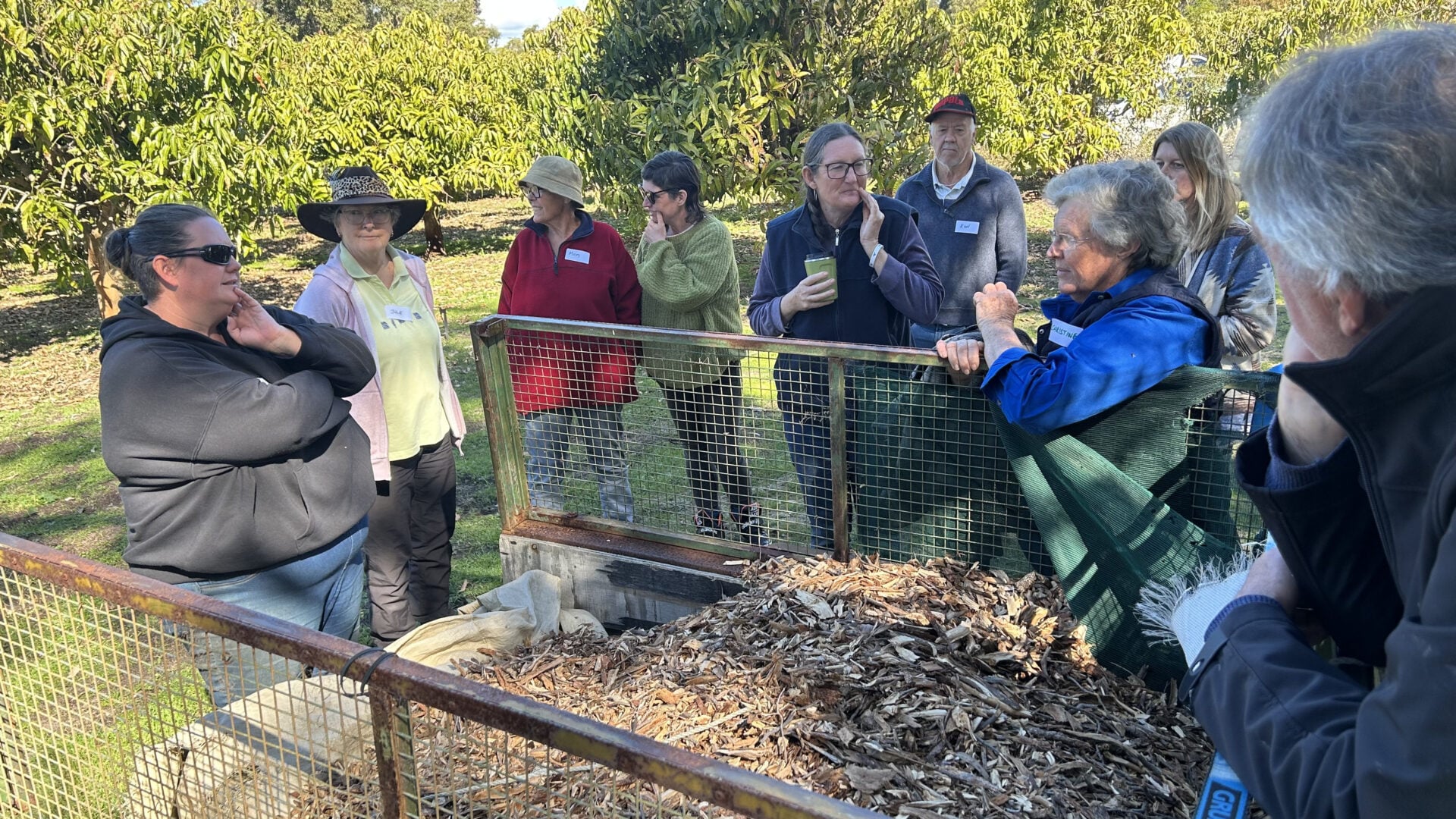
A Tour of Araluen Mangoes
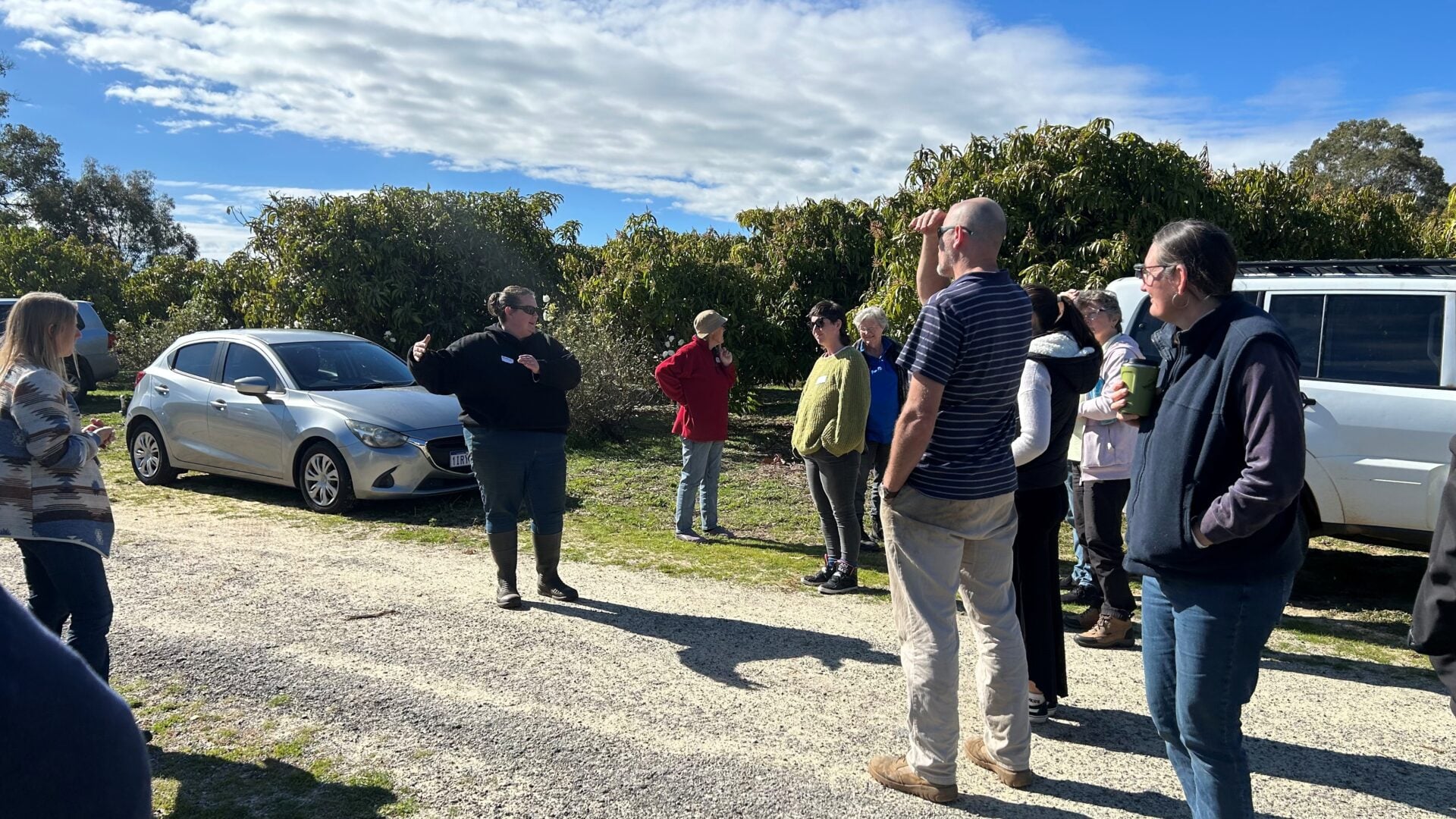
Robyn opened the day by sharing her experiences since moving to the property just one year ago. She discussed some of the practices she had trialled, what she had learned and the improvements she was continuing to explore.
During a short tour of the property, attendees viewed the cover crops Robyn is establishing between rows of mango trees and her composting system. The walk prompted plenty of discussion, with Community of Practice members sharing their own experiences, offering suggestions and discussing ideas Robyn could consider in the future.
Building Resilient Local Food Systems Through Seed Saving
Laura Blishen from Thrive Sustainability then spoke about the importance of seed saving and how to get started. As a small landholder in the Wanerie area, Laura is passionate about establishing local seed libraries that allow communities to preserve, share and grow locally adapted produce.
Laura encouraged attendees to save seeds and grow their own produce, highlighting how these simple actions can contribute to a more sustainable and resilient local food system.
The group then broke for lunch, also catered by Caladenia Mini Golf Park and Café. Conversations continued throughout the break, with attendees discussing the challenges they were experiencing on their own properties and exchanging ideas about potential solutions.
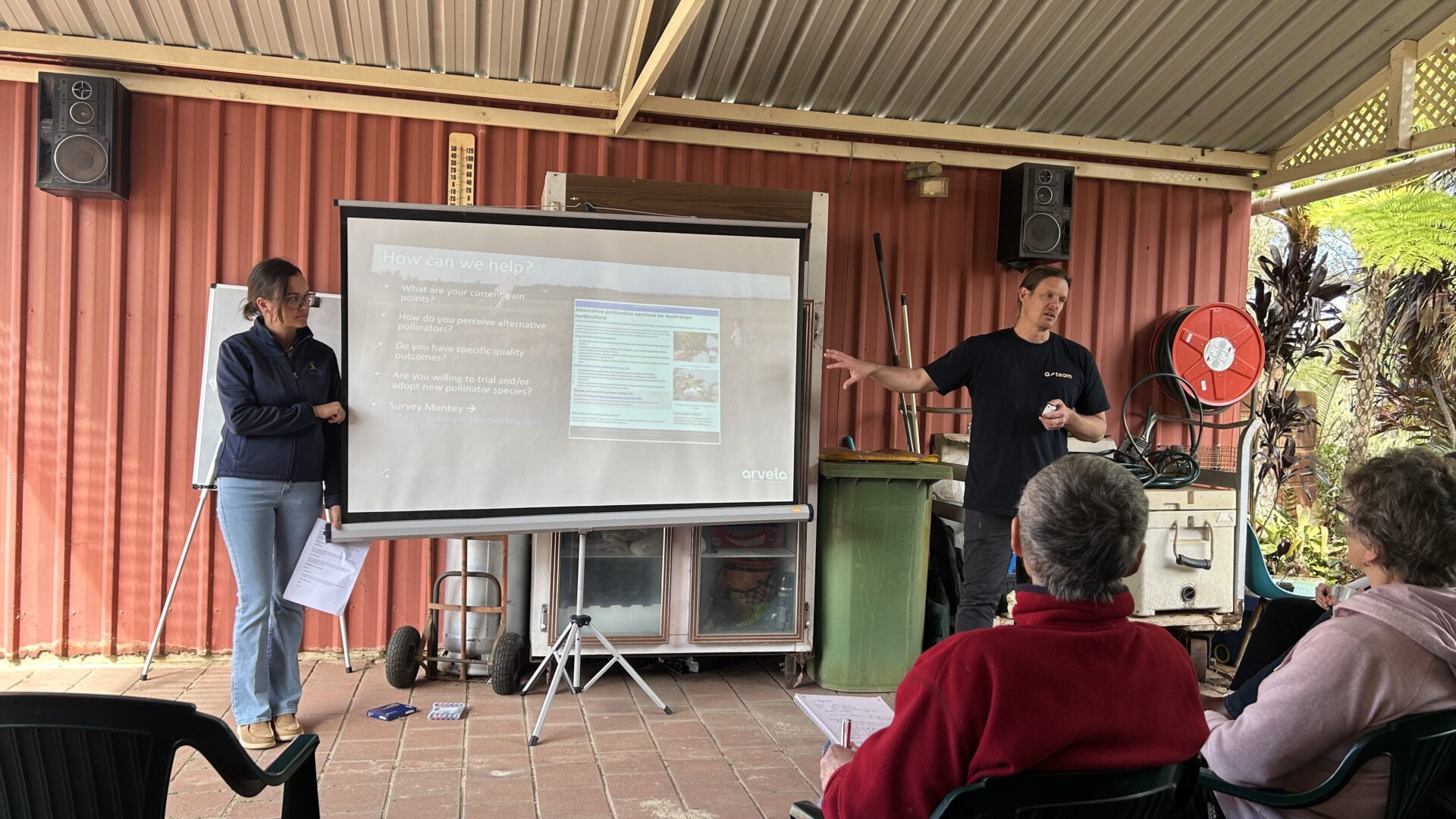
Exploring Alternative Pollinators
After lunch, the group heard from Luke Wheat, founder of Arvela. Luke spoke about his research into alternative pollinators and how insects other than European honey bees may be used to support pollination, including hover flies.
He explained that alternative pollinators can be valuable across a range of farming and horticultural systems, but their suitability must be assessed on a case-by-case basis. Different pollinators have particular requirements and limitations that influence where, when and how they can be used effectively.
The topic generated considerable interest and many questions from attendees, particularly because of its relevance to the horticultural landholders in the group.
Arvela is currently seeking grower feedback to shape commercial trials, service design and early adoption pathways. https://www.surveymonkey.com/r/XVTJP89
Sharing Practical Ideas
The Community of Practice then divided into small groups to explore three topics identified before the event:
- Implementing landscape rehydration and restoring natural water movement
- Preparing properties for drought and extreme heat conditions
- Using weeds as a resource, including making weed teas and fertilisers
Each group discussed practical approaches, shared personal experiences and developed ideas for addressing these challenges. Everyone then came back together to present their key points.
The day concluded with an opportunity for attendees to network, exchange contact details and continue sharing ideas. Tamagen from Perth NRM also provided information about upcoming events in nearby areas.
The meet-up highlighted the value of bringing landholders together to learn from specialists and, more importantly, from one another. The enthusiasm, practical knowledge and willingness to share experiences created a productive and engaging day for everyone involved.
If you’re interested in joining the Resilient Farming Community of Practice and attending a future event, please get in touch with NACC NRM’s Sustainable Agriculture team.
NACC NRM’s Future Farm Foundations project is supported by the Australian Government through funding from the Natural Heritage Trust under the Climate-Smart Agriculture Program.