
At the end of June, NACC NRM teamed up with Geraldton Grammar School for a day of hands-on learning at Chapman River with their Year 5 and 6 students.
The day’s activities were centred around the unique adaptations that plants and animals have developed to survive in and around the Chapman River estuary and river mouth. With 90 students in attendance and a jam-packed schedule, it was a collaborative effort!
Our Biodiversity staff were joined by Chapman River Friends and Birdlife Midwest to lead a bush walk along the freshwater section of the river. As students explored the area, they discovered how local plants and animals have evolved to cope with the challenges of a freshwater environment, from specialised root systems to unique behaviours that help native species thrive. Birdlife Midwest volunteers also guided students in spotting and finding local bird species, explaining how features such as beak shape and plumage support their survival.
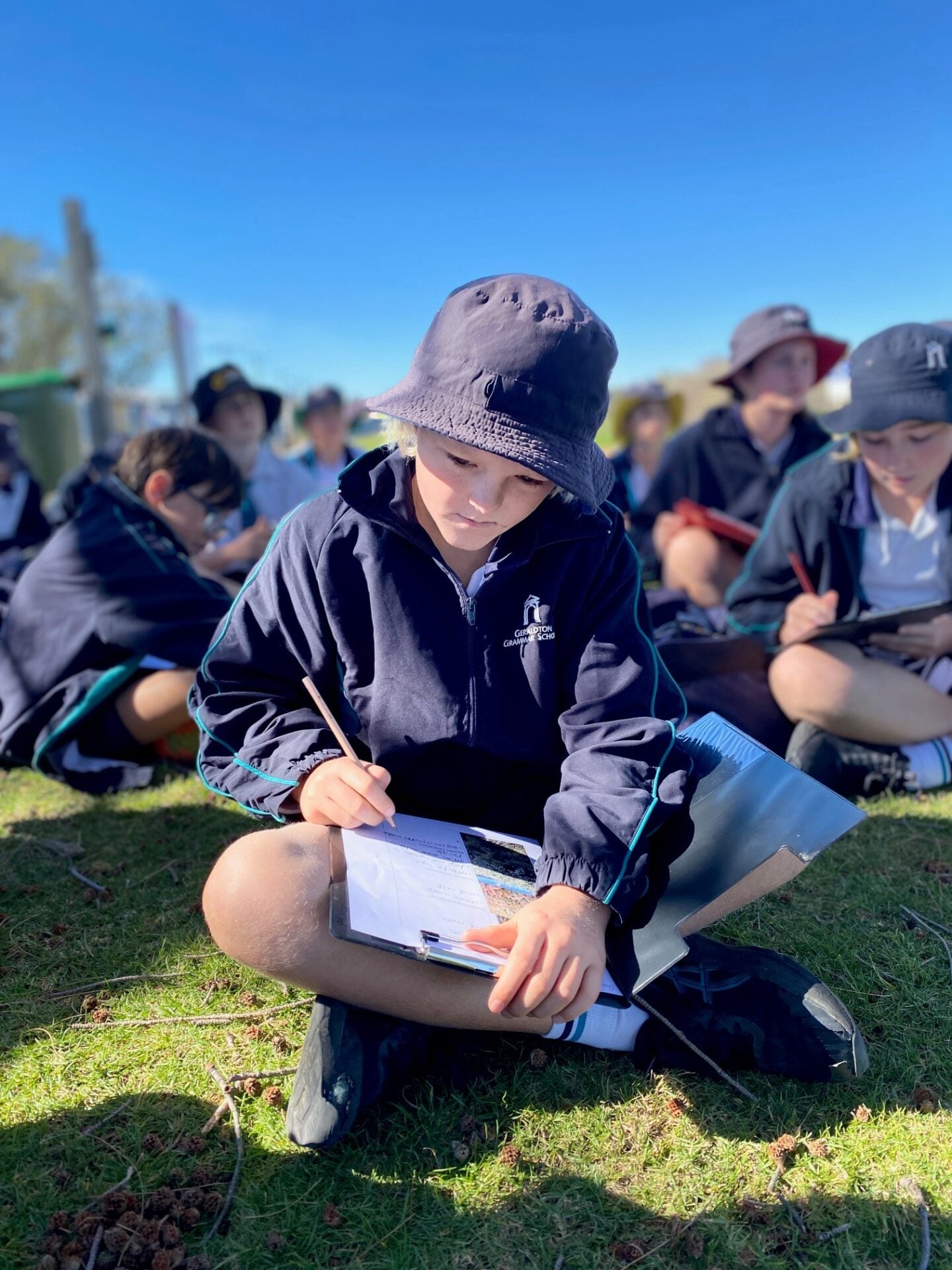
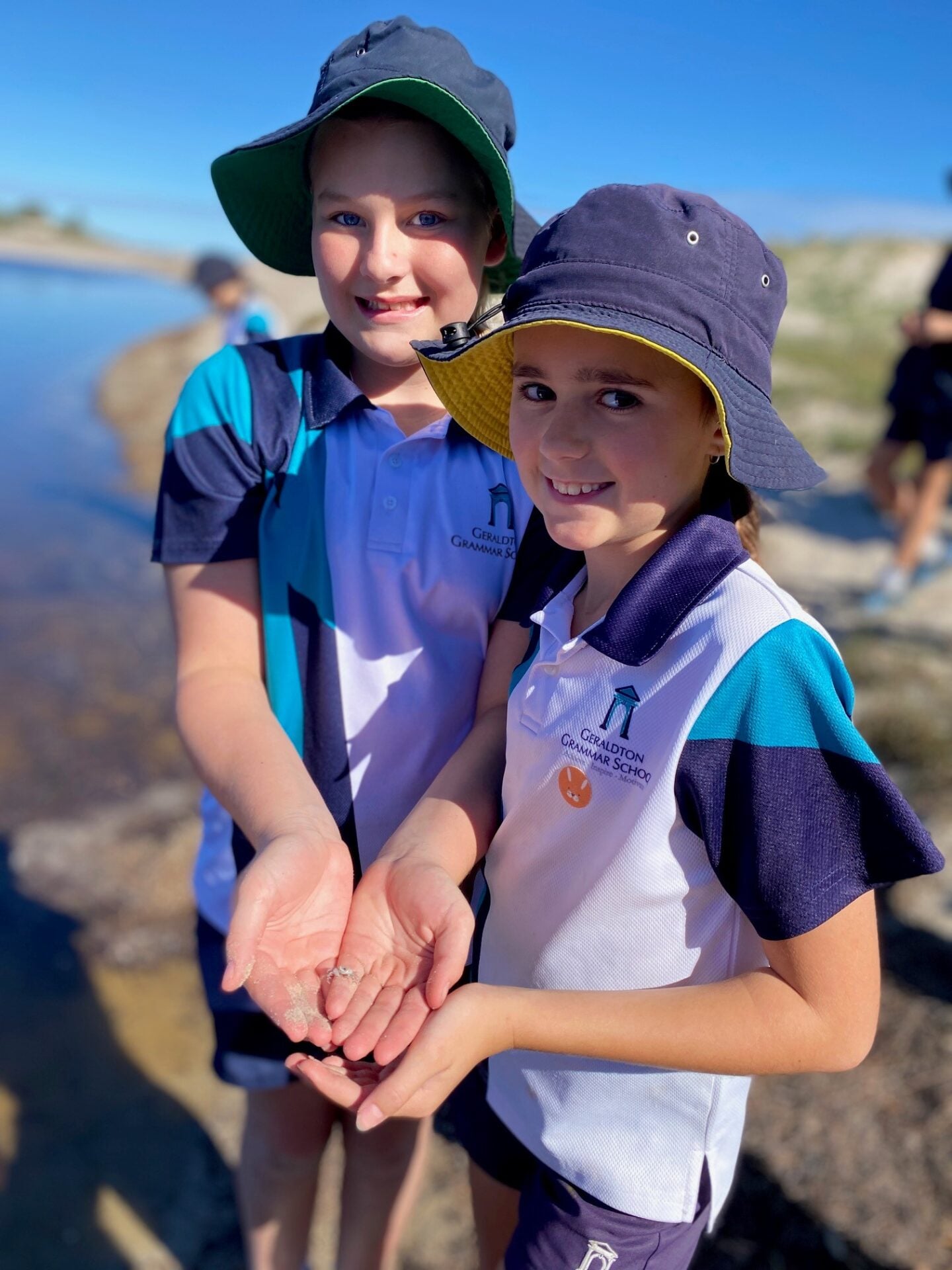
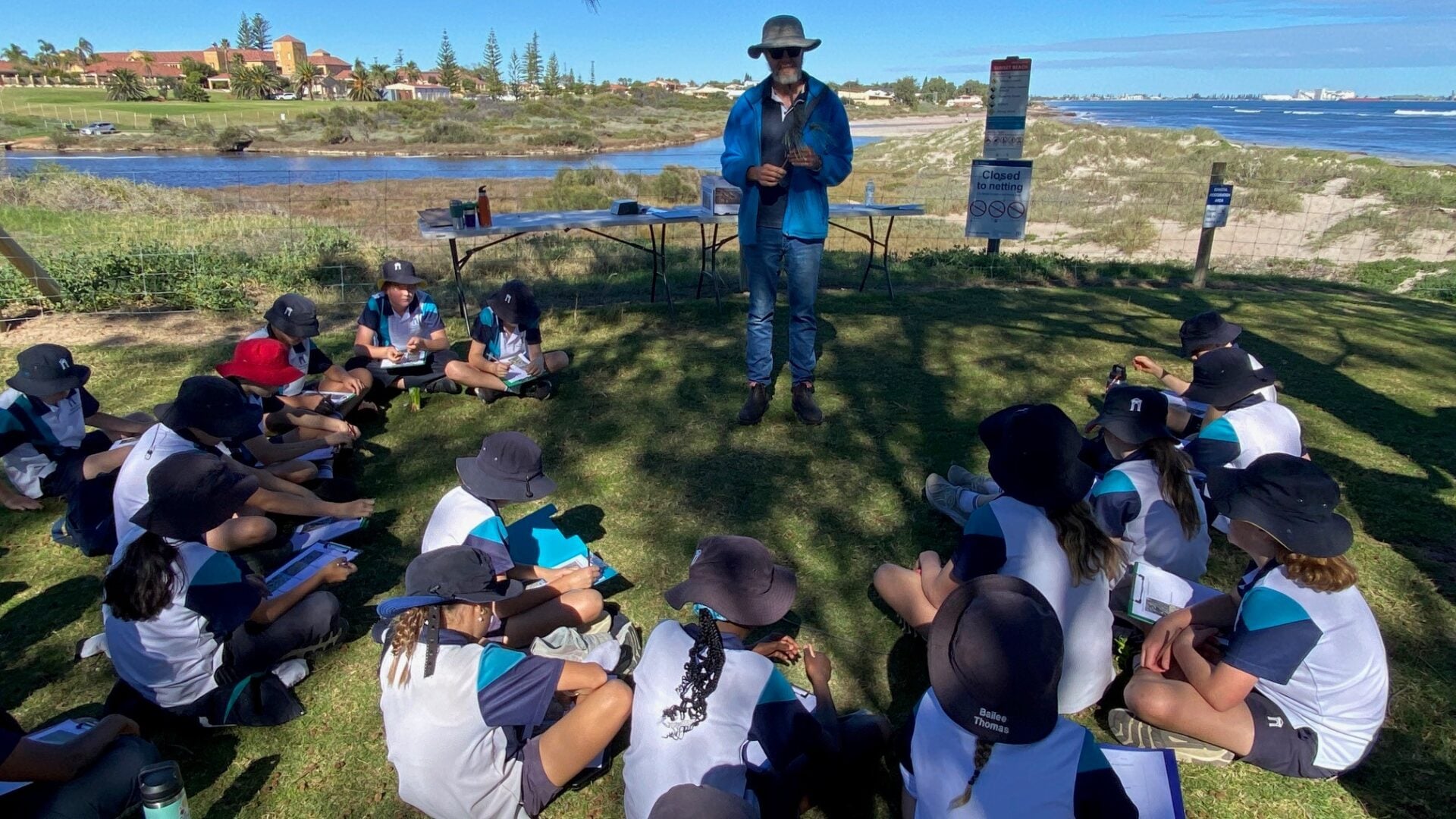
Photo credit: Geraldton Grammar School
Meanwhile, at the river mouth, NACC NRM’s Coastal & Marine team introduced students to the adaptations vital to inhabiting a salty, shifting coastal environment. Through dune walks and interactive games, students learnt how coastal plants anchor themselves against wind and erosion, and how marine animals cope with saltwater, tides, and exposure. The group was even lucky enough to see a whale pass through, providing a timely real‑life example of the remarkable adaptations that marine mammals are capable of.
By the end of the day, students were able to compare how plants and animals adapt and survive in freshwater and coastal environments, gaining a deeper understanding of the biodiversity found across the Chapman River Regional Park.
A big thank you to everyone involved; it was a rewarding day of learning, exploration, and connection with the natural world!