
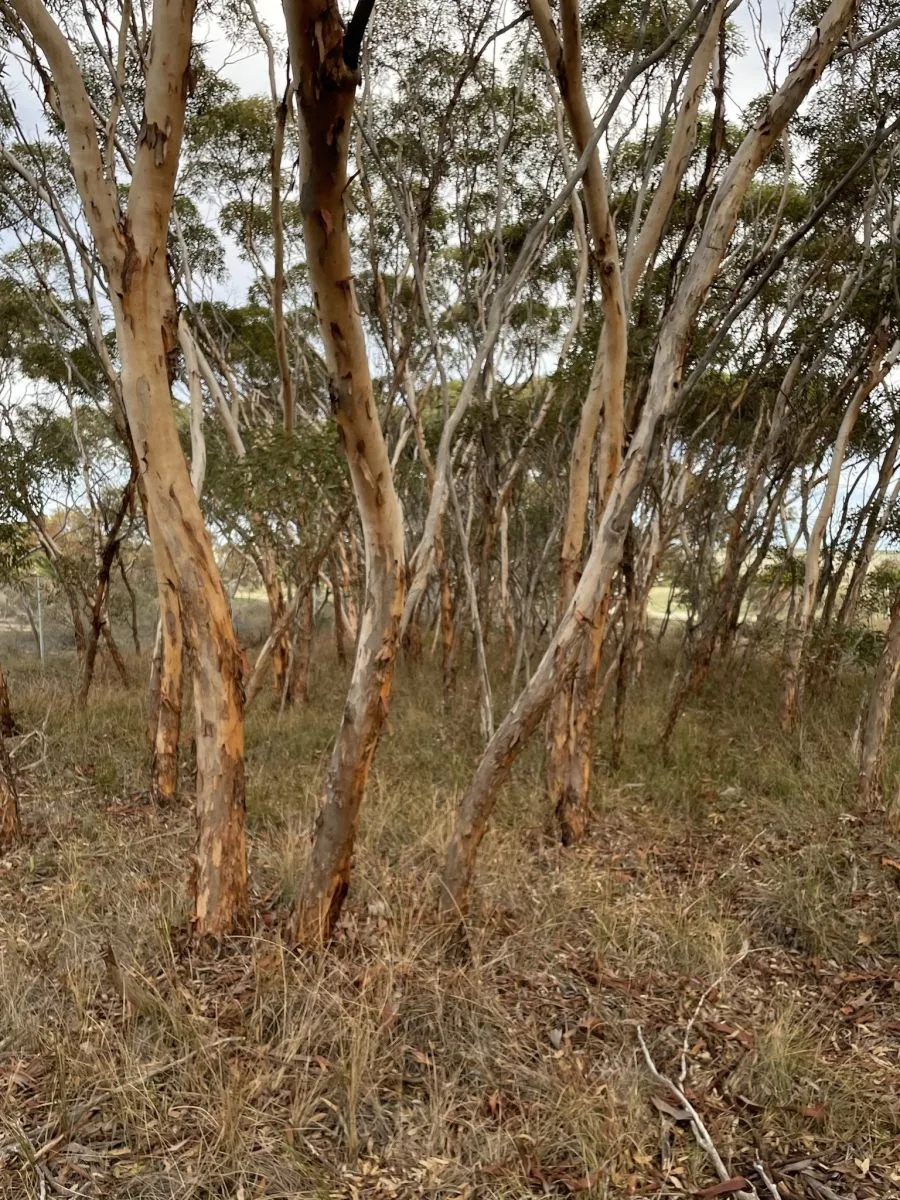
Efforts to protect the endangered Scaly-butt Mallee (Eucalyptus leprophloia) have seen the completion of dieback mapping within the Northern Agricultural Region (NAR), thanks to the Department of Biodiversity, Conservations and Attractions (DBCA) and Midwest Aboriginal Ranger Program (MARP).
Dieback (also referred to as Phytophthora dieback or Phytophthora) is a plant disease that has major impacts on the plant diversity of our native ecosystems. Although some native species are thought to occur, a species introduced in the early 1900s, Phytophthora cinnamomi, has caused considerable damage across the southwest of WA. It affects more than 40% of native plant species – such as banksias, hakeas, snottygobbles, eucalypts and grass trees – and can even impact ornamental and horticultural species.

Dieback is spread naturally, moving through soil, roots and run-off. It is also carried by animals with infested soil on their feet or their fur. Similarly, humans transport dieback when we disturb and move infested soil by walking, cycling or driving. Once it finds suitable roots to infect, dieback draws nutrients from its host plant, ultimately killing it.
Dieback mapping provides information on the occurrence of the disease at a particular site, noting areas where dieback is ‘present’, ‘not present’ or ‘undetermined’. This allows for the formation of a dieback management plan which can aid in mitigating dieback risks at a site. Given the irreversible impacts of dieback – including reductions of biomass, biodiversity, and food and shelter options, as well as increased areas of bare soil and weed invasion – this work is vital to help manage the disease in areas such as the Eucalypt Woodlands of WA Wheatbelt Threatened Ecological Community (TEC).
Thanks to the MARP Rangers and DBCA team for conducting this crucial mapping. These efforts are a significant step toward protecting Scaly-butt Mallee and support the irreplaceable environmental, social and cultural value connected to healthy landscapes.
This project is jointly funded by the Australian Government Natural Heritage Trust and NACC NRM, a member of the Commonwealth Regional Delivery Partners panel.