
Spring has sprung, and NACC NRM’s Biodiversity team, along with friends and volunteers are once again in full swing monitoring our favourite endangered birds. As the season gets underway, we thought it was the perfect opportunity to reflect on some of our Carnaby’s Cockatoos milestones from earlier in the year.
Back in June, our friend Dean from Carnaby Crusaders was busy helping us deliver key outcomes across several of our projects, including our House & Home: Safeguarding Native Species project, proudly funded by Mitsui E&P Australia and Beach Energy.
With the support of local landholders and custodians, through this project, two new artificial hollows were installed in the Three Springs district. According to landholders, the sites have been home to nesting Carnaby’s Cockatoos and Red-tailed Black Cockatoos for many years.
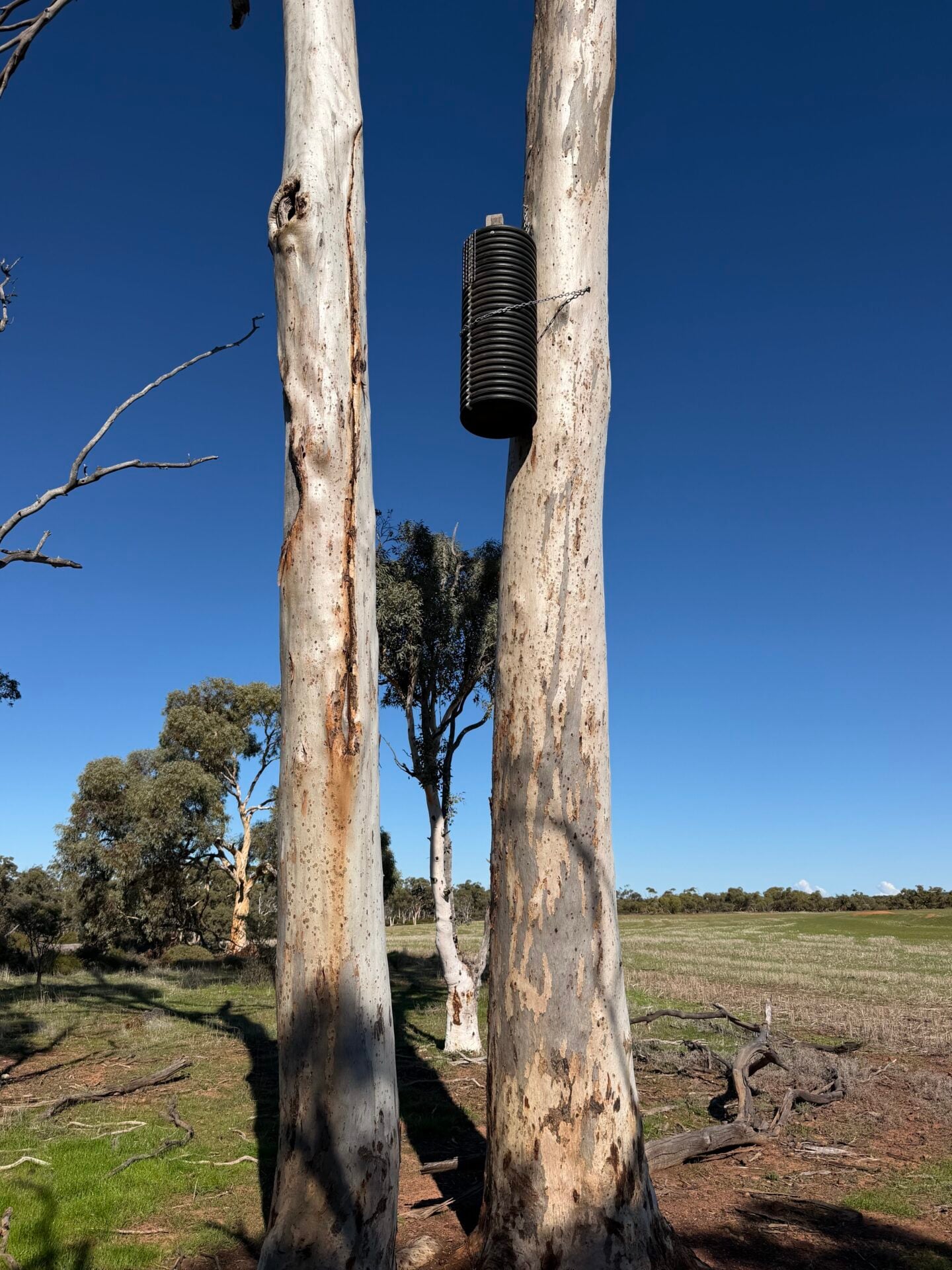
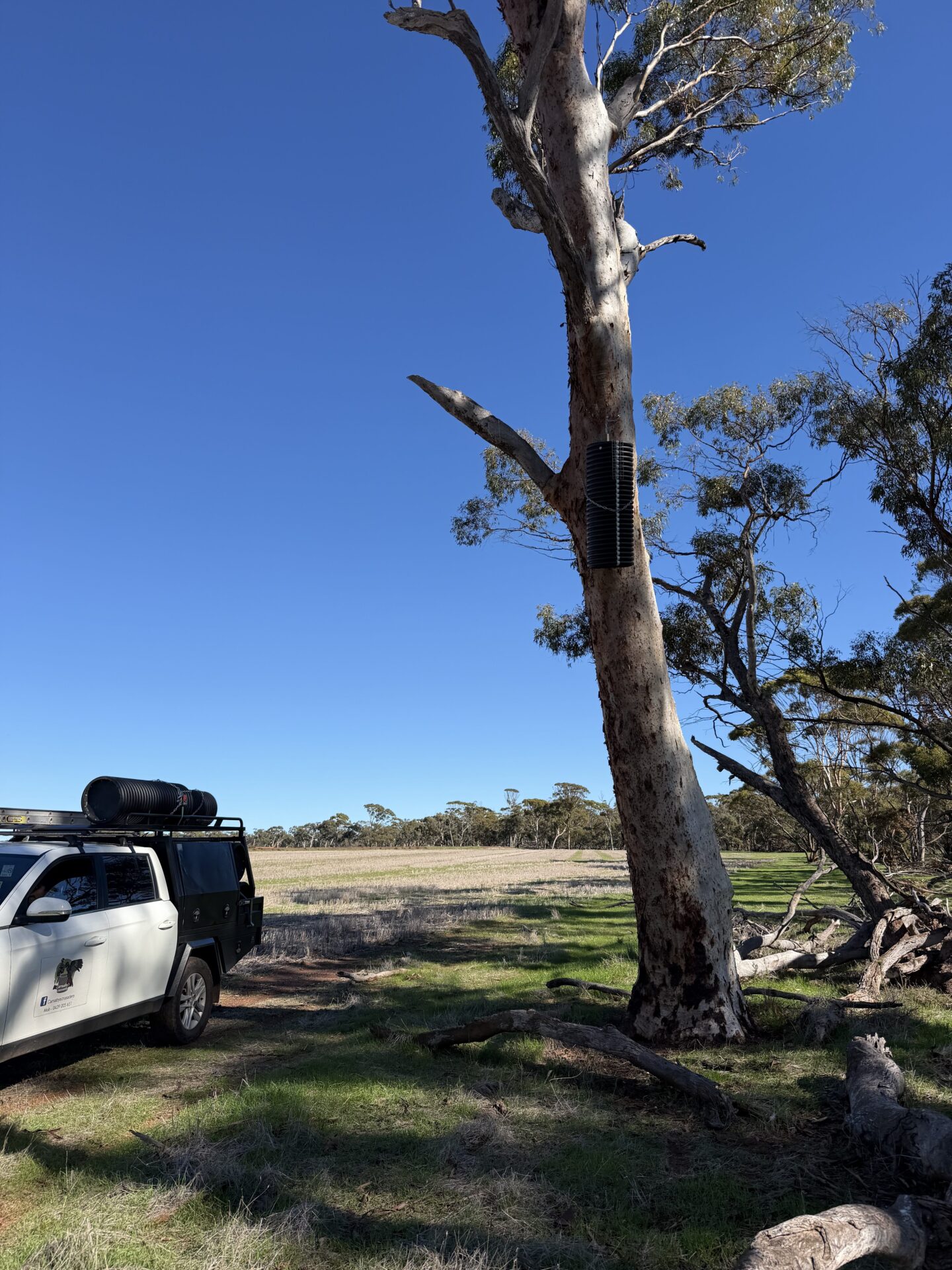
The hollows were installed in wandoo and salmon gum woodlands, which not only provide critical habitat for endangered Carnaby’s Cockatoos but are also both keystone species within the Wheatbelt Eucalypt Woodland Threatened Ecological Community. A win-win for wildlife and woodland alike!
Natural hollows big enough for black cockatoos take 150–200 years to form, meaning only very old eucalypts provide suitable nesting cavities. As aging eucalypts in our region with suitable hollows face increasing pressures from clearing, fire, and other threats, artificial hollows can help support breeding in our degraded landscapes. However, they cannot replace the ecological value of mature woodland or the long‑term importance of natural hollow‑bearing trees.
Lasting recovery of Black Cockatoo populations depends on protecting existing habitat and restoring healthy woodland ecosystems across the landscape.
We can’t wait to monitor the success of these new hollows and hope the Carnaby’s enjoy their new homes.
This project is funded by Mitsui E&P Australia with Beach Energy.