Earlier this month, the NACC NRM team were part of an amazing day of action and impact at Flat Rocks Beach!
On Thursday 13 March, Senior Coastcare Support Officer Dr Mic Payne, Coastal & Marine Project Officer Josh Burney and Communications Officer Phoebe Royce headed to the increasingly popular Flat Rocks Beach in South Greenough for a clean-up quest.
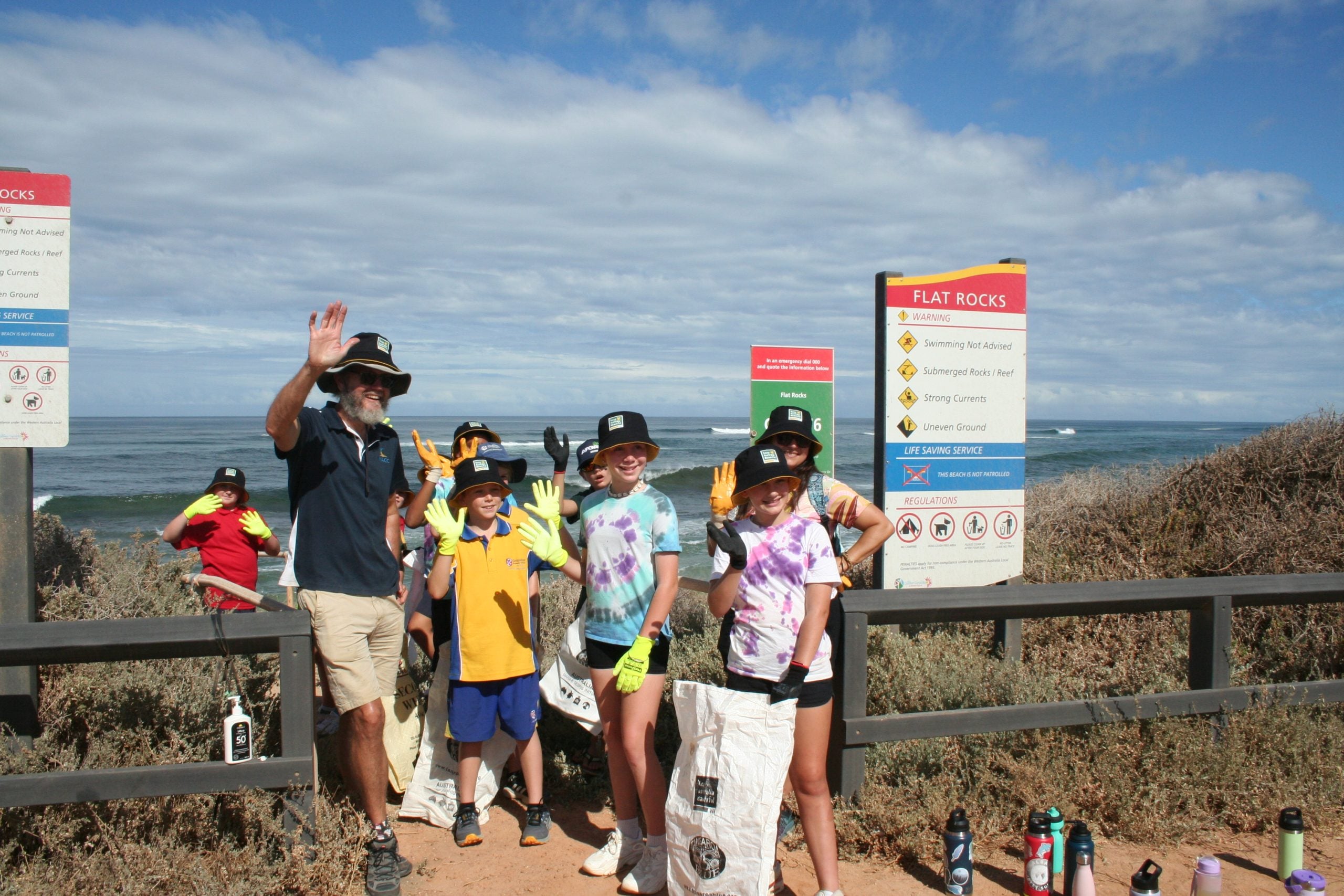
The weather was on our side, and we kicked things off with a fantastic crew from Keep Australia Beautiful Council WA (KABCWA), Midwest PEAC Year 6 students, Batavia Coastcare Network (BCN), Department of Primary Industries and Regional Development (DPIRD), and Mullermind Creative. Our collective goal for the day was to produce a brief video about NACC NRM’s Fishing Float Survey project, which was made possible thanks to important funding from KABWA’s 2024 Litter Grant!
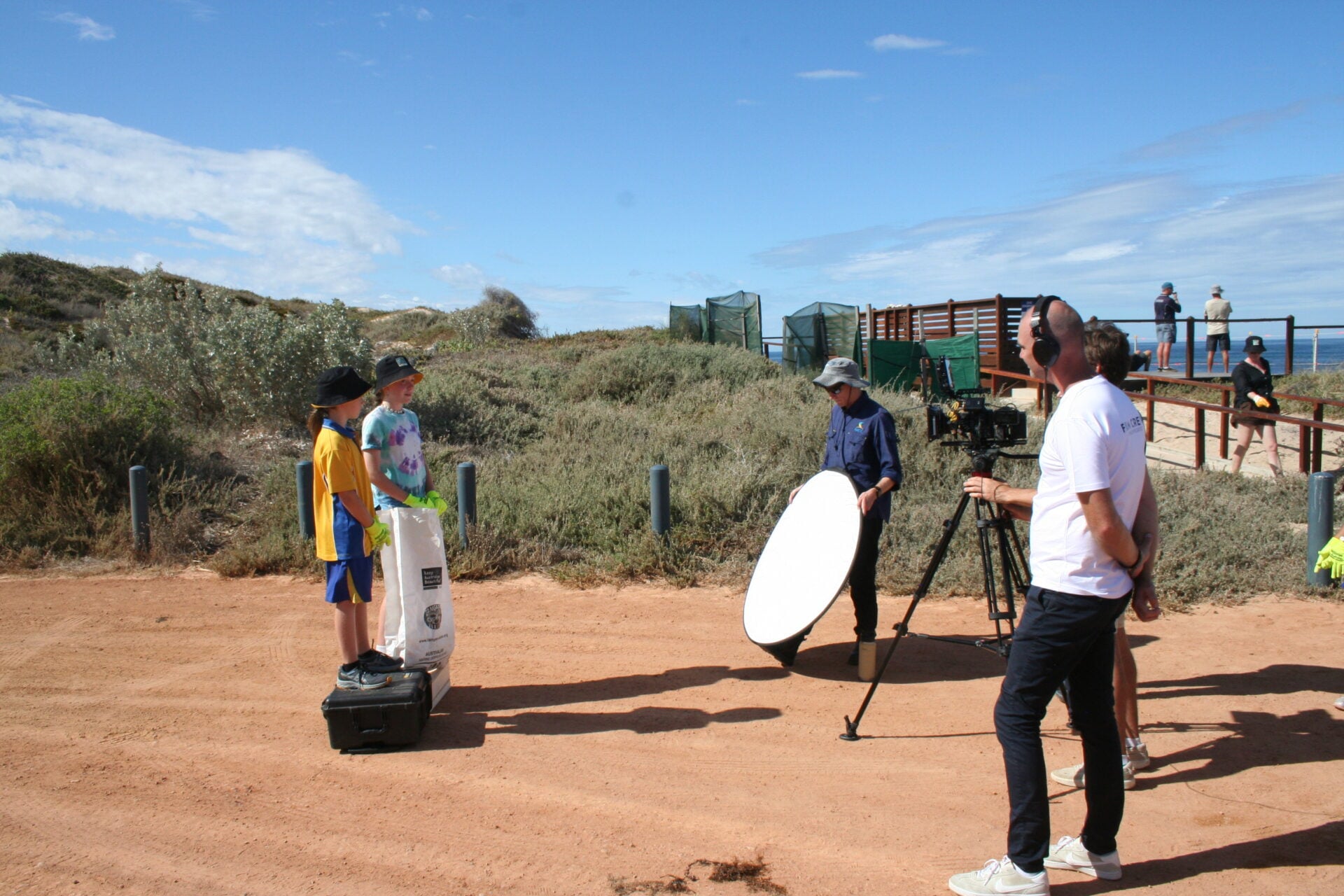
The day commenced with interviews, with the fabulous Mullermind team behind the camera, capturing every moment. Our very own Senior Coastcare Support Officer Dr Mic Payne took the stage to discuss NACC NRM’s Fishing Float Survey project and the work we’re doing to trace marine debris. Thanks to our amazing community, over 150 reports of washed-up fishing floats along our coast have already been logged as part of this citizen science project!
Following Mic, the next generation of coastcarers stepped up for their interviews. PEAC students from schools across the region (Northampton, Geraldton, Wandina, Walkaway, Mt Tarcoola, Allendale, and Kalbarri) shared their knowledge on how marine debris affects our ecosystems and what we can all do to lighten the litter load for a healthier future.
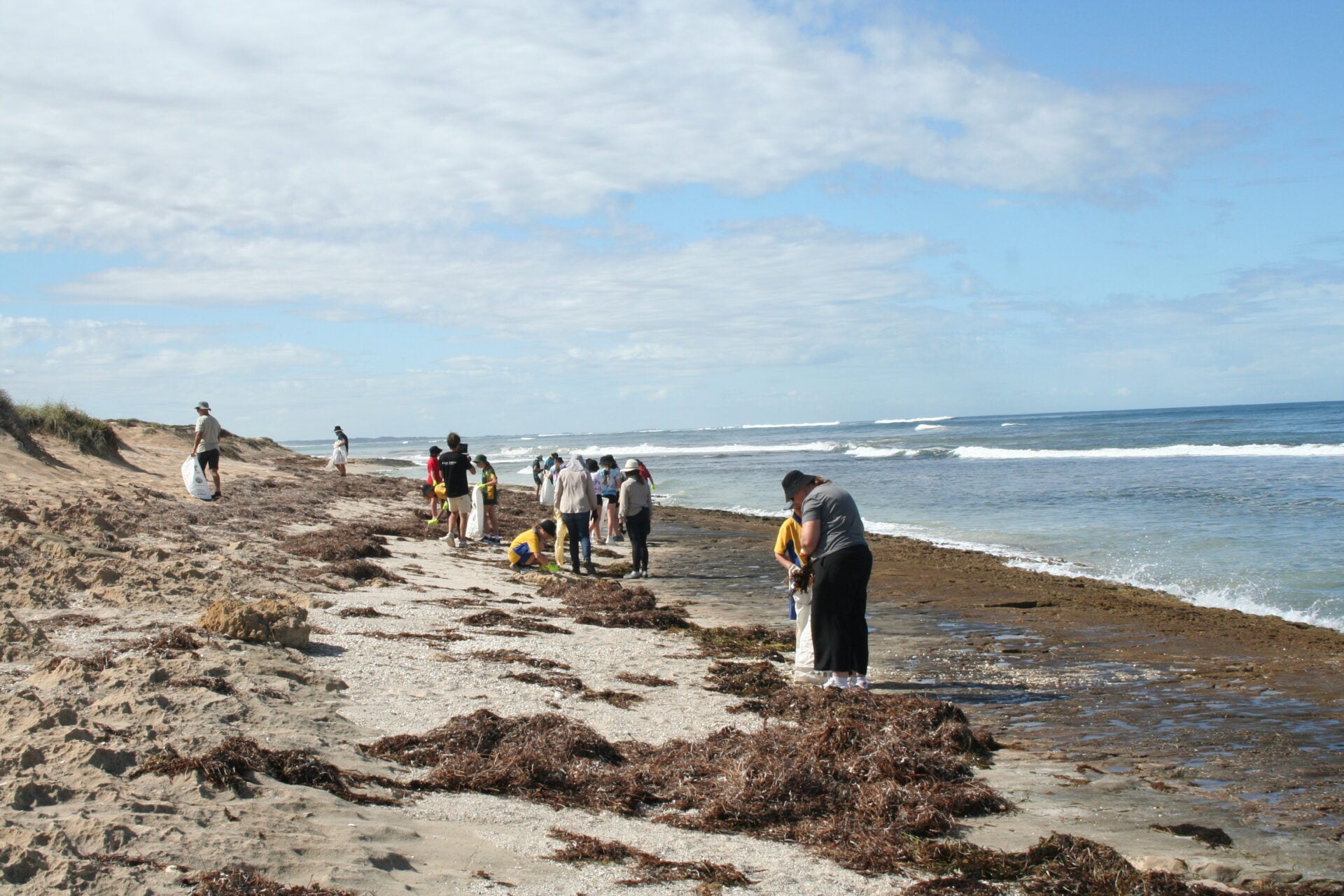
It was then time to get the gloves on and begin the clean up. These young heroes didn’t hold back, scouring the beach for litter and proving that many hands make light work. Some of the most interesting finds? A car tyre, a gas bottle, a pillow, and some stunning sea glass.

Back at Beachlands Primary School, the PEAC group sorted through their findings, and the results were eye opening: 21kgs of rubbish collected! 67% was from the pot fishing industry, and of that, an astonishing 82% of the debris had been lost for many years. Students learned all about how debris from the fishing industry can break down into smaller pieces, posing a risk to marine life through ingestion or entanglement. The findings of this project will shed a light on major sources of marine debris, allowing for less polluting practices to be adopted in the future.
A huge thank you to Midwest PEAC and their awesome students, Mullermind Creative for documenting the day, DPIRD and BCN for supporting the project, and KABCWA for bringing everyone together for this important cause!