
By Dr Nic Dunlop | Ecologist, Perenjori Hills Sanctuary Working Group
Over a thousand hectares of remnant bush on a Carbon Neutral property is earmarked to become the Perenjori Hills Sanctuary. The remnant is part of the Koolanooka Complex Threatened Ecological Community (the TEC).
With support from the Gunduwa Regional Conservation Association the Carbon Neutral volunteers and two traditional owners sampled Echidna scats, digging pits and surface soils to investigate the animal’s diet and its influence on the microbiome in an area of York Gum woodland. The EDNA Futures lab at Curtin University was contracted to use EDNA technology to identify insect and microbial taxa in the samples.
There were 6 termite species and one ant species in the scat samples. Surprisingly, at least 3 of the termites were harvesting species and not wood-feeding as one might expect from a habitat dominated by trees and deadwood.
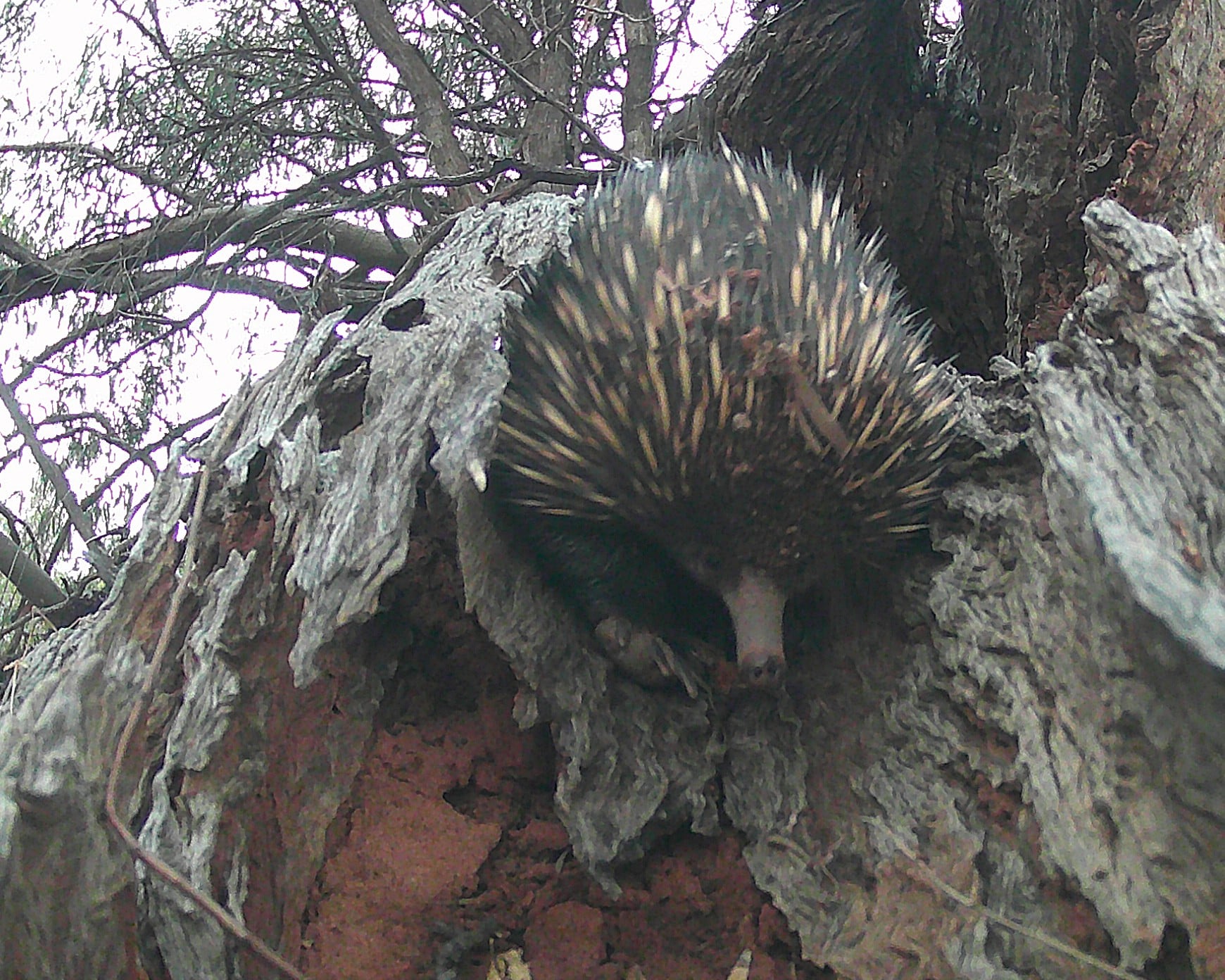
With respect to the role of Echidnas as ‘ecosystem engineers’ there were three key questions.
- Do the pits excavated by foraging Echidnas create microhabitats with distinctive microbial communities?
- Do Echidnas increase soil microbial biodiversity? and
- Are there more specific ecological services produced by the Echidna diggings?
The results indicated that the Echidna diggings have a different microbial community to soil samples from the canopy- gardens and bio-crusts and bare surfaces in the woodland.
The Echidna pits had 1421 identified microbial taxa compared to 781 in surface soil without bio-crust and 632 with bio-crust. They increased biodiversity which presumably enhances a variety of ecological functions.
The three microbial taxa that were most frequently detected in Echidna diggings but absent from the other soil samples were all bacteria, Nitrospirota, Chitinophaga and Pseudomonodonta. Nitrospirota are nitrifying bacteria that convert nitrites to nitrates making nitrogen available to plants. Chitinophaga specialise in breaking down the protein Chitin, which is the key structural component of fungal cell walls and the exoskeletons of arthropods, such as ants and termites, thus sequestering these abundant materials in the soil carbon. Bacteria in the Pseudomonodonta (or Proteobacteria) are important decomposers in arid soils.
Since the answers to all the questions was yes, the results support the hypothesis that Echidnas function as ecosystem engineers in the York Gum Woodands.