
The Banded-Leg Swimming Crab is named after its unique patterned legs and its expertise in moving through water.
Its rearmost pair of legs are paddle shaped, rotating like propellers, making them swift and agile swimmers. Usually, this crab swims sideways, but can also be seen swimming backwards and forwards. Its streamlined body is built to support movement through water, while its long pincers are equipped with sharp spines, ready to snatch fish and any other fast-moving prey.
These crabs are omnivores, meaning they feed on crustaceans, fish and molluscs, as well as detritus, keeping the ocean floors clear. They are also most active at night, meaning they can slip under the radar without being sighted!
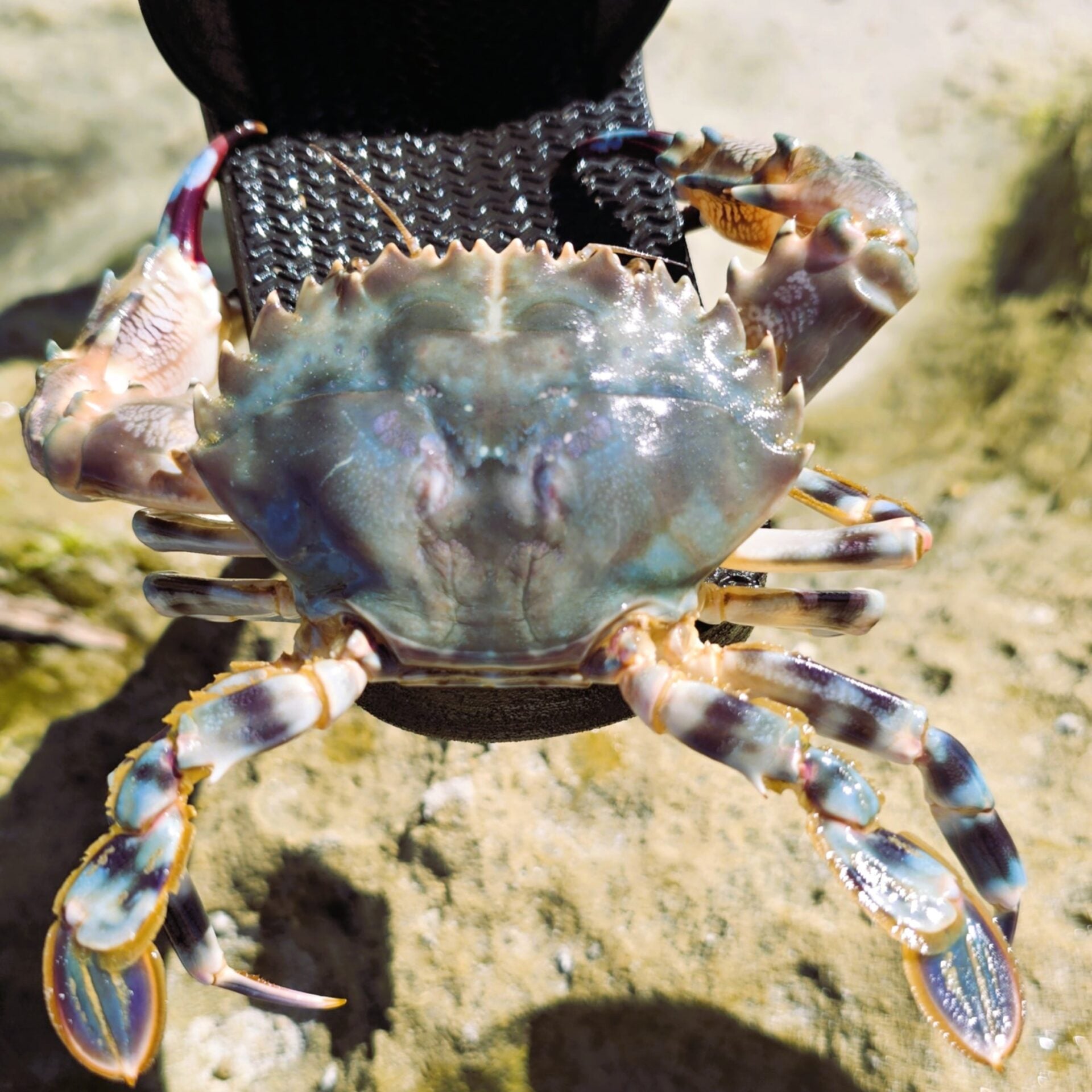

Banded-leg swimmers are found from South Africa to Southeast Asia and across Tahiti, within the Indo-pacific region. They inhabit rocky areas, mangrove mudflats and estuaries, often near seabeds.
Are you wondering how you can spot one of these pretty little critters? Banded-leg swimming crabs have fan-shaped bodies, measuring 5–7 cm wide, with spines along its sides. Their rear legs are paddle-like, and their legs and pincers feature striking dark brown and bright blue bands.