
On Friday 4th of September, the Turquoise Coast Regional Forum made a triumphant return to once again enchant and educate the Northern Agricultural Region’s keen coastal community!
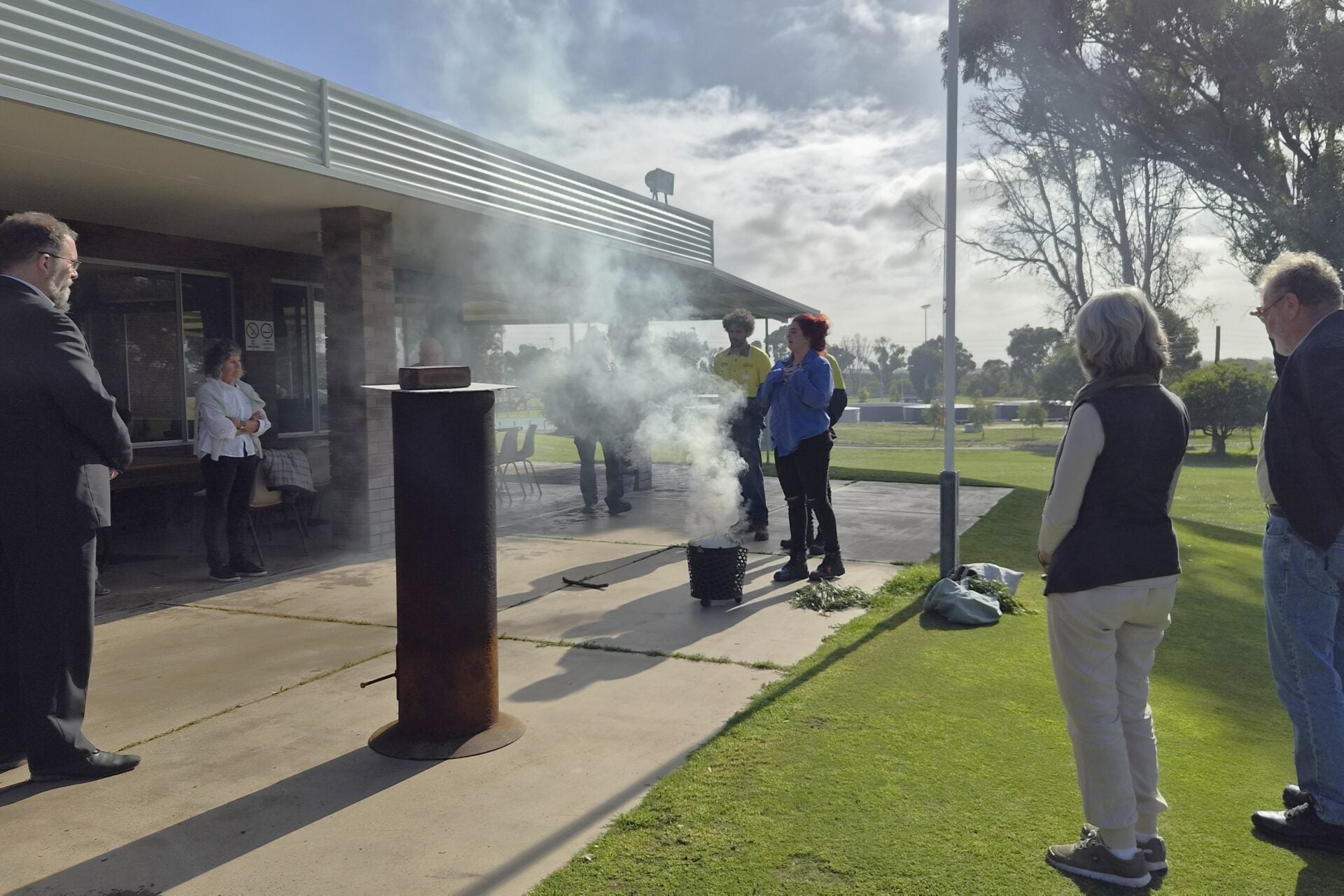
Hosted by the Jurien Bay Regional Herbarium Group at the Jurien Bay Country Golf Club, attendees were greeted by blue skies and a smoking ceremony and Acknowledgement of Country delivered by Skye Shaw and Rangers of Kwelena Mambakort Aboriginal Corporation (KMAC).
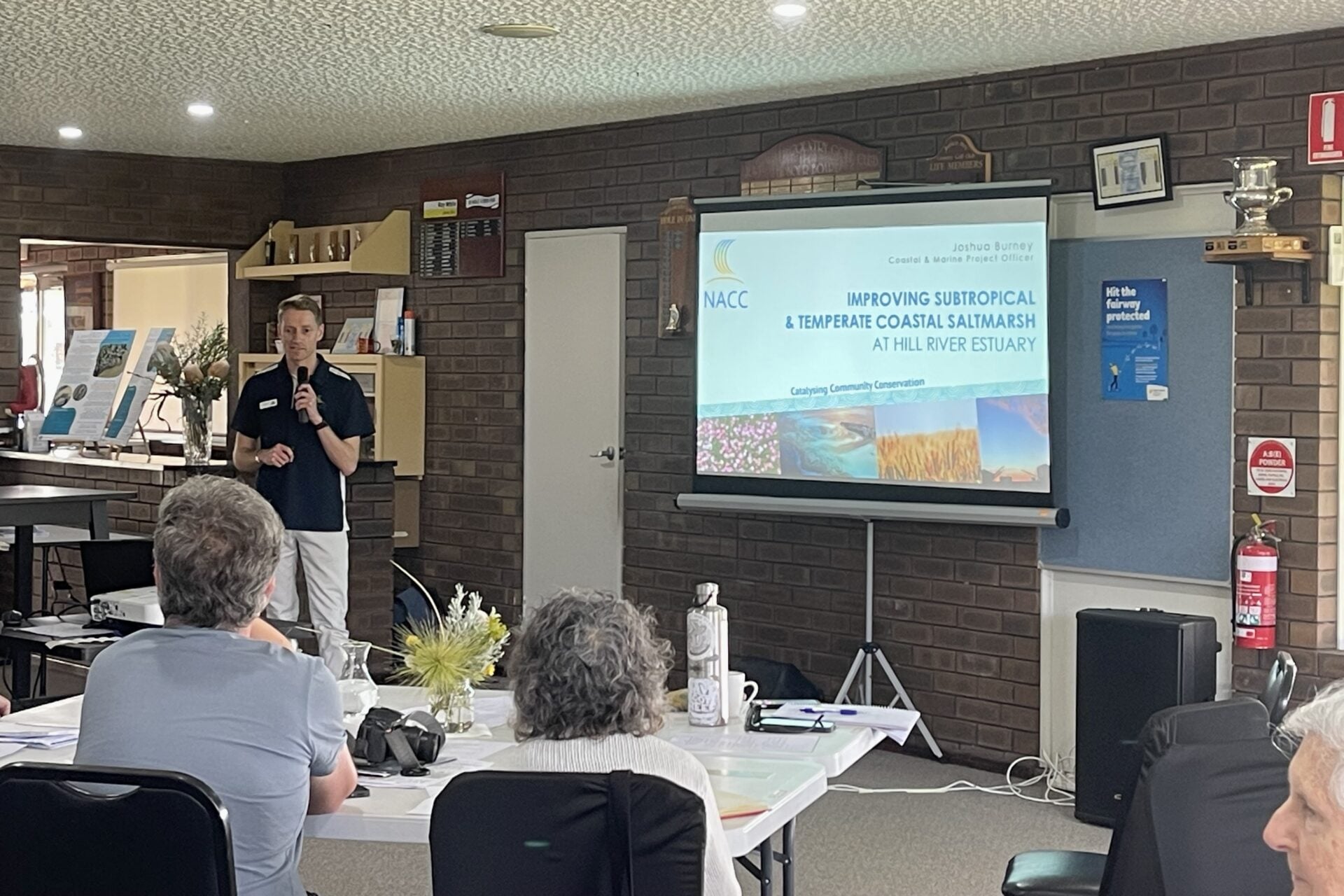
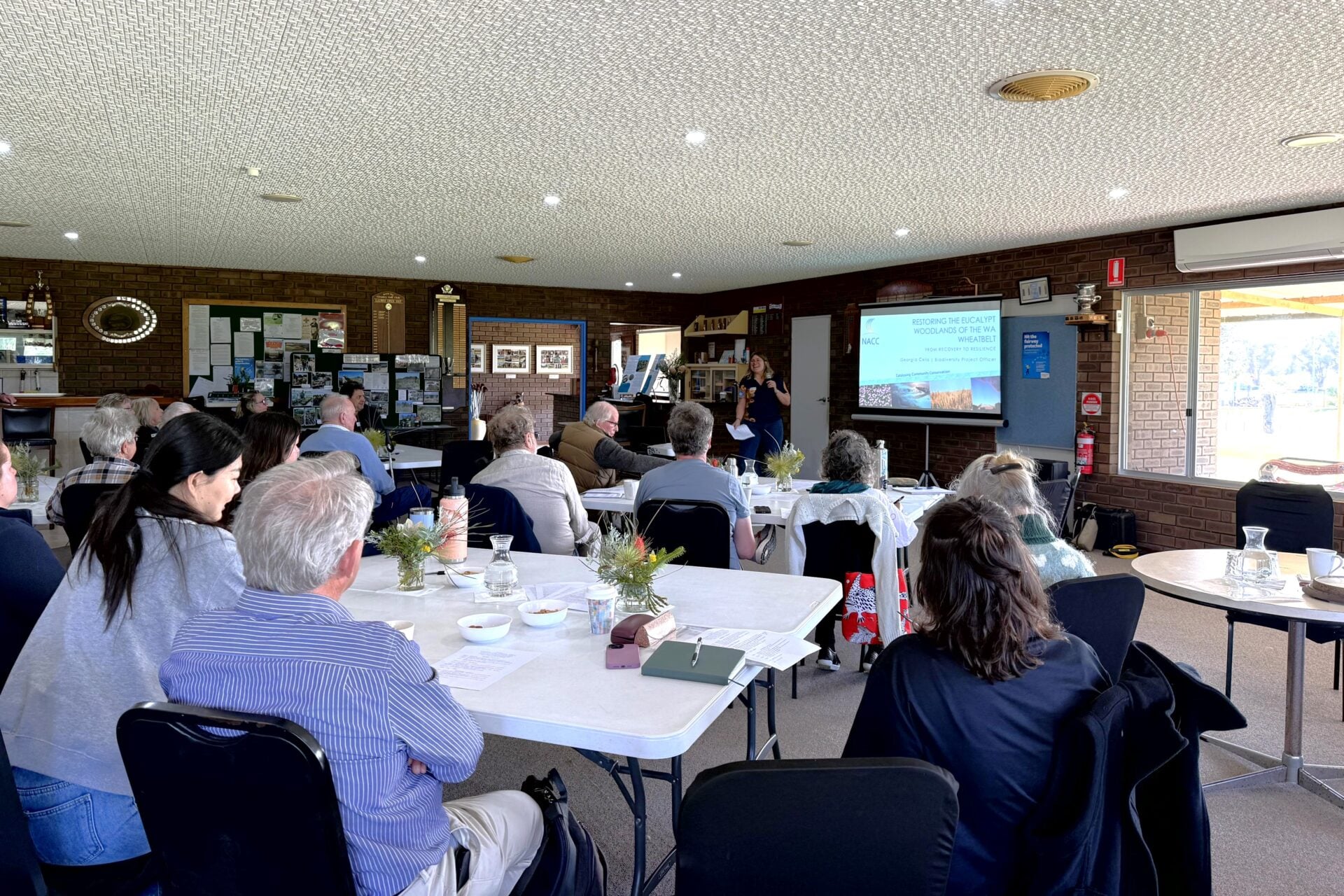
It was a jam-packed speaker schedule covering a broad range of topics that followed last year’s overarching themes of ‘Looking West’ and ‘Looking East’. Kicking off the day was a history of the Jurien Bay Herbarium from Ron Snook, who received life membership in recognition of his remarkable conservation efforts. The Shire of Dandaragan provided an update on the Coastal Recreational Tracks Management Master Plan before hearing from NACC NRM’s Biodiversity Project Officer, Georgia Cella, about the WA Wheatbelt Woodlands. This threatened ecological community (TEC) has been decimated by land clearing and is vulnerable to climate change, further clearing, altered fire regimes and invasive species. Continuing the agricultural theme, the Department of Primary Industries and Regional Development followed with a discussion about groundwater processes in the WA Wheatbelt, namely salinity. This talk highlighted the different properties of dense, clay-like soils compared to coarse, coastal sandplains, appealing to audience members with a farming background, and others, alike.
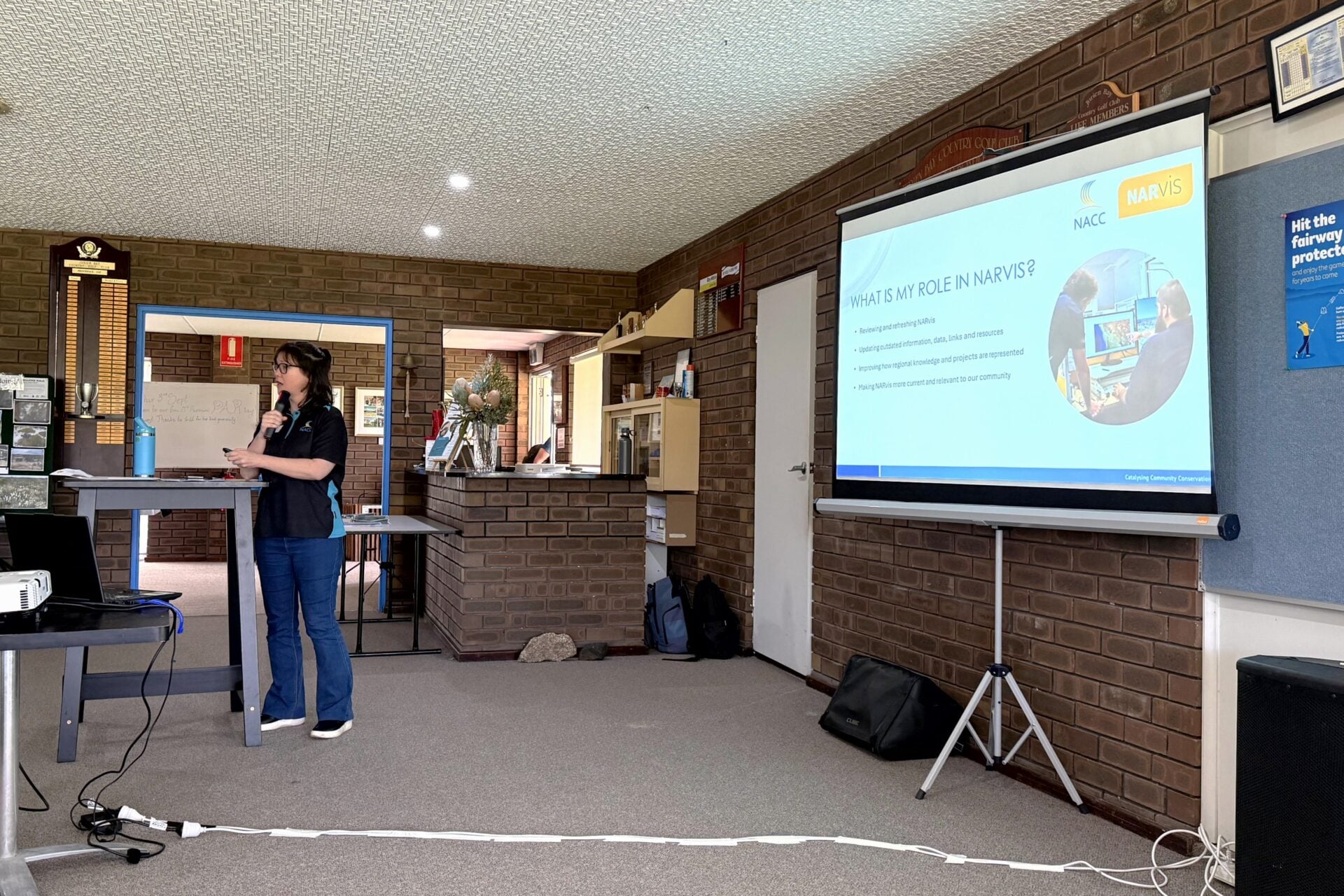
Veering back toward the coast, the group heard about the challenge of tackling Pyp Grass (Ehrharta villosa) on a changing coastline. Professors and researchers from the University of Western Australia wooed with the wonder of terrestrial, and marine, plants, celebrating the diversity of Hi Vallee Farm and strength of community in supporting seagrass re-establishment. Before lunch, community members were invited to complete a survey of their natural resource management priorities, as part of an update to NACC NRM’s regional strategy, NARvis – you can find the form here and have your say.
Following lunch and lively discussion, the power of plants remained front of mind, specifically, the ability of WA’s native species to thrive in extremely impoverished soil conditions. Keeping the plant conversation going, NACC NRM’s Coastal and Marine Project Officer, Josh Burney, spoke about weed species impacting Coastal Saltmarsh TEC at nearby Hill River estuary. KMAC Rangers have been contracted to treat weeds at the site multiple times with follow-up site assessments revealing positive results. Presentations finished on a sombre, yet informative, talk about H5N1 bird flu. Attendees learnt where and when this highly pathogenic strain of bird flu originated, how it is currently impacting Australian birds, and how it may impact other Australian species, including mammals. If you come across any sick or dead wildlife, remember:
- Avoid contact with sick or dead wildlife (including the surrounding area)
- Record what you see, the location and take photos/videos from a distance
- Report to the Emergency Animal Disease Hotline on 1800 675 888
Events such as these are valuable reminders of the power of community in coming together to conserve our region’s precious coastal environments. No matter your interest or background, there is a plant or animal to study, ecosystem to immerse yourself in or environmental issue to tackle. The strength and resilience of coastal communities within the NAR continues to drive a wave of inspirational actions – NACC NRM is excited to see the accomplishments of community-led conservation that float to the surface!
About the Presenters
Ron Snook | Jurien Bay Regional Herbarium
Ron is one of the founding members of the Jurien Bay Regional Herbarium Group, and has supported the Herbarium since the 1980s.
Ross West | Environment Coordinator, Shires of Dandaragan, Coorow & Gingin
Ross Snook previously worked in mine rehabilitation, is studying an Advanced Diploma in Environmental Ecosystems, and has experience over 12 years in health, safety, and off shore and on-land mining.
Adele Killen | Research Scientist, Department of Primary Industries & Regional Development
Adele is a research scientist in hydrology, specialising in groundwater assessment in the south-eastern wheatbelt of WA. She has worked in the Northern Agricultural Region and central Ag region monitoring and assessing groundwater processes since 2004.
Joshua Burney | Coastal and Marine Project Officer, NACC NRM
Joshua joined the NACC NRM team in 2024. Based in Geraldton, he is currently working on a federally funded project to improve the threatened ecological community of subtropical and temperate coastal saltmarsh in the Northern Agricultural Region (NAR). Josh also engages with local schools and community groups throughout the Northern Ag Region, offering support and resources to catalyse community conservation of the region’s precious coastal and marine environments.
Alanna Smith | Conservation Coordinator, Department of Biodiversity, Conservation & Attractions
Alanna has been a member of the Herbarium group since 2014 and has been actively involved in Coastcare initiatives in the Cervantes and Jurien areas throughout that time. Since 2014, she has monitored coastal erosion through the Photomon program, contributed to coastal dune revegetation through brushing and planting activities, and currently coordinates the pyp grass eradication program. Her involvement with the Herbarium group has been both inspiring and motivating, reinforcing a strong commitment to ongoing on-ground conservation efforts.
Hans Lambers | University of Western Australia
Hans was born in the Netherlands, completed his PhD in 1979, and was appointed Professor of Ecophysiology at Utrecht University in 1985. In 1998, he migrated to Australia and was appointed Professor of Plant Biology/Ecology at the University of Western Australia, where his research focuses on the mineral nutrition of Australian native species, particularly how certain Australian plants acquire phosphorus from nutrient-poor soils and use it with remarkable efficiency. He is widely published and highly cited, elected to the Royal Netherlands Academy of Arts and Sciences in 2003 and to the Australian Academy of Science in 2012. He has received a number of Honorary Professorships and was is Distinguished Professor at the National Academy of Agriculture Green Development at China Agricultural University (2019–2023; 2024-2027) and Strategic Scientist at Beijing Forestry University (2024–2028). Hans, and Marion Cambridge, are the new co-owners of Hi Vallee farm.
Dr Marion Cambridge | University of Western Australia
Marion is a marine plant ecophysiologist specializing in the ecology of temperate seagrasses from the southern half of Australia. Her interests include the effects of human pressures on seagrasses (particularly eutrophication), growth and nutrient dynamics, repair of damaged seagrass systems through habitat restoration and natural recovery, clonal growth and seedling recruitment. Marion has had a long interest in linking eco-physiological traits of individual species to their tolerance of a range of environmental factors, particularly the gradient in wave energy and sedimentation on the southwestern Australian coast. Recent work has included effects of salinity and brine on seagrass physiology in relation to discharge of desalination brines into seagrass environments.
Louise Hill | Biodiversity NARvis Project Officer, NACC NRM
Louise is currently leading the 2026 review and update of NARvis, the regional natural resource management (NRM) strategy for the Northern Agricultural Region (NAR), with NACC NRM. Her work involves reviewing and updating the information presented through NARvis (narvis.com.au), ensuring it reflects current knowledge, policy and priorities, and engaging with NRM stakeholders across the region to understand how areas of interest and priorities may have changed since the strategy was substantially updated in 2021. Louise wants to ensure that the strategy remains a genuinely useful, community-informed resource that reflects the environmental challenges, priorities, knowledge and work of the people and organisations involved in natural resource management across the NAR.
Dr Shu Tong Liu | University of Western Australia
Dr Shu Tong Liu is a Research Associate at the School of Biological Sciences at the University of Western Australia. She holds a Doctorate from UWA, where she worked on the phosphorus- and nitrogen-use strategies of native plants in south-western Australia. Her current research builds on this work, exploring how native species adapt to nutrient-poor environments and the ecological mechanisms that support their survival. She also supervises Higher Degree by Research (HDR) students, fostering the next generation of plant scientists.
Georgia Cella | Biodiversity Project Officer, NACC NRM
Georgia joined the NACC NRM team in April 2026 after completing a Bachelor of Animal Ecology. Originally from the Sunshine Coast in Southeast Queensland, Georgia has a strong passion for biodiversity conservation, ecological restoration, and protecting native wildlife. Before pursuing a career in environmental science, she worked in a range of medical administration roles before deciding to enroll into university and follow her interest in ecology. Through her studies and professional experience, Georgia has developed a keen interest in conservation initiatives that support healthy ecosystems and resilient landscapes.
Dr Nic Dunlop
Nic is an animal ecologist with 40 odd years working in WA in a range of capacities. Latterly, he has spent much of his time guiding citizen-science projects. His long term research and conservation interest has been seabirds and seabird islands around southwest WA.
This project is jointly funded by the Australian Government Natural Heritage Trust and NACC NRM, a member of the Commonwealth Regional Delivery Partners panel.