
Many of us across the northern agricultural region can relate to the challenge of non-wetting soils. From the back yard to the paddock, it can be an ongoing struggle to get the little rainfall we receive to actually soak in and do some good!
This was the problem that Jeff Johnson and Kirsti Singleton, after about five years of owning Tallering Views, realised would be their biggest challenge and most important one to solve. Located north of Mullewa and straddling the agriculture / rangelands boundary, the property had some cropping areas and cattle grazing areas before Jeff and Kirsti moved in.
Jeff admits that their own mismanagement of the land and mistakes made in their first five years (including overgrazing with sheep and goats, recreational motor bike use with mates, and ploughing the cropping areas) had compounded any problems they inherited, resulting in severely degraded land with next to no vegetation.
They had “watched the place turning into a desert”.
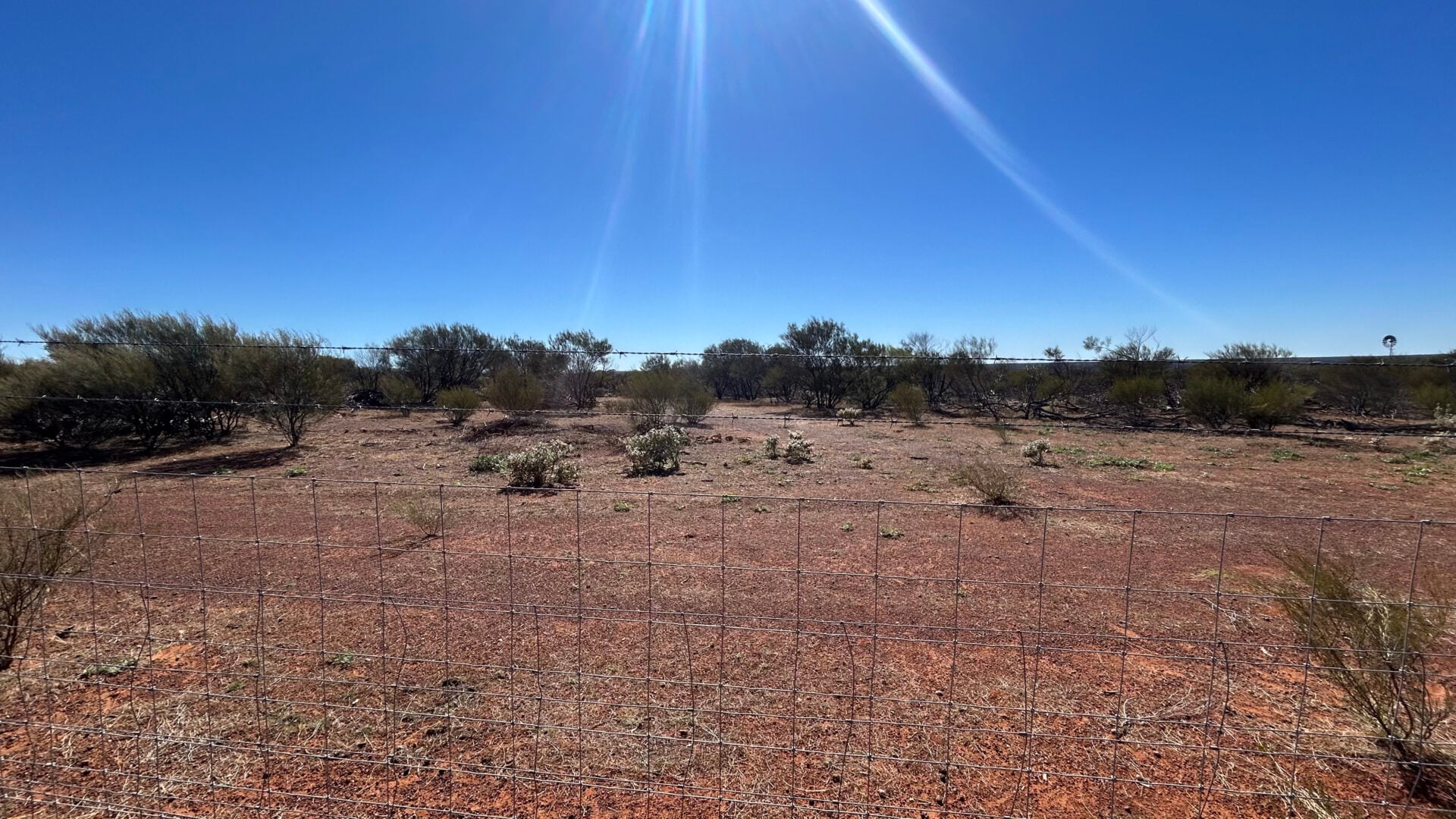
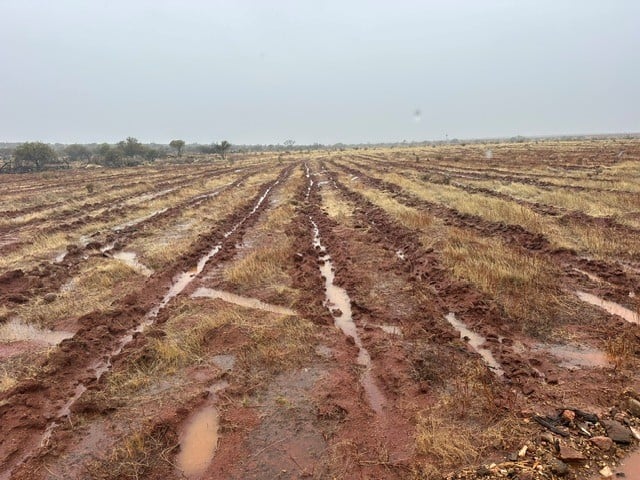
For Jeff, the lightbulb moment came in 2019; following a heavy and prolonged downpour, the ground was still rock hard and dry underneath its crusty surface. He realised the rain was simply rolling across the hardened surface, into eroded creeks and roaring beyond the property boundaries. With an average rainfall of 200 mm a year, which often arrives in heavy rainstorm events, and four below-average rainfall years anticipated in every 10, finding a way to make the most of the rain that does fall in this landscape is vital. Something had to change.
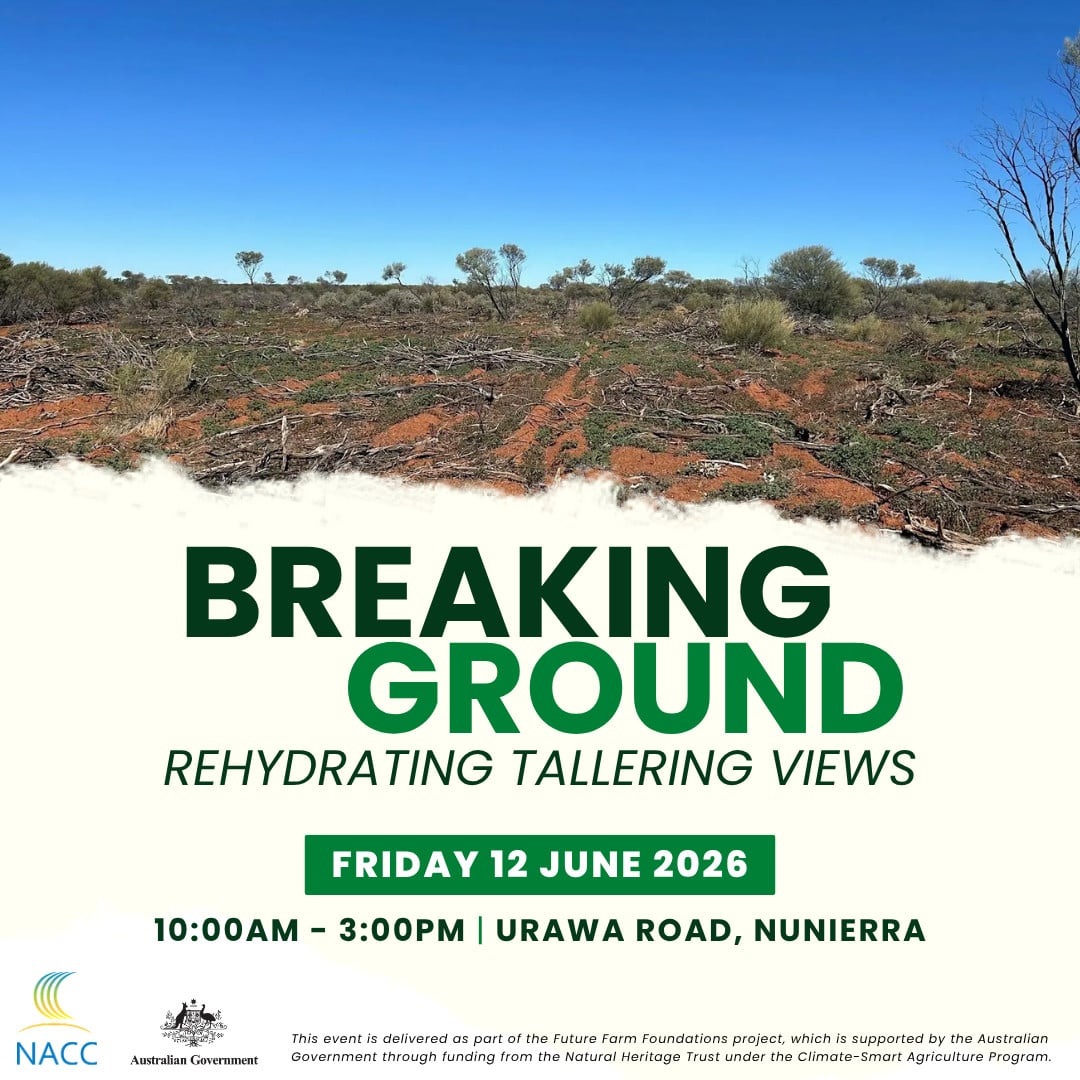
Want to see the changes at Tallering Views for yourself?
Register for our field walk on Friday 12 June 2026.
So began a period of trial and error, of working out how to work with the land and its natural processes, instead of resisting or trying to control them using practices designed for different landscapes, climates and soils. Early efforts to stem water loss through the eroded creek beds only resulted in more erosion; it took some time, as Jeff says, to understand that “water doesn’t go uphill”. His first efforts to create contour banks on slopes to slow down water didn’t quite hit the mark either, in places creating even worse erosion and taking a toll on the tractor too.
Over time, Jeff settled on a technique that suits the lie of the land at Tallering Views. Using his boiler making expertise, he dreamt up and build tines to add to a front end loader, with wings on the side of the tines that allow him to gouge v shape rips across the hill contours. A simple spirit level in the loader window helps to make sure those rips are level, so the water doesn’t spill out the end. Over time, he also worked out how far apart they needed to be from one another – a lot closer than usual with rehydration contours – and the right time in the rain cycle to rip different soil types to achieve the optimal depth. Seeing the rain pool in those rips instead of rolling away and off property was a moment to celebrate.
Alongside this work, it was also essential to better control grazing on the property; this involved changes such as destocking all the sheep and most of the goats, bringing in a small, sustainable number of cattle, implementing a strict rotational grazing system, and installing electric boundary fencing to exclude feral animals like kangaroos, dogs and foxes.
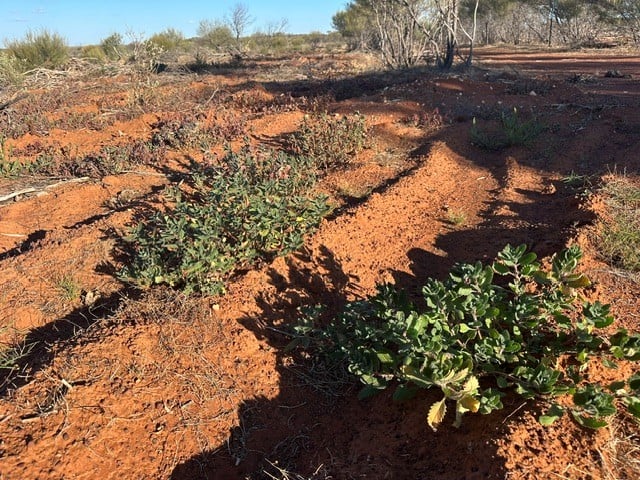
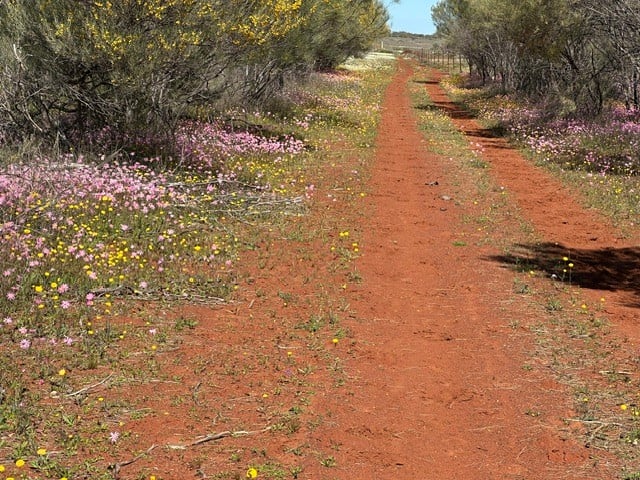
As more and more rainfall began to seep into v rips across the landscape, and with grazing better managed, signs of recovery began to appear. There was no planting, no seeding of any kind. However, the natural and diversified growth that has emerged in those rips, from the existing residual seedbank, has been a fascinating process for Jeff and Kirsti to observe.
Although some plants might be considered weeds, they have trusted that each one is there for a good reason. When one plant has done its job and changed what’s happening beneath the surface, the next suite of plants has taken over. From early colonisers like clammy goosefoot (Dysphania pumilio) through kerosene grass (Aristida contorta)and wanderrie grass (Eriachne spp.), they have soon enjoyed seeing additional plants establishing, including maroon bush (Scaevola spinescens), ruby saltbush (Enchylaena tomentosa), several species of mulla mulla (Ptilotus spp.) and saltbush (Atriplex spp.) and so much more.
Come the spring, they’ve been rewarded with carpets of wildflowers they could never have imagined – seas of white, yellow and pink. Already, jam tree (Acacia acuminata) saplings are starting to establish, and there is great excitement at what may come next.
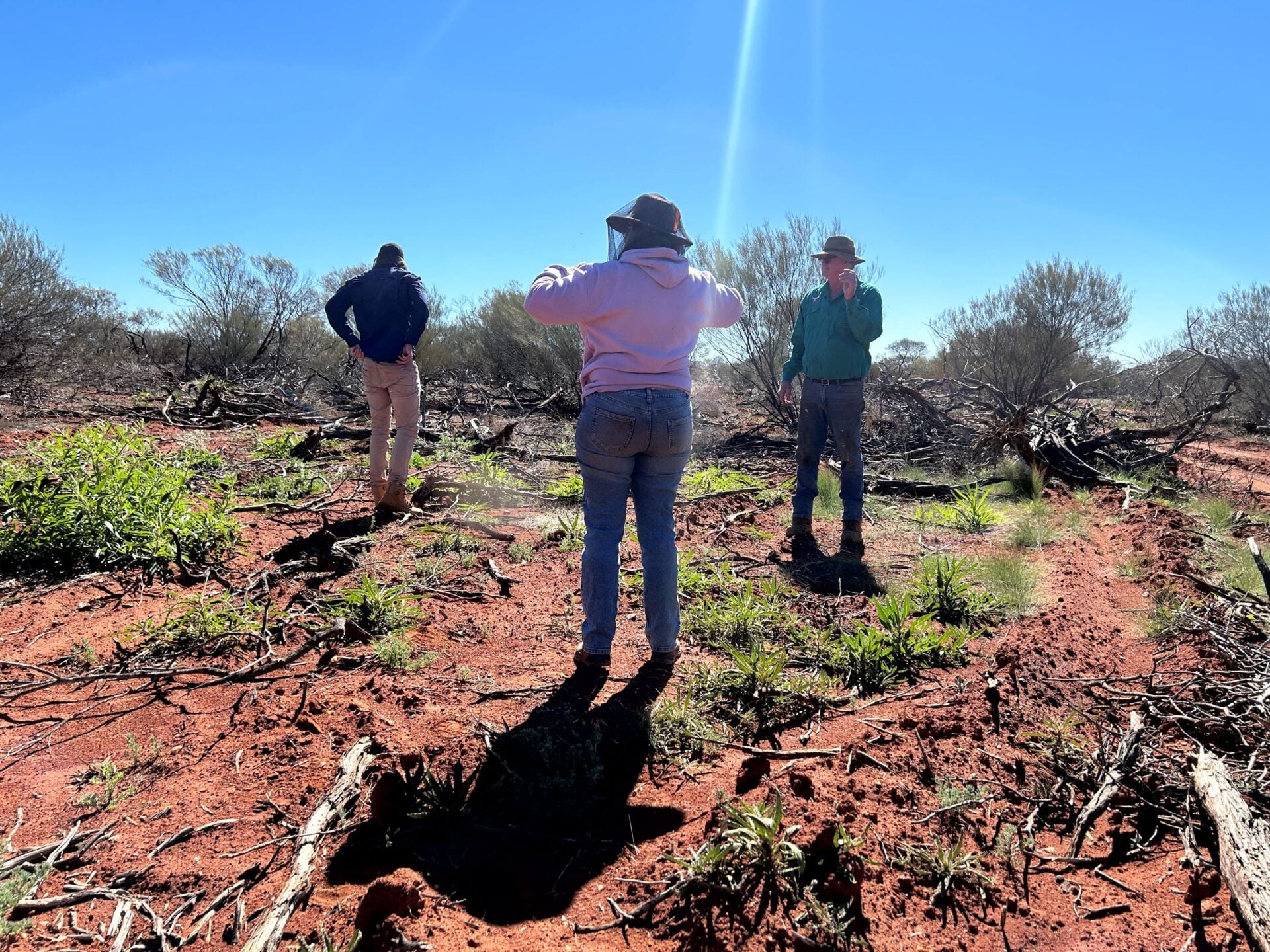
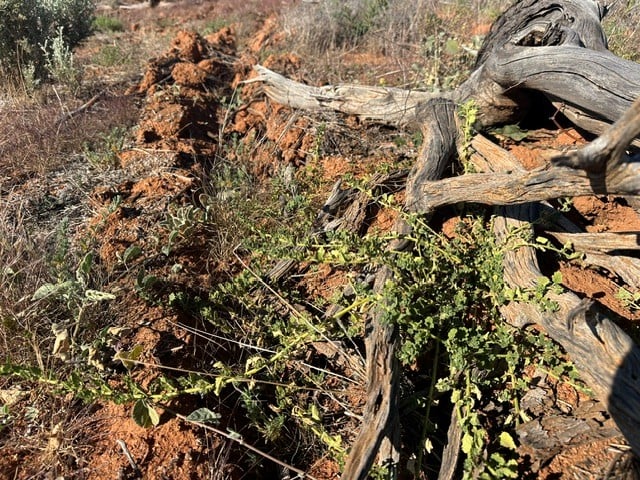
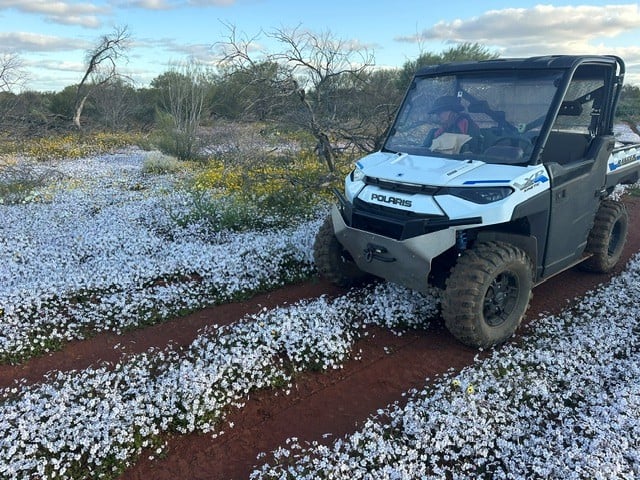
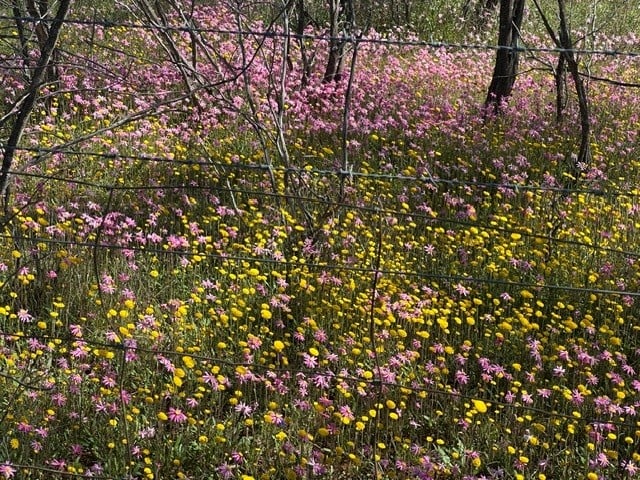
Photos: Jeff Johnson
On Friday 12 June, NACC NRM will run an event at Tallering Views, for interested landholders to come and see for themselves the work that has been undertaken, and how the land is recovering – places are limited and registrations essential. While the soil types and landscape may not be typical across the Northern Ag Region, many of the principles to be explored on the day can be applied to other scenarios and landscapes.
If nothing else, inspiration can be gained from that commitment Jeff and Kirsti have shown to keep experimenting, making mistakes and finetuning their approach, until they have seen their efforts bring rewards. Their land is finally beginning to flourish, most notable during dry spells, when the contrast with what they see over their boundary fences tells a story of its own. With our changing climate expected to influence rainfall significantly, there’s no better time to engage with this story and wring out everything that can be learned and implemented across landscapes to improve our resilience.
The Future Farm Foundations project is supported by the Australian Government through funding from the Natural Heritage Trust, under the Climate-Smart Agriculture Program.