
The Red-Leaved Sundew can be found around clay loam slopes amongst the granite outcrops and moss beds. This spectacular species can be frequently sighted in our granite outcrop reserves such as the Canna Reserve and Koolanooka Reserve near Morawa and Perenjori.
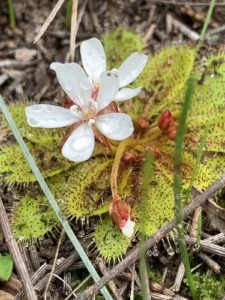
Photo: iNaturalist Australia
But how is it carnivorous? Well, the Red Leaves of this insect-trapping native secrete a sticky, clear fluid. This invisible coating around the leaves is a type of mucus, only noticeable as it glistens in the sun, making it the perfect weapon. The Plant lures in unsuspecting insects with its eye-catching colours. However, the mucus coated plant traps the insect giving the leaves enough time to quickly fold, engulfing its prey. The fluids produced by the small herb are beaming with microorganisms, but whether the plant uses these microorganisms for digestion is still unclear.

Photo: iNaturalist Australia
The carnivorous nature of the sundew provides an addition survival mechanism, allowing it to have survived many years in a variable arid environment. This is especially rare as it can supplement its nutrient intake from elsewhere (insects) in addition to feeding from nutrients in the ground. Understanding the evolution of this plant in the north compared to other sundew in the Droseraceae family around the SW Land division or other Australian sundews is not frequently discussed but it is a potential driver behind the different colour and size viewed amongst the species.
At the end of a wet winter, the small plant matures and as it dries out it releases spores which are then dispersed. This method of reproduction is strengthened by a tubulous fleshly root, allowing existing plants to survive the hot and often dry summer. Finally, as winter rolls around again, this magical plant emerges from the surface, small and fleshy taking form as a ground-covering flower until it blooms again.