
A targeted conservation effort has seen the successful removal of feral bee colonies from 16 tree hollows within the Wandoo woodlands of Dookanooka Nature Reserve. This work is extremely important in safeguarding natural hollows, which are critical to the breeding and survival of endangered species, like the Carnaby’s Cockatoo.
Led by Sam Danischewsky, a local First Nations man and owner-operator of Sam’s Midwest Vermin Control, the control effort focused on protecting natural hollows from invasive European honeybees. While beneficial to agriculture, feral bees often dominate tree hollows, displacing native birds, mammals, reptiles, and invertebrates, and disrupting delicate woodland ecosystems.
Dookanooka Nature Reserve forms part of the Yamatji Conservation Estate, jointly managed by the Yamatji Nation and the Department of Biodiversity, Conservation and Attractions (DBCA). Cultural governance, which integrates cultural values and community-led decision-making into policy development and implementation, is embedded in this partnership through the Joint Management Body (JMB), comprising eight representatives from the four Yamatji claim groups. The JMB collaborates with the Yamatji Southern Regional Corporation and DBCA to ensure these values shape the conservation estate’s future.
The Eucalypt Woodlands of the WA Wheatbelt are critical to the regions biodiversity and provides vital habitat for native hollow dependent fauna such as Nightjars, Possums and Boobook Owls. By restoring these habitats, the project strengthens broader biodiversity outcomes across the region.
Feral bee control is important in managing habitat condition within our region’s woodlands.
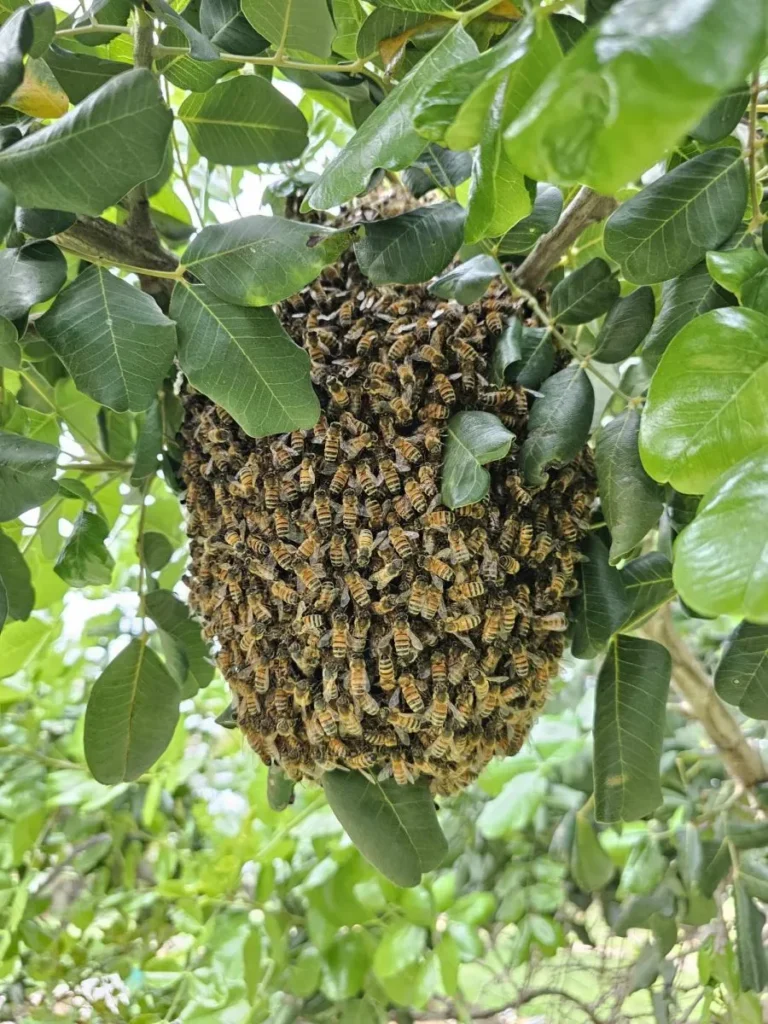
Read more about NACC NRM’s project ‘Restoring the Eucalypt Woodlands of the WA Wheatbelt’ by clicking here or contacting NACC NRM’s Biodiversity team.
This project is jointly funded by the Australian Government Natural Heritage Trust and NACC NRM, a member of the Commonwealth Regional Delivery Partners panel.