
During August, NACC NRM’s Biodiversity Coordinator Jarna Kendle and new team member, Biodiversity Project Officer Chris McAlpine, travelled to Murchison House Station to check in on the local Carnaby’s population. The team’s objective was to monitor breeding activity and habitat use in this crucial corner of the Northern Agricultural Region (NAR).
With sunny skies above, the trip was already looking promising. Several cockatoos were already settled on eggs, while others were still investigating potential hollows, carefully selecting the right nesting site to raise their young. This activity marks the beginning of the vital breeding period for Carnaby’s cockatoos, an endangered species reliant on large tree hollows for nesting.
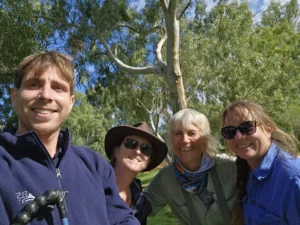
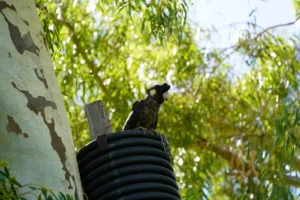
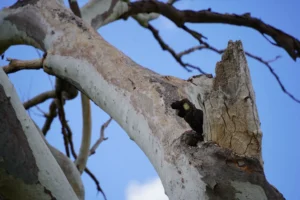
Photos: Chris McAlpine
Ongoing monitoring across the NAR provides valuable insight into breeding success, population trends and habitat condition. These efforts also help identify priority areas for habitat protection and restoration, ensuring Carnaby’s have access to the food, water and hollows they need to thrive.
As the season progresses, NACC NRM’s Biodiversity team will continue working with landholders, community groups and partners to support these iconic birds. Protecting nesting sites and enhancing habitat is vital to secure the future of Carnaby’s cockatoos – and to ensure that the sound of their distinctive calls remains part of our spring landscape for generations to come.
This project is jointly funded by the Australian Government Natural Heritage Trust and NACC NRM, a member of the Commonwealth Regional Delivery Partners panel.