The training brought together rangers from within the Midwest Aboriginal Ranger Program, and the invitation was extended to Yamatji Southern Regional Corporation, which resulted in a group consisting of two NACC NRM staff, five Western Mulga Rangers, and two Yamatji Land and Sea Rangers.
This intensive course combined both theoretical knowledge and practical exercises focused on the safe and ethical capture, restraint, handling, and transportation of a variety of native wildlife, including invertebrates, frogs, lizards, birds, and small mammals.
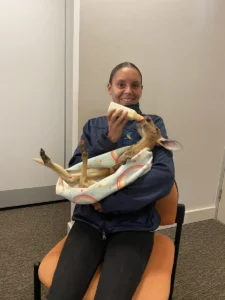

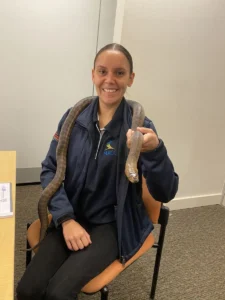
NACC NRM’s Aboriginal Custodianship Project Officer, Kyiesha Ronan
Participants gained valuable insights into:
- Fauna identification and appropriate capture and handling methods
- The use of traps, tools, and equipment in accordance with safe wildlife practices
- Identification of tracks, scats, burrows, and nests of conservation-significant species
- Understanding theecology of native fauna to inform decisions around translocation
- Assessing injured animals to determine whether they should be released, rehabilitated, or euthanised
- Performing euthanasia in a humane and ethical manner when required
One of the most valuable aspects of the day was the opportunity for hands-on experience with live native fauna in a controlled, supportive environment under the supervision of experienced, licensed trainers. This allowed participants to build confidence and competence in handling wildlife responsibly.
The day concluded with each participant proudly receiving their Fauna Handling Certificate, recognising their successful completion of the training and their commitment to ethical wildlife management. This course strengthens the skills and knowledge essential for on-ground conservation work and supports the important role our Aboriginal rangers and environmental staff play in protecting the Northern Agricultural Region’s unique biodiversity.
This project is supported through funding from the Australian Governments National Indigenous Australians Agency.