It’s been a big year for the Carnaby’s Cockatoo population of Murchison House Station, with nesting season in full swing and a record number of fledglings banded!
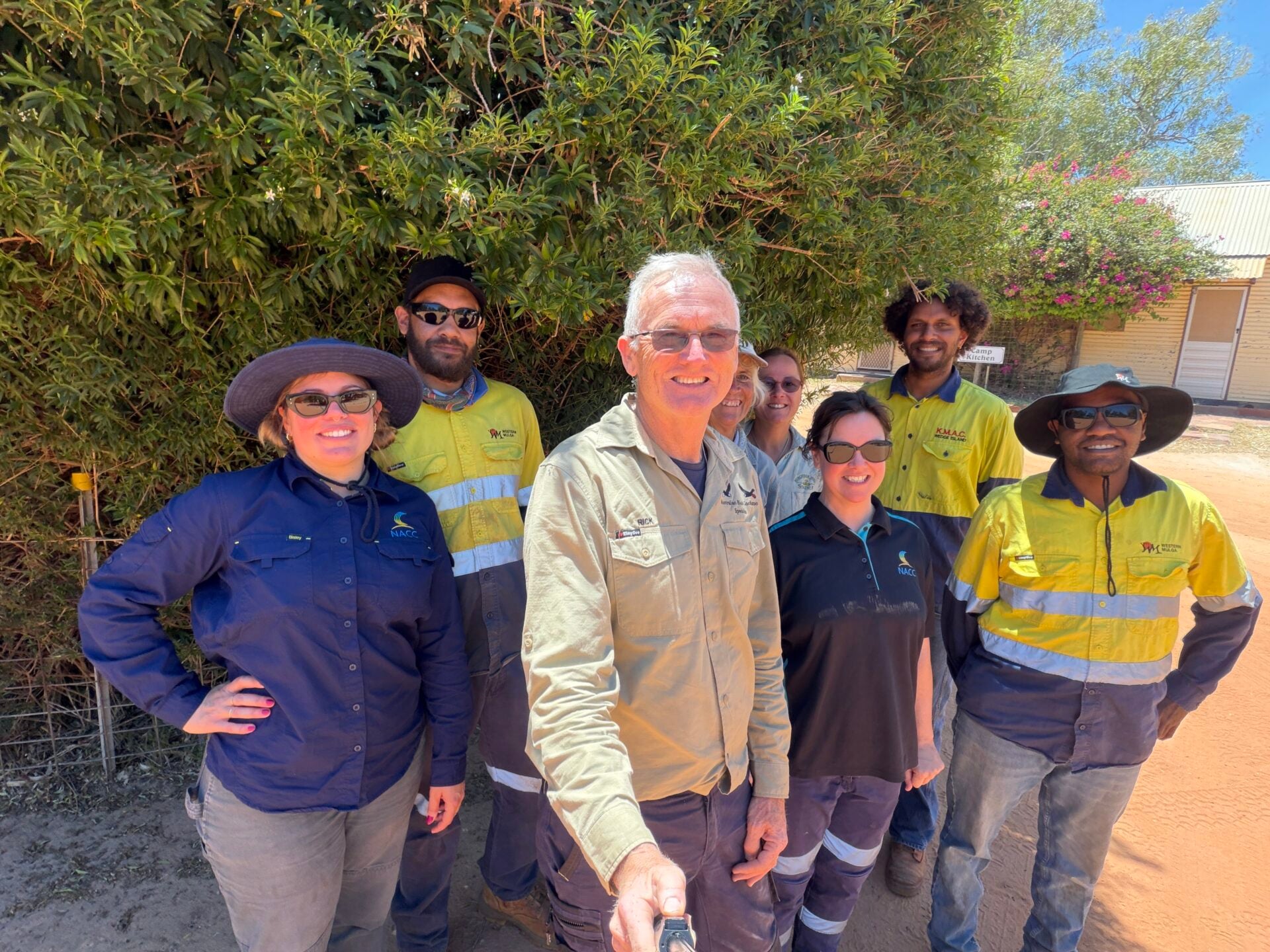
For the fifth year running, NACC NRM’s Biodiversity team headed to the species’ northernmost breeding grounds to band nestlings. They were joined by Rick Dawson from Australian Black Cockatoo Specialists, BirdLife Midwest-Geraldton volunteer Heather Beswick, Midwest Aboriginal Rangers Isaiah Mourambine (Western Mulga), Dylan Pearce (Western Mulga), Levi Kelly (KMAC), and Murchison House Station volunteers Maria and Diane.
In the weeks leading up to banding, the team monitored the artificial and natural hollows at Murchison House Station for signs of breeding. This early monitoring makes it easier to find active nests and to estimate the age of the nestlings, which must be at least three weeks old before they can be banded. Timing the banding can be difficult, as nestlings within a season may vary in age due to environmental factors, which means some may have already fledged or some may have only just hatched. Thankfully, this year, luck was on the team’s side.
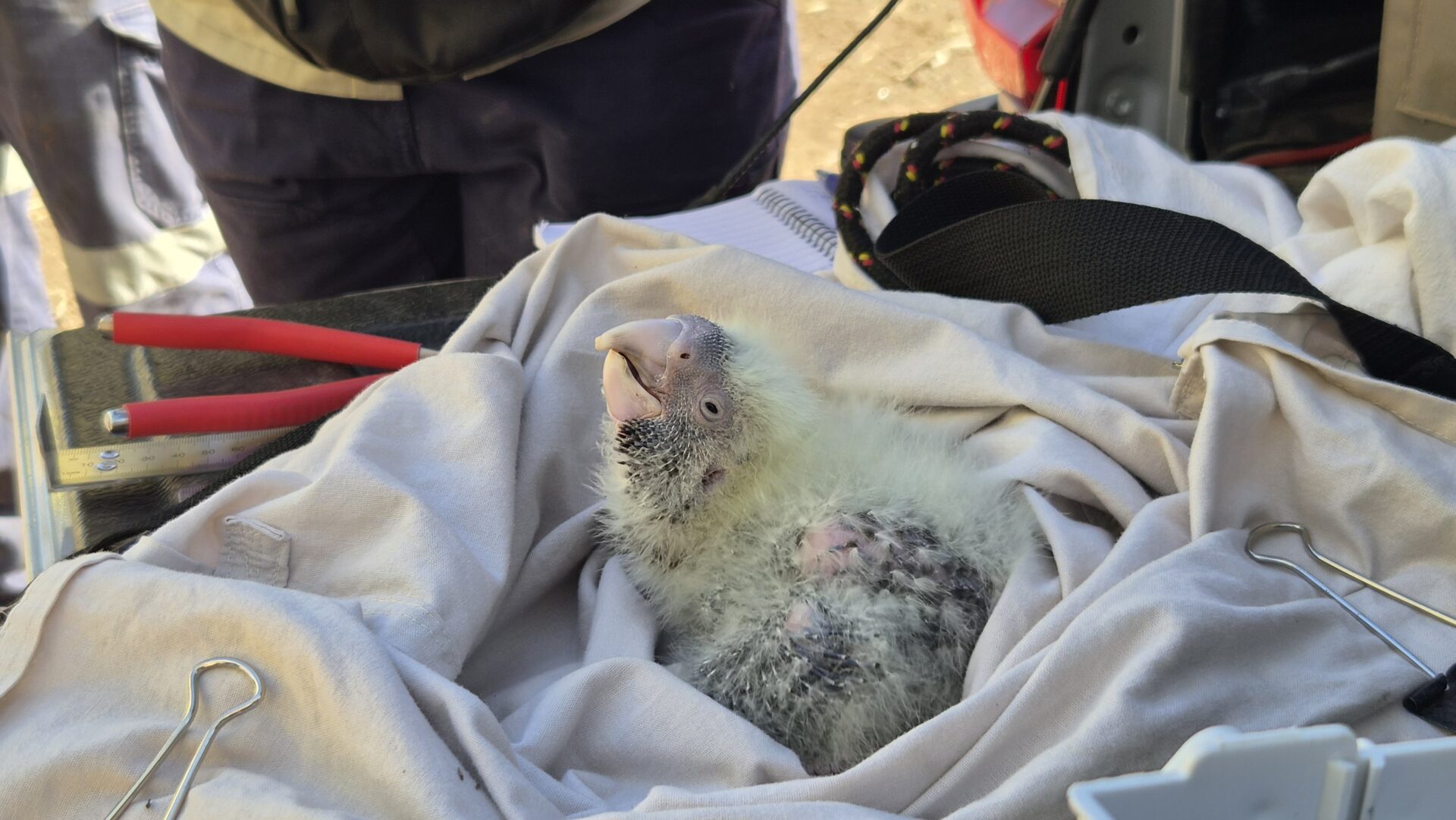
After a restful night at the station, the team set out early in search for the nestlings. Each nestling was fitted with a uniquely numbered band, weighed, sexed, measured (folded left wing) and sampled for DNA before being safely returned to their hollow. Nine nestlings were found this year and eight were old enough to be banded, a record for the program at this breeding site.
The information collected is vital to the survival of this endangered species, as it helps researchers understand their geographic range, diet and genetics, and gain insight into how climate change may affect Carnaby populations.
All monitoring is conducted by licensed professionals with the appropriate permits and landholder approval.
A big thank you to all those who helped in this year’s banding, without your efforts this wouldn’t have been possible. A special thanks to Rick for his tireless efforts of banding across the whole southwest and to Murchison House Station for allowing the team onto the station and keeping an eye on these amazing birds.
You can help us learn more about these beautiful birds and their movements by submitting photos of banded birds or recording your observations through BirdLife Australia’s Birdata.
This project is jointly funded by the Australian Government Natural Heritage Trust and NACC NRM, a member of the Commonwealth Regional Delivery Partners panel.