
From colourful carpets of wildflowers to the vivid green shades of mid storey shrubs and the twisting towers of eucalypts, there is no denying the natural beauty of a woodland landscape.
While remnants of the critically endangered Eucalypt Woodlands of the WA Wheatbelt serve as an example in our backyard, there is a less attractive component of woodlands that is also critical to the survival of many species; dead wood.
Often overlooked or labeled as unsightly, dead trees, shrubs, branches and logs provide valuable services to woodland flora and fauna. For example, the endangered Carnaby’s Cockatoo (Zanda latirostris) rely on hollows for nesting, with living trees taking upwards of 100 years to provide suitable homes. Given that dead trees can remain standing for decades before falling, the hollows they provide become vital habitat for a range of birds, mammals, reptiles and invertebrates.
Large dead trees also offer branches and perches for birds of prey, owls and others, such as cuckoo-shrikes and robins, providing vantage points to observe and strike prey. Some birds, like sittellas, cuckoo-shrikes and flycatchers, for example, prefer to nest on branches of dead trees. Eagles, however, will occupy the dead stags at the top of taller trees. Dead twigs and branches also serve as key nest material for a variety of bird species, while willy wagtails and honeyeaters use lichen and cobwebs found on dead wood.
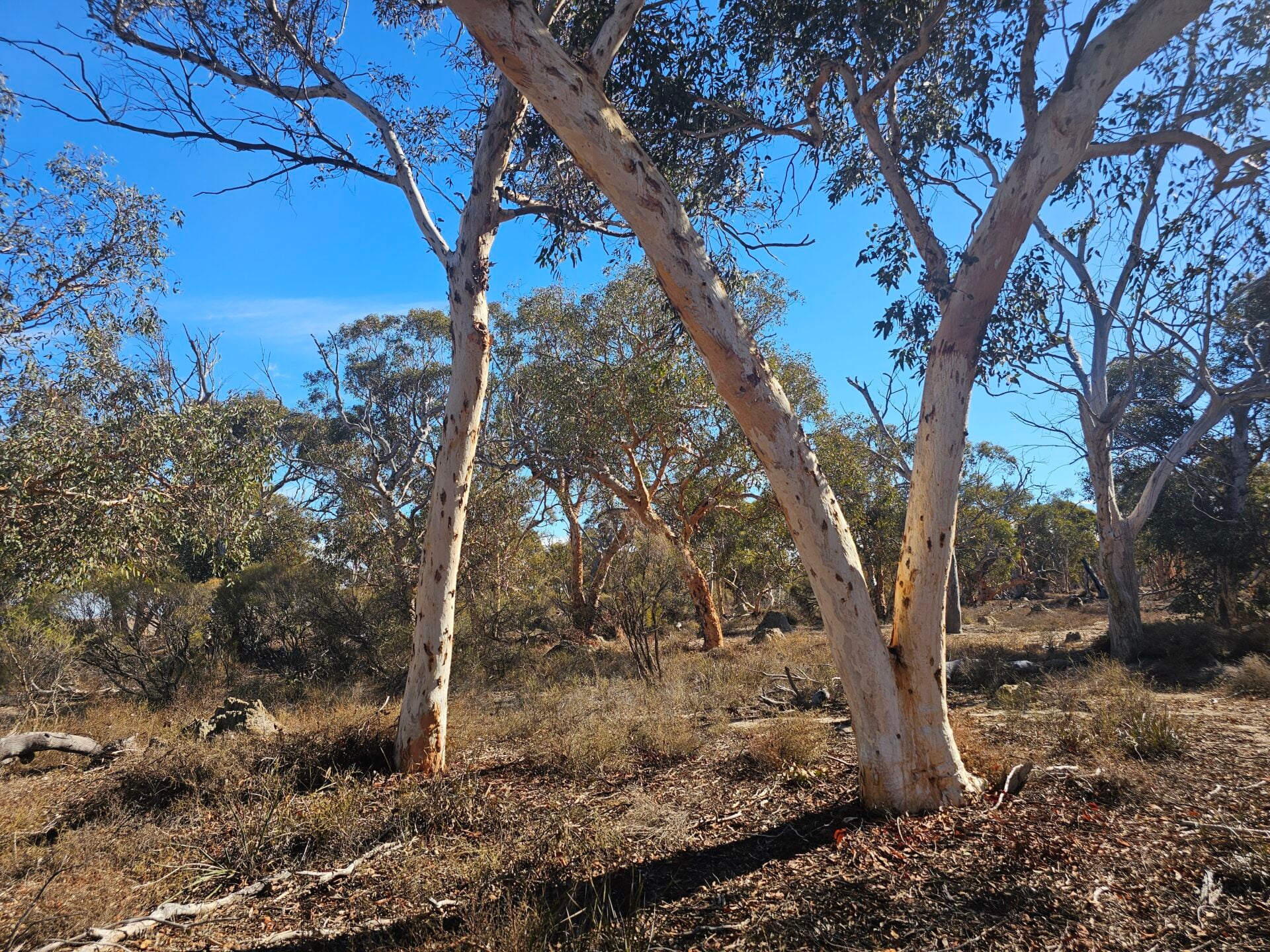
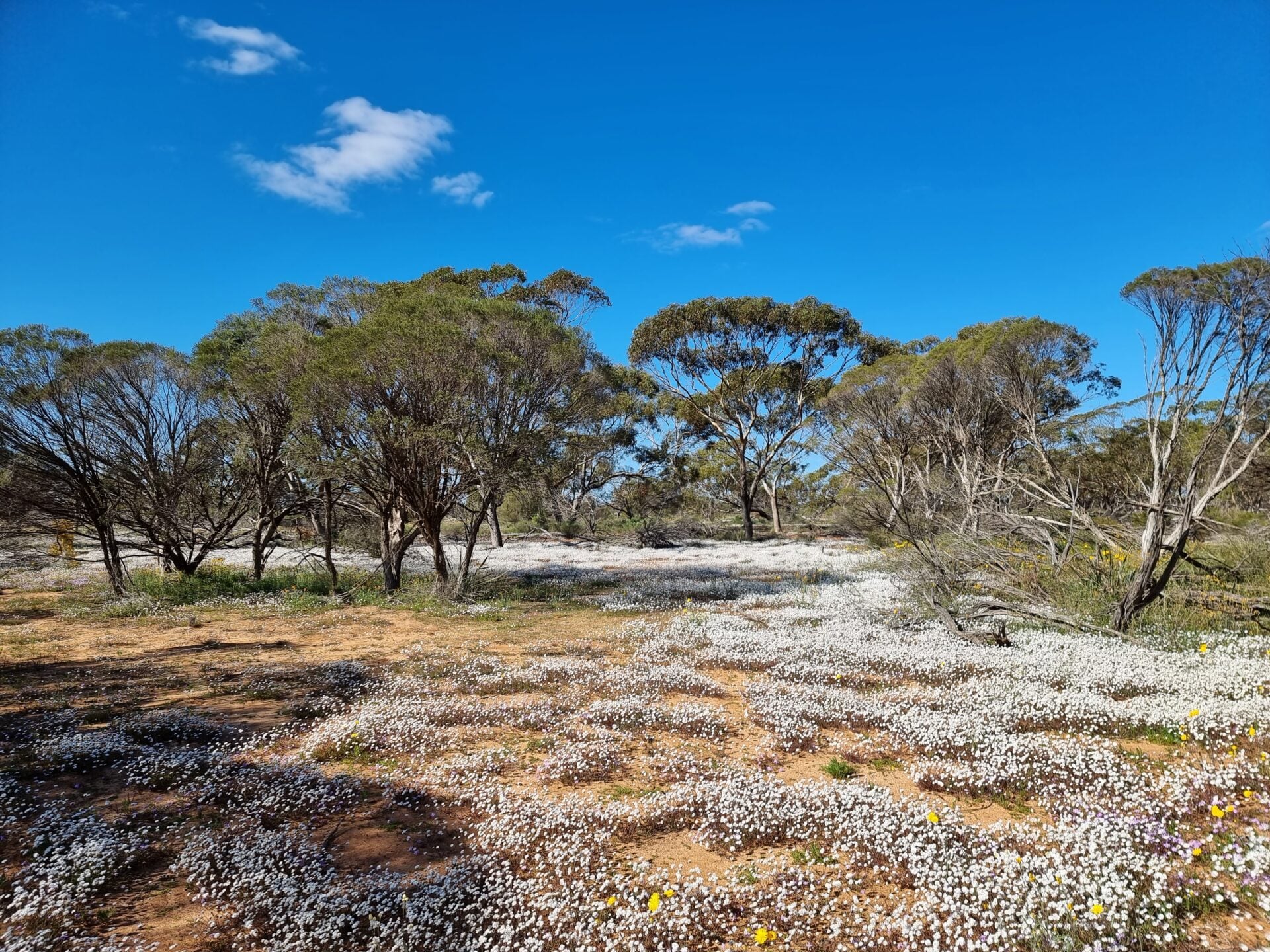
After falling to the ground, dead trees and logs live out a new life and become home to mammals and reptiles who occupy their hollows. The vulnerable Western Spiny-tailed Skink (Egernia stokesii badia) rely on fallen York Gum hollows in particular. Over time, dead wood decomposes at the hands of fungi and termites, which are also an important food source for other animals like echidnas and numbats. Leaf litter and twigs serve as a kind of blanket, keeping soil cool for burrowing invertebrates and plant roots while also holding topsoil in place. As the wood and litter decays, its nutrients are returned to the soil, providing essential resources for the next generation of plants.
There is a misconception about dead trees being unsafe and having a greater tendency to fall. This is only a hazard around roads, buildings or other infrastructure when the removal of dead trees or dead tree limbs is deemed appropriate. In areas of bushland, dead trees should remain untouched as part of the ecosystem. In woodland communities, such as the Eucalypt Woodlands of the WA Wheatbelt, protecting all remaining vegetation, including dead wood, should be considered a high priority. Grazed areas of remnant Wheatbelt woodlands with dead logs and branches on the ground have been found to have a higher number of small reptile species than those without. The undeniable truth is that dead trees, shrubs and logs play an essential role in the ecology of woodland ecosystems.
The next time you find yourself admiring the splendour of a woodland, local park, reserve, or even your own garden, remember the value of dead trees, branches and logs. Instead of being put off by their less appealing aesthetic, be sure to celebrate their continued contribution to the very precious surrounding ecosystems.
For more information on the Eucalypt Woodlands of the WA Wheatbelt, contact NACC NRM’s Biodiversity team.
This project is jointly funded by the Australian Government Natural Heritage Trust and NACC NRM, a member of the Commonwealth Regional Delivery Partners panel.