
The site showcases practical starting points for mitigating the impacts of declining rainfall and increasingly intense extreme weather events. These include stabilising soils vulnerable to wind and water erosion, reducing soil disturbance outside of growing seasons, adopting proven grazing techniques in new landscapes, improving input management, lowering soil surface temperatures, and stabilising landscapes at a catchment scale.
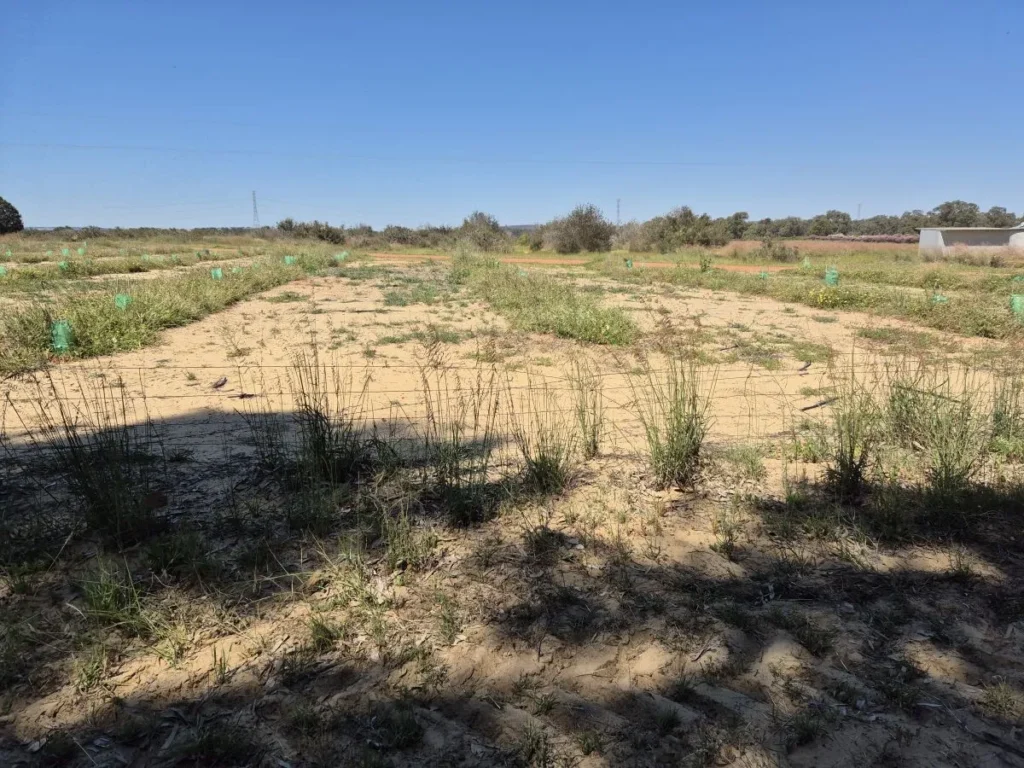
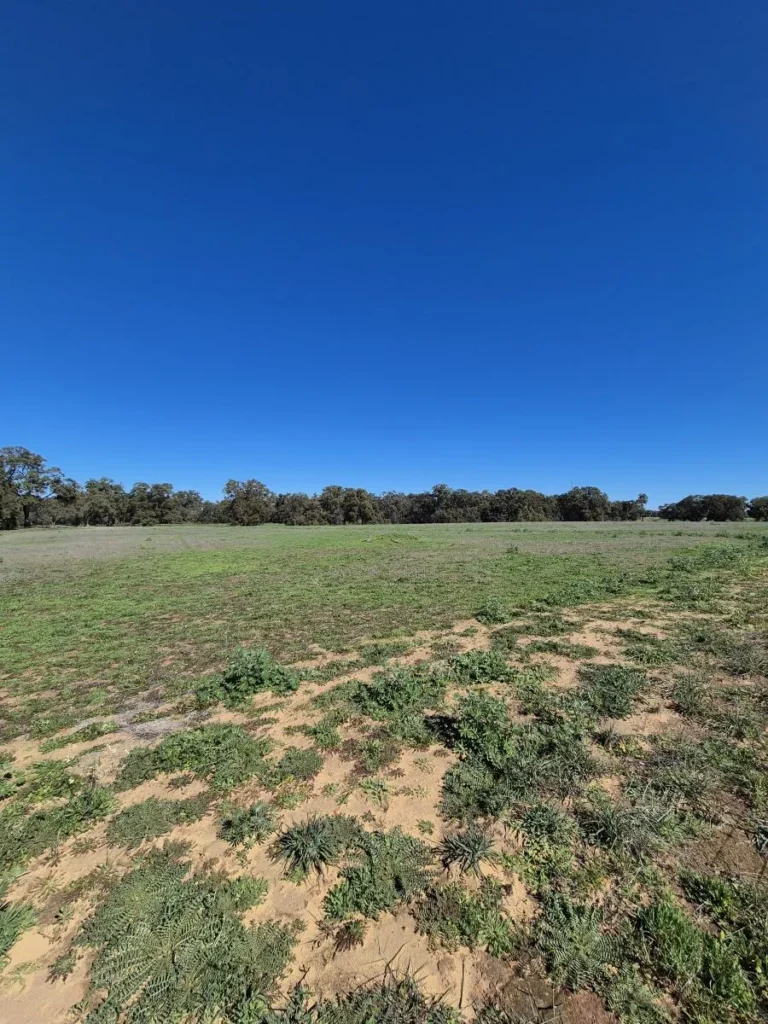
Planted shrub species create wind protection and alternate income through flower production
Less fragile soils will remain as annual pasture systems
The first step has been the development of a guiding plan to support the staged implementation and expansion of practices that conserve natural resources through long-term transition pathways aligned with the triple bottom line. This plan directs all on-ground works. To date, the site has established perennial pastures and vegetation zones, and designed earthworks to improve water movement in some areas and increase retention in others to be implemented before the break of next season.
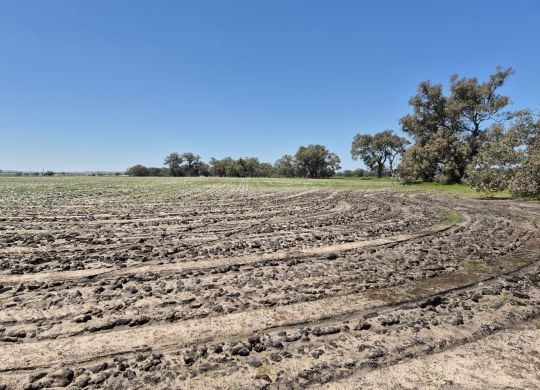
Perennial Pasture established in low lying zone to stabilise at-risk soils
Ongoing management will include virtual fencing, further pasture improvements, and expanded vegetation areas to provide stock refuge and reduce the risk of wind erosion. In the new year NACC NRM will be running a series of workshops and field days to extend learnings from this and related project works.
This project received funding from the Australian Government’s Future Drought Fund.
