This year’s theme, ‘Wetlands and Traditional Knowledge: Celebrating Cultural Heritage’ spotlights the timeless role of traditional knowledge in sustaining wetland ecosystems and preserving cultural identity.
Wetlands are land areas that are saturated or flooded with water either permanently or seasonally. They provide habitat, support biodiversity, and offer significant economic, cultural, and recreational benefits. Nearly 90% of the world’s wetlands have been degraded since the 1700s, and we are losing wetlands three times faster than forests. Yet, wetlands are critically important ecosystems that contribute to biodiversity, climate mitigation and adaptation, freshwater availability, world economies and more.
Wetlands take different forms in various landscapes, and can be categorised as inland wetlands, coastal wetlands, or human made wetlands.
Inland Wetlands
- Marshes
- Lakes
- Rivers
- Floodplains
- Peatlands
- Swamps
Coastal Wetlands
- Saltwater marshes
- Estuaries
- Mangroves
- Lagoons
- Coral Reefs
Human Made Wetlands
- Ponds
- Rice paddies
- Salt pans
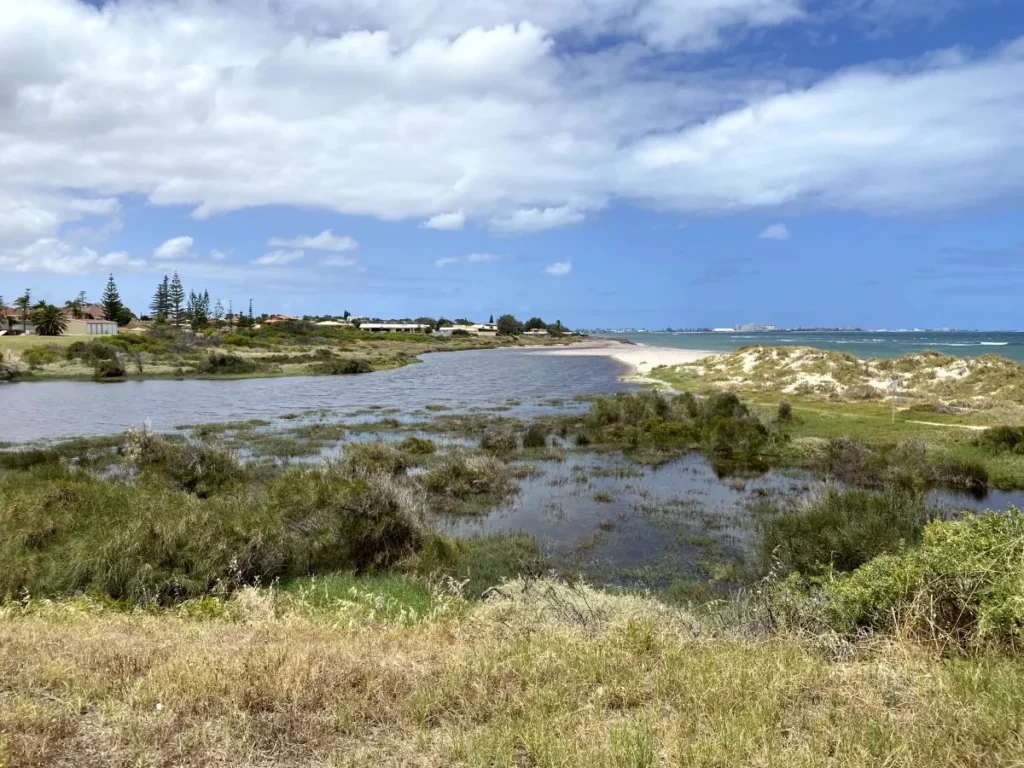
Coastal Wetlands – Chapman River Estuary
For First Nations peoples, water is a sacred source of life. The natural flow of water sustains aquatic ecosystems that are central to our spirituality, our social and cultural economy and wellbeing. The rivers are the veins of Country, carrying water to sustain all parts of our sacred landscape. The wetlands are the kidneys, filtering the water as it passes through the land.
Across the Northern Agricultural Region, many mob believe that our waterways were carved out by Bimarra, a powerful Dreamtime serpent. As the guardian of water sources, Bimarra is paid respects through the long-standing tradition of throwing a handful of sand into the water when visiting local waterways.
If you’re looking to learn more about wetlands, check out these local events!
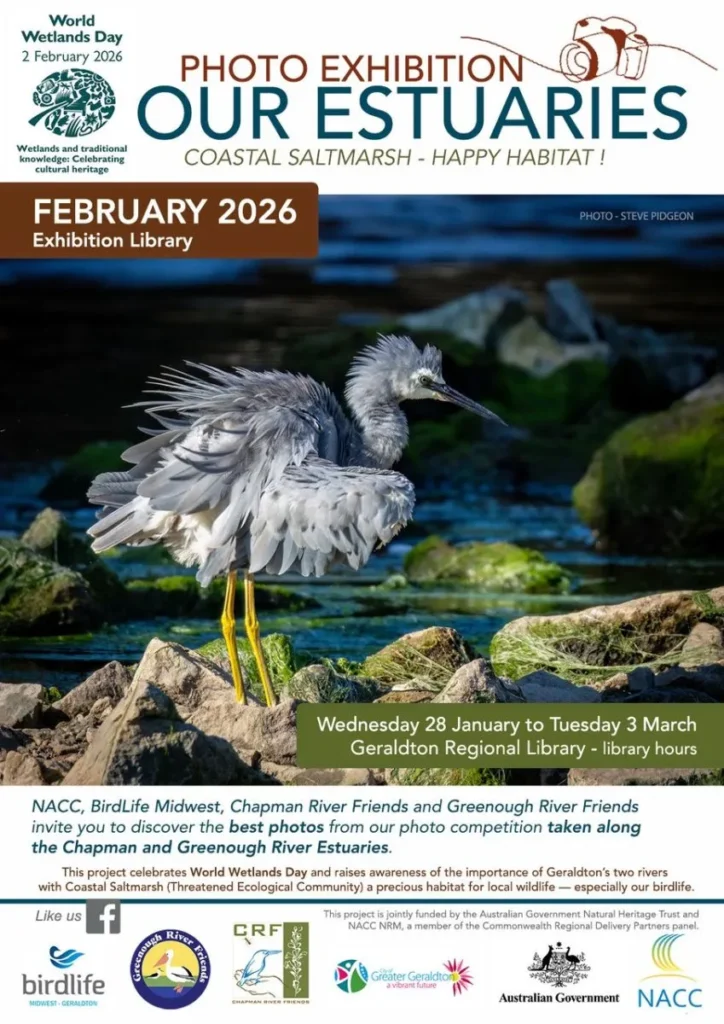
‘Our Estuaries’ Photo Exhibition
‘Our Estuaries’ not only celebrates the estuaries of Chapman and Greenough, it also showcases the talent of local photographers! While the competition has closed, a selection of entries is currently on exhibition at the Geraldton Regional Library, located at 37 Marine Terrace, Geraldton. Check it out and cast your vote for the People’s Choice Prize before the exhibition closes on 3 March 2026.
This initiative is a collaborative effort between NACC NRM, the City of Greater Geraldton, Birdlife Midwest-Geraldton, Greenough River Friends and Chapman River Friends.
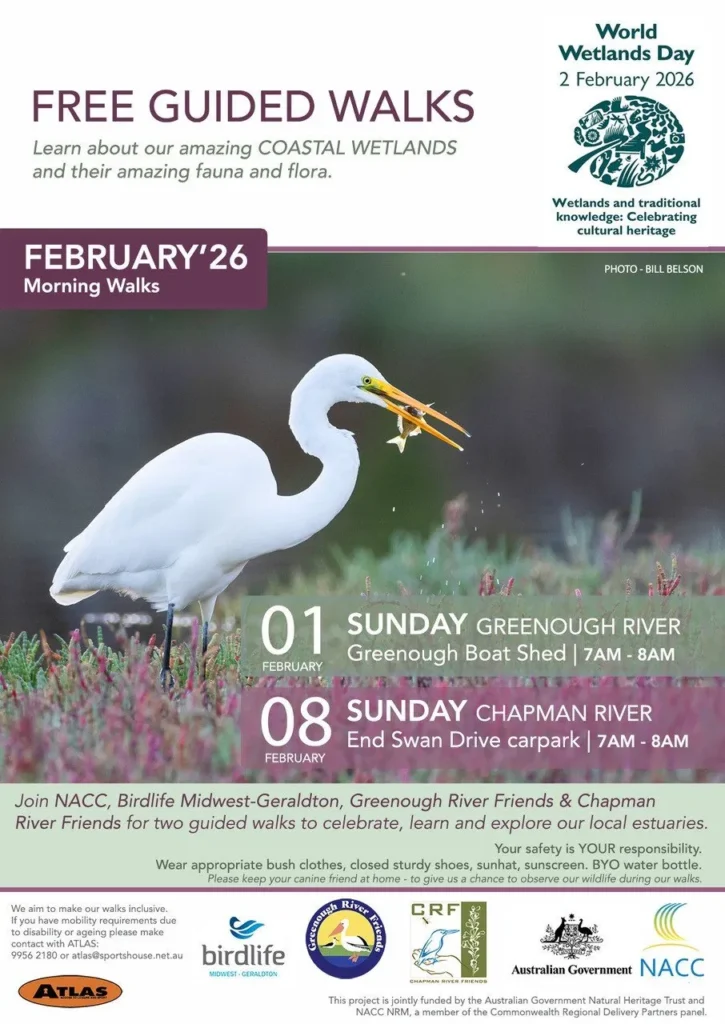
FREE Guided Wetland Walks
Celebrate World Wetlands Day with a stroll along our stunning local estuaries, led by NACC NRM, Birdlife Midwest-Geraldton, Greenough River Friends and Chapman River Friends. Watch the estuary come to life, learn about wetland ecosystems and wildlife, and explore the beauty of the Greenough and Chapman Estuaries with local experts!
1 February 2026 | 7:00am – 8:00am | Greenough River Boat Shed | Learn more
8 February 2026 | 7:00am – 8:00am | Chapman River End Swan Drive Carpark | Learn more
NACC NRM is committed to engaging the community in protecting and restoring wetlands, home to the Threatened Ecological Community (TEC) of saltmarsh.
Safeguarding saltmarsh is an important cause for NACC NRM; our Coastal & Marine team have been hard at work delivering our project, ‘Improving Subtropical and Temperate Coastal Saltmarsh in the Northern Agricultural Region’. This project aims to identify, assess, conserve and then manage TEC areas for a healthier, more sustainable future. Weed control, access control, and debris removal will be undertaken in priority areas, helping saltmarsh, wetlands, and wildlife to thrive for years to come!
This project is jointly funded by the Australian Government Natural Heritage Trust and NACC NRM, a member of the Commonwealth Regional Delivery Partners panel.