
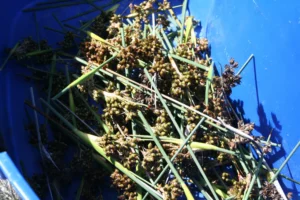
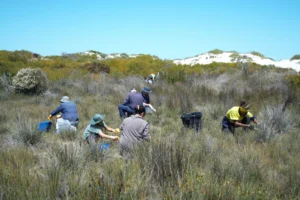
Leading the charge was NACC NRM’s Coastal & Marine Project Officer Joshua Burney and Communications Officer Phoebe Royce, armed and ready with secateurs and a camera! The team focused on removing Sharp Rush (Juncus acutus), a high-impact invasive weed that poses a serious threat to both the environment and agriculture. With its razor-sharp tips and prolific seed production, Sharp Rush can quickly take over, outcompeting native vegetation and altering fragile saltmarsh ecosystems.
Back in May 2025, approximately four hectares of Sharp Rush were treated in the area. This month’s return trip aimed to re-treat missed or re-growing plants, ensuring the ongoing success of the initial effort. Mature plants were carefully de-seeded and cut at the base before KMAC applied targeted herbicide to prevent further spread.
Control methods for weeds like Sharp Rush are vital in improving the health of coastal saltmarsh, a listed Threatened Ecological Community (TEC). If weeds dominate more than 50% of a saltmarsh site, it risks losing its classification, along with any conservation efforts, and potentially, the many ecosystem services these wetlands provide. Healthy saltmarsh supports a wealth of native species, filters waterways, stabilises riverbanks, and stores carbon, making it a key player in coastal resilience and biodiversity.
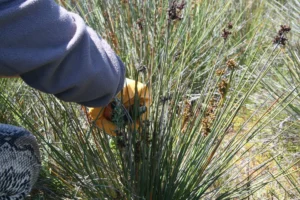
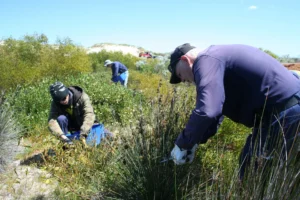
Thanks to this collaborative local effort, the Hill River estuary is one step closer to a thriving, resilient saltmarsh ecosystem that will continue to support native plants, wildlife, and the wider community for generations to come.
This project is jointly funded by the Australian Government Natural Heritage Trust and NACC NRM, a member of the Commonwealth Regional Delivery Partners panel.