
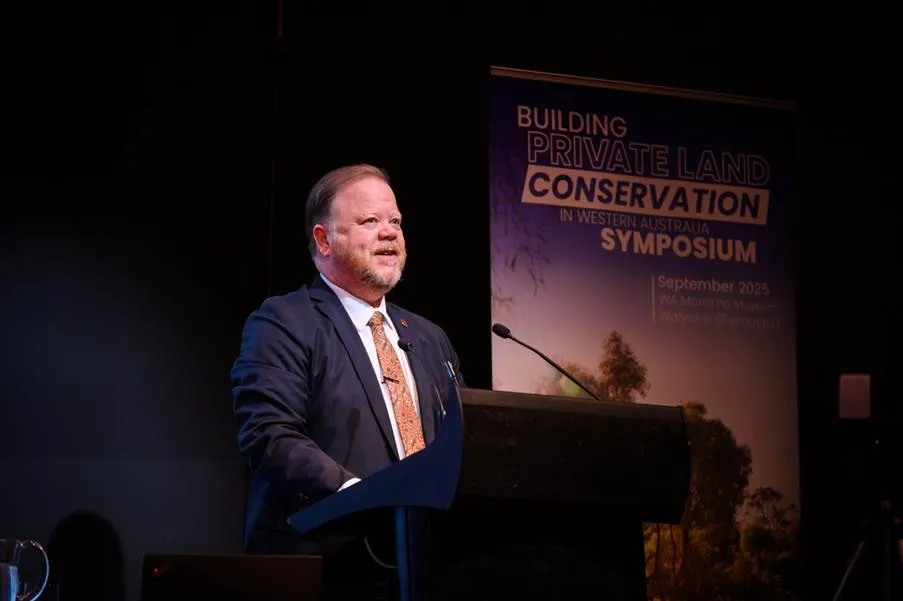
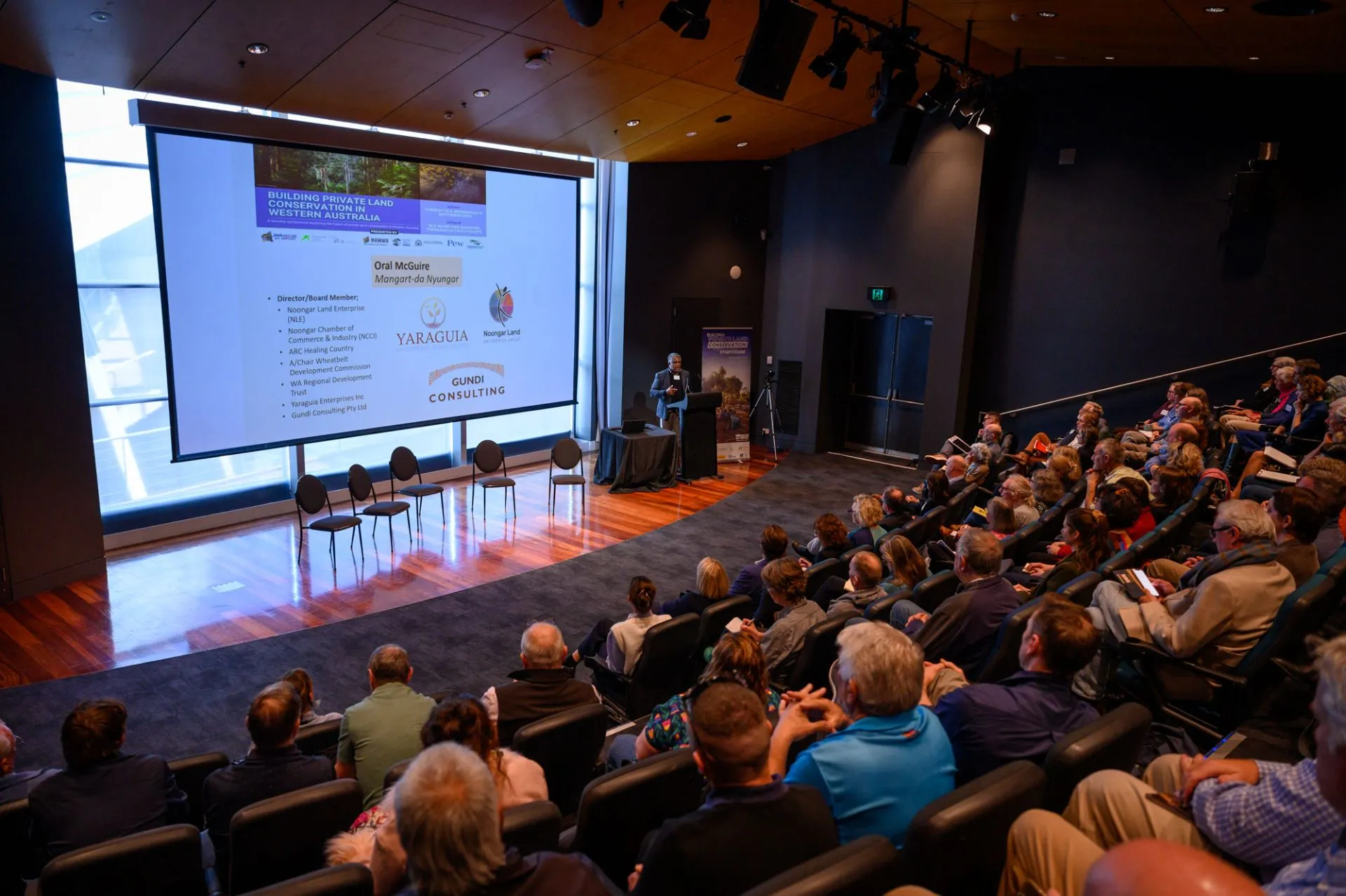
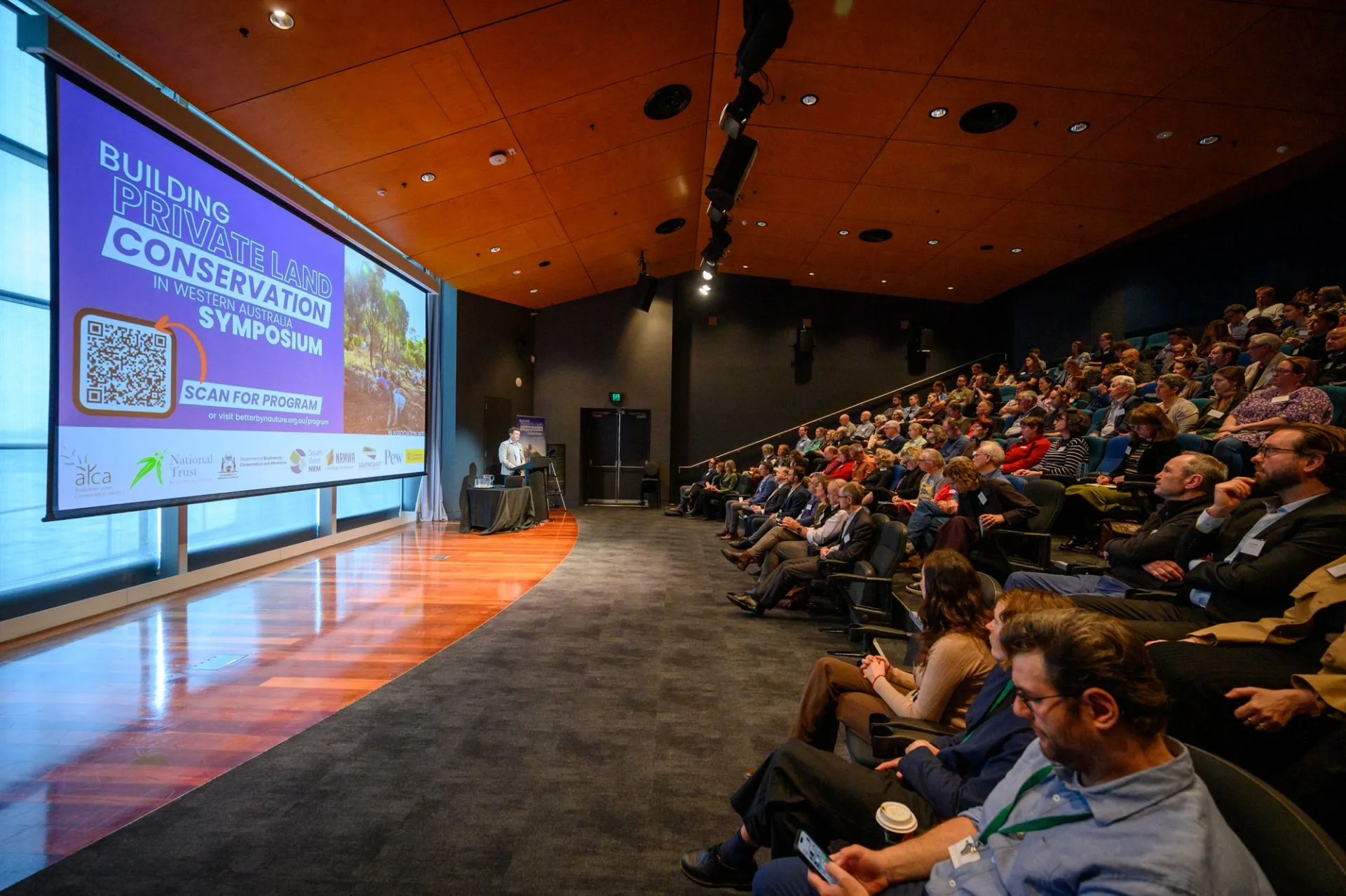
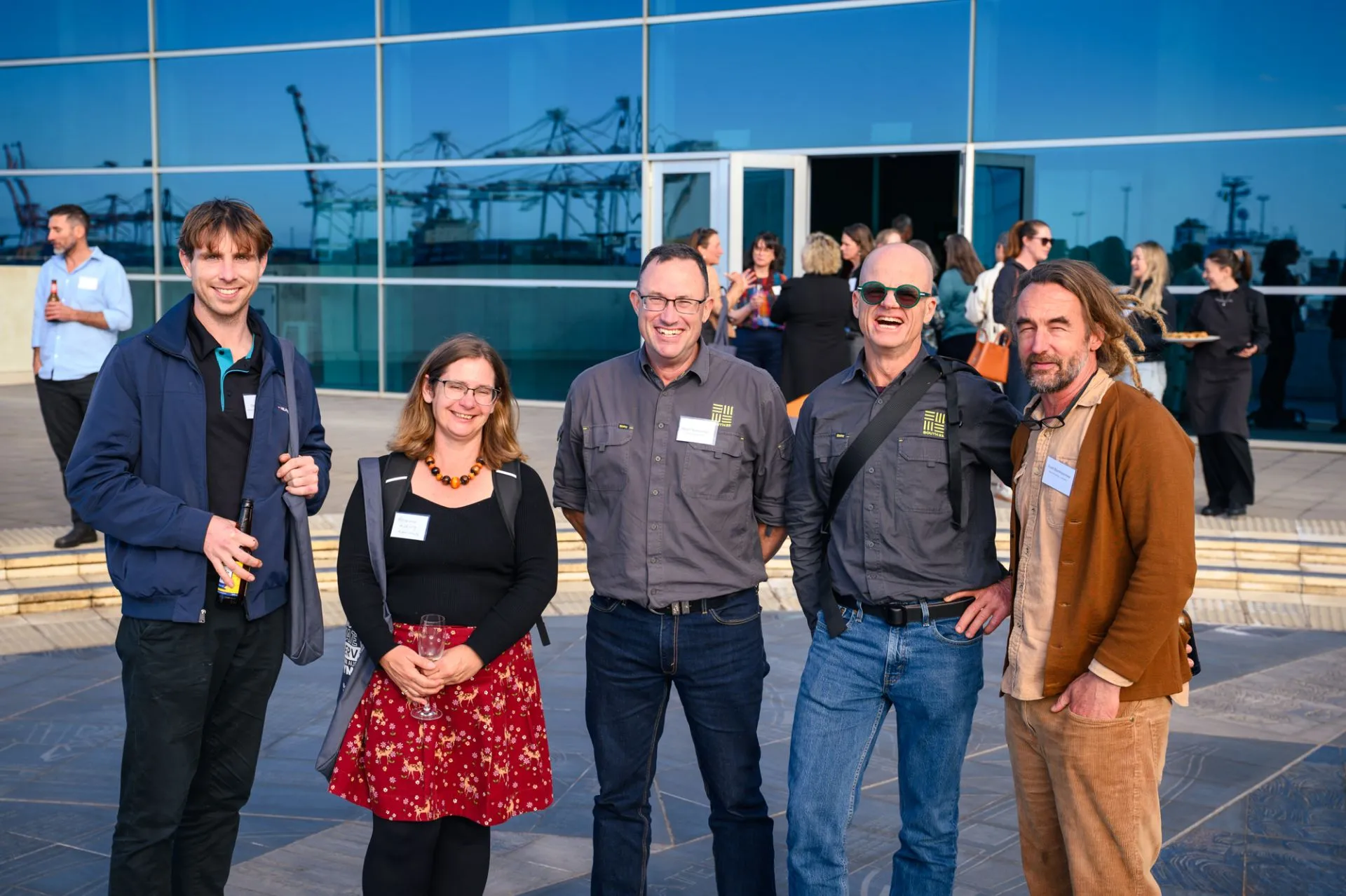
Recently, NACC NRM staff attended a WA Better by Nature conference on Private Land Conservation in Western Australia which explored the current limitations as well as learnings we can take from other states. The conference saw speakers from State Government agencies, MP’s as well as representatives from NSW, Victoria, and many private organisations involved in conservation.
The Northern Agricultural Region contains many sites of high conservation value, with numerous ‘patches’ of these ecological communities on private land. A key example of this is the Eucalypt Woodlands of the Western Australian Wheatbelt Threatened Ecological Community (TEC).
The complexity of working across private tenures has been identified as a barrier that makes coordinating conservation at scale more difficult. Strong engagement and incentives for landholders are effective pathways to overcome this barrier.
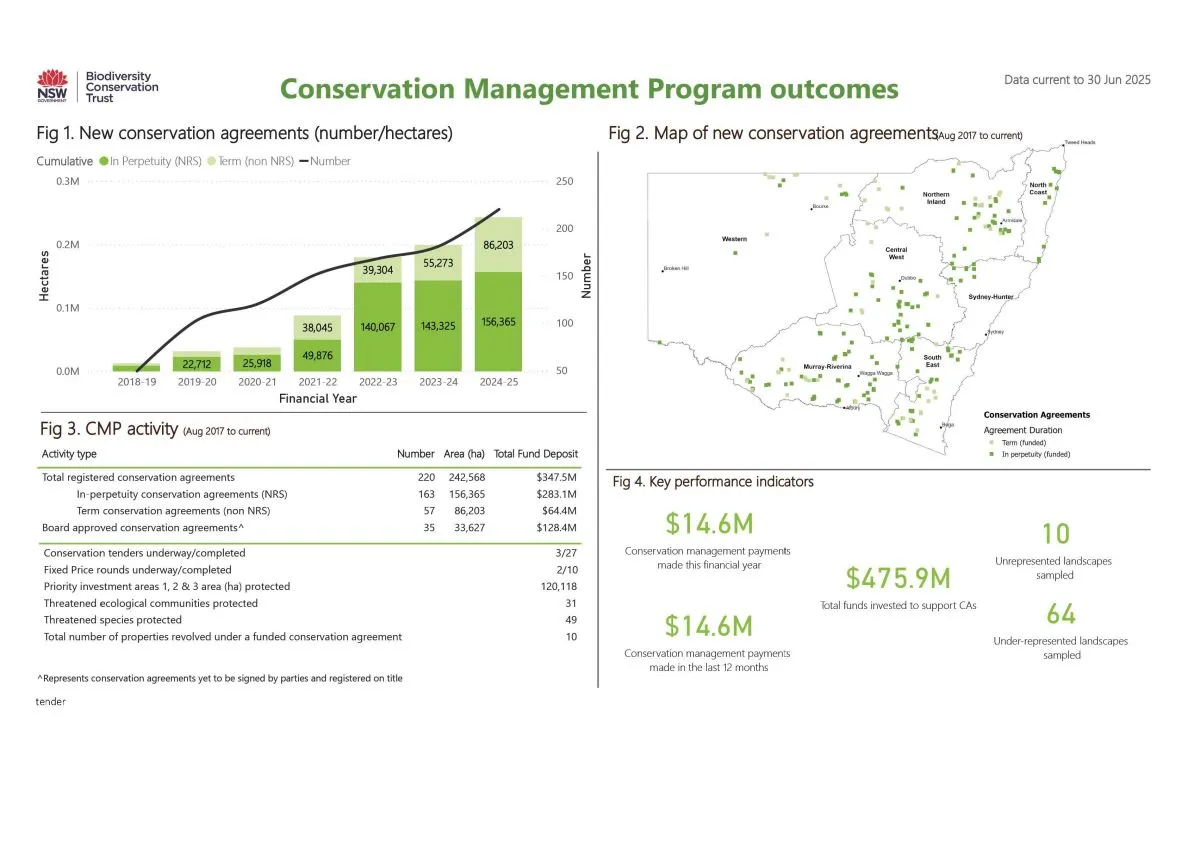
The conference provided valuable learnings from initiatives in other states, for WA agencies and organisations. NSW, QLD, and Victoria have progressed private land conservation at scale, partially driven by financial incentives for private landholders from government. The NSW Biodiversity Conservation Trust have established 242 568 ha of funded private land conservation agreements (covenants). These agreements are supported by a $476M fund to assist with establishment and ongoing management, with $14.6M in management payments provided to landholders in the last financial year. A high level summary of BCT outcomes is outlined at Figure 1 with further information on the NSW BCT model available through the NSW BCT Homepage.
Conservation activities within WA on private tenure present a major opportunity to increase the area of WA contributing to Australia’s 30 by 30 Global Biodiversity Framework targets. Landholder values and co-benefits of managed vegetation remain critical in advancing environmental outcomes. This article will provide details on some of the programs and incentives that private landholders can currently access to support conservation activities on-farm.
Natural Resource Management (NRM) Regional groups
One source of funding and support for private landholders who want to undertake conservation activities in WA, is the natural resource management sector. The funding arrangements for NRM groups are varied across WA with projects often needing to meet specific conditions and funder priorities. However, there are often opportunities available to support conservation works that align both land manager values and on-farm benefits with conservation outcomes.
To access funding, it is helpful to understand what sorts of natural environments exist on your property, and what areas may have high conservation values.
- Threatened or priority ecological communities.
- Threatened or priority flora or fauna species.
- High quality remnant vegetation.
- Critical connecting nature corridors.
- Proximity to reserves, parks, or other protected areas.
- Areas with high community or cultural value.
A list of all threatened and priority items identified within the NAR are available through NARvis here with further information also available from DCCEEW.
Click below to contact NACC NRM’s programs teams for funding applications, projects, or activities.
Aboriginal Custodianship | Biodiversity | Coastal & Marine | Sustainable Agriculture

Photos: Miles Noel Studio
Grants and Funding
From time to time funding becomes available through federal, local, and state government as well as corporate funds established for community and environmental activities. Examples below are not likely to fit individual landholder scopes however NRM regional groups can help to coordinate community or collective landholder efforts.
- State NRM Program offers grant rounds such as the community stewardship grants and feral cat management grants. All community members can apply for these grants.
- DPIRD Funded Grants, have an array of grants related to primary industries and regional development.
- Landcare Australia – Often have grants available for community-based Landcare activities on private land.
- Lottery west
Corporate Investment
Investment in carbon is increasing across the NAR, with organisations looking to access poor-quality farmland to generate carbon credits and, in the future, possibly biodiversity certificates. This creates competition for land across the region but can also provide opportunities for landholders to manage farmland more economically, in addition to making significant contributions to conservation.
Carbon, Carbon+ Markets
The development of the Carbon market in the last decade has seen it now positioned as a key source of funding for private landholders wanting to undertake conservation activities. This shift presents a more complex operating environment, but it has also opened new opportunities for landholders looking to conduct small to medium-scale conservation works.
Discussions at the WA Better by Nature conference identified some of the limitations of the Carbon Market becoming a driving force for conservation in the wheatbelt. These limitations are often echoed in industry research and within agricultural focused assessments[2],[3],[4].
- Highly complex and frequently changing policy environments.
- Lack of trust and confidence in the carbon market system.
- Lack of clarity around future requirements for Farmers to hold their own credits in pursuit of emissions reductions.
- Carbon Credit price levels do not have high enough levels of economic and policy certainty to generate sufficient confidence in future returns.
- Methods available for a project are not always well suited to small scale private landholder projects.
- Complicated processes for project registration for small businesses to undertake.
- Developing space for rewarding high-value biodiverse carbon plantings and management of established vegetation.
Despite the limitations, there has been advancement in landholder support in navigating the complexity. This is continuing with further refinement of market tools, greater industry confidence, and an NRM sector placed to support interested farmers.
If you are looking to complete conservation activities with a desire to generate Carbon credits, it is recommended that you seek professional advice early in the planning stages. Opportunities in the Carbon market do not need to limit your conservation activities but do generally require a longer lead time.
There is growing opportunity throughout the wheatbelt for farmers and landholders to access the carbon market. Credit generation through biodiverse saltbush plantings on saline-affected areas is just one example of a potential carbon project approach that is particularly applicable to the wheatbelt.
NACC NRM has supported numerous land managers to understand and implement their own projects in the carbon market.
Photos: Miles Noel Studio
Natural Capital Accounting
Natural Capital Accounting (NCA) methodologies have developed greatly in the last 12 months, with state and federal governments focusing on implementation in line with the United Nations System of Environmental-Economic Accounting5.
There are several approaches to developing a natural capital account for private landholders with guides available through industry bodies and NRM Regions Australia[5]. One leading framework suitable for landholders within the NAR is the Accounting for Nature (AfN) framework. AfN provides a transparent and certifiable environmental accounting framework which can be applied on-farm to assess and monitor changes in the natural capital values of their property.
An example of potential future use of NCA in adding value is the AfN certified Carbon+ Credit currently being piloted[6]. When AfN frameworks are applied in conjunction with carbon credits it allows for the generation of a high integrity Carbon+ Credit, which is expected to obtain higher value in the carbon market.
Pairing NCA with Carbon markets is also likely to be of benefit as government increase accountability requirements in relation to nature and biodiversity and look to deliver international obligations. In order to deliver these obligations, significant investment is required[7] and NCA frameworks will be a valuable tool in ensuring transparency and accountability for biodiversity claims.
Setting a baseline for a property as early as possible is the best way landholders can position themselves to access opportunities that are developing in the Nature Repair Market. NCA frameworks available can be useful tools in providing measured and verifiable data into the future. Improvements made in an NCA account may be of future value or be important for landholders to demonstrate their sustainability performance.
Nature repair markets & Biodiversity certificates
The recently opened Nature Repair Market[8] managed by the Clean Energy Regulator, allows landholders to generate biodiversity certificates from actions undertaken to restore and protect the environment. The first project was registered in August 2025 on a cattle grazing property in the Mid North Coast region of New South Wales, where trees and shrubs will be planted to support native ecosystems, generating a biodiversity certificate when outcomes are met or assessed to be on track. Once trees are established (10-15 years) cattle grazing will recommence on the revegetated parcels to maintain production capacity of the land.
Whilst the potential for financial benefits from biodiversity certificates remain unclear, these certificates present another potential opportunity for landholders in conducting conservation activities in the future. Financial benefits are predicted to come with a more established market and trading opportunities for certificates.
Covenanting
Covenanting of land is considered the gold standard for private land conservation. However, in WA, this process is complicated and there are limited financial incentives. WA Local Governments sometimes provide land tax relief for properties with covenanted areas, which provides a small financial incentive. Other states have examples of covenanted land providing direct financial support for landholders through land tax credits and direct annual payments to support ongoing conservation management activities for covenanted parcels.
If you are interested in covenanting, there are currently three pathways for landholders in WA, with each having a different form of ongoing support and procedures.
- National Trust Western Australia
- Department Primary Industries and Regional Development
- Department of Biodiversity Conservation and Attractions – New processes for land covenanting being established.
Ultimately, private land conservation incentives in WA exist in a complex space with limitations impacting scale. Despite this, developing frameworks will likely provide opportunities in the future. When approaching conservation or environmental works on your property, it is important to ask, “What is your purpose is for the activity?” Answering this will help guide the path taken to implement works and guide outcomes which help to articulate project success and future transactions.
Engaging your local NRM organisation is a great place to start. NACC NRM will continue to facilitate and support community connections and knowledge sharing opportunities wherever possible. There are many people throughout the region who have worked through some of the options explored in this article so engaging within your community can be valuable.
This project is jointly funded by the Australian Government’s Saving Native Species Program and NACC NRM.
Chris McAlpine – Biodiversity Project officer
[2] Carbon Market Institute: Landholder guidance: A checklist for partnering on carbon farming projects. 2024
[3] The Australia Institute: The Problem with Carbon Credits and Offsets Explained. 2023
[4]Landon R. Schofield, Micayla E. Pearson, Samuel Newell, Nathan Clackum, Benjamin L. Turner Why aren’t more landowners enrolling in land-based carbon credit exchanges? Rangelands, Volume 46, Issue 4, 2024,
[5] Carbon Market Institute, NRM Regions Australia: Carbon for Nature, Leveraging carbon farming investment to deliver additional benefits for nature. Leveraging carbon farming investment to deliver additional benefits for nature. 2025
[6] AFN: Carbon+ Pilot program
[7] PWC: A nature-positive Australia: The value of an Australian biodiversity market. 2022
[8] DCCEEW: Nature Repair Market